


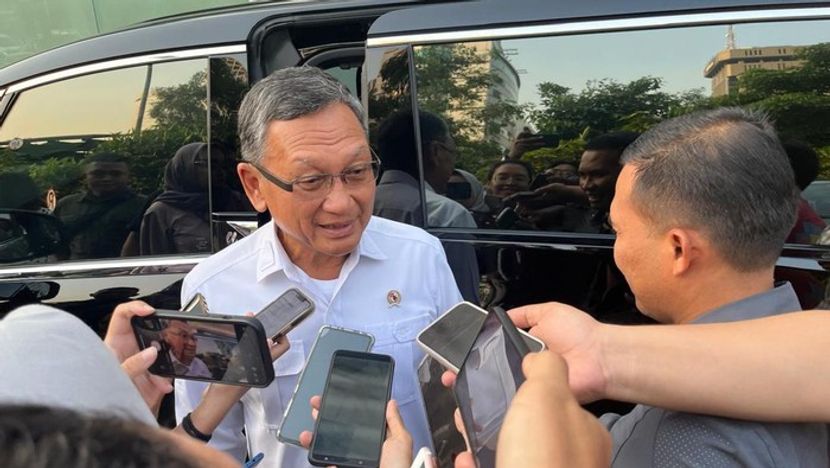
 The government has decided to stop building new nickel refining facilities or smelters that produce low value-added products, specifically rotary kiln electric furnace (RKEF) smelters that produce nickel pig iron (NPI). The Minister of Energy and Mineral Resources stated at the Jakarta Oil and Gas (Migas) Directorate General that the Ministry of Industry has agreed not to add new factories for RKEF and NPI. The government is encouraging the use of minerals to support the electric vehicle industry and new renewable energy. Meanwhile, Indonesia's smelters include bauxite, nickel, iron, and copper. Indonesian smelters must be able to produce intermediate products; several intermediate products are not produced by Indonesian smelters.
This is what the government needs to encourage next so that the industry can develop rapidly. Currently, the government is also evaluating the nickel-based industry, which has low added value. They are assessing that the industry's decline has already begun, so it will no longer develop. After this, new factories cannot be built; construction of new smelters producing low value-added products must first be halted. First, stop; no more can be added. So after that, the government will consider how to guide industrial transformation, while also paying attention to international demand.
The government has decided to stop building new nickel refining facilities or smelters that produce low value-added products, specifically rotary kiln electric furnace (RKEF) smelters that produce nickel pig iron (NPI). The Minister of Energy and Mineral Resources stated at the Jakarta Oil and Gas (Migas) Directorate General that the Ministry of Industry has agreed not to add new factories for RKEF and NPI. The government is encouraging the use of minerals to support the electric vehicle industry and new renewable energy. Meanwhile, Indonesia's smelters include bauxite, nickel, iron, and copper. Indonesian smelters must be able to produce intermediate products; several intermediate products are not produced by Indonesian smelters.
This is what the government needs to encourage next so that the industry can develop rapidly. Currently, the government is also evaluating the nickel-based industry, which has low added value. They are assessing that the industry's decline has already begun, so it will no longer develop. After this, new factories cannot be built; construction of new smelters producing low value-added products must first be halted. First, stop; no more can be added. So after that, the government will consider how to guide industrial transformation, while also paying attention to international demand.
The government has decided to stop building new nickel refining facilities or smelters that produce low value-added products, specifically rotary kiln electric furnace (RKEF) smelters that produce nickel pig iron (NPI). The Minister of Energy and Mineral Resources stated at the Jakarta Oil and Gas (Migas) Directorate General that the Ministry of Industry has agreed not to add new factories for RKEF and NPI. The government is encouraging the use of minerals to support the electric vehicle industry and new renewable energy. Meanwhile, Indonesia's smelters include bauxite, nickel, iron, and copper. Indonesian smelters must be able to produce intermediate products; several intermediate products are not produced by Indonesian smelters.
This is what the government needs to encourage next so that the industry can develop rapidly. Currently, the government is also evaluating the nickel-based industry, which has low added value. They are assessing that the industry's decline has already begun, so it will no longer develop. After this, new factories cannot be built; construction of new smelters producing low value-added products must first be halted. First, stop; no more can be added. So after that, the government will consider how to guide industrial transformation, while also paying attention to international demand.
The government has decided to stop building new nickel refining facilities or smelters that produce low value-added products, specifically rotary kiln electric furnace (RKEF) smelters that produce nickel pig iron (NPI). The Minister of Energy and Mineral Resources stated at the Jakarta Oil and Gas (Migas) Directorate General that the Ministry of Industry has agreed not to add new factories for RKEF and NPI. The government is encouraging the use of minerals to support the electric vehicle industry and new renewable energy. Meanwhile, Indonesia's smelters include bauxite, nickel, iron, and copper. Indonesian smelters must be able to produce intermediate products; several intermediate products are not produced by Indonesian smelters.
This is what the government needs to encourage next so that the industry can develop rapidly. Currently, the government is also evaluating the nickel-based industry, which has low added value. They are assessing that the industry's decline has already begun, so it will no longer develop. After this, new factories cannot be built; construction of new smelters producing low value-added products must first be halted. First, stop; no more can be added. So after that, the government will consider how to guide industrial transformation, while also paying attention to international demand.