
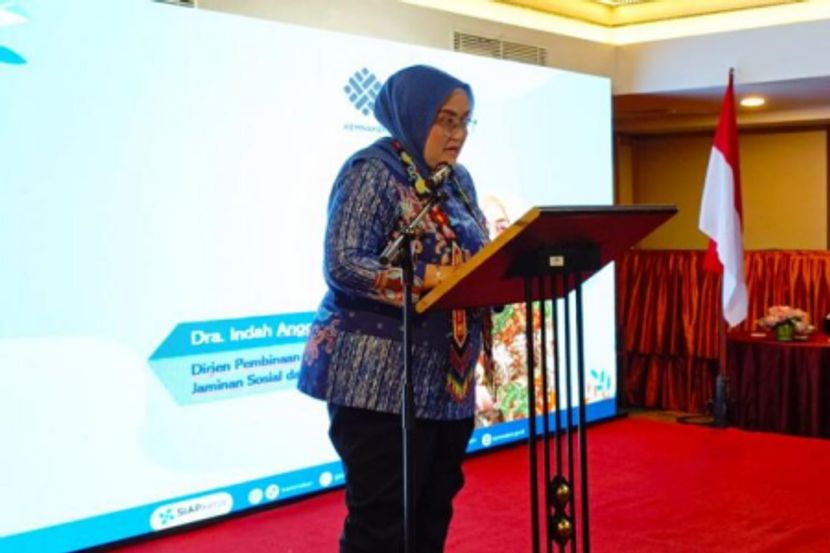
 The Ministry of Manpower (Kemenaker) has responded to the threat of mass layoffs in the food and beverage industry (mamin) caused by government regulations (PP) on health. The Director of Industrial Relations Development and Employment Social Security (PHI-JSK) at the Ministry of Manpower confirmed that, so far, they have not received any reports of layoffs in the food and beverage industry. Even so, she stated that the health program should not be viewed solely from its negative impacts; this regulation is considered a driving force for the food and beverage industry to encourage a healthy lifestyle among people. Do not focus only on the workforce, as there have actually been no reports of layoffs in the food and beverage industry; instead, businesses should restructure to better respond to society's healthy lifestyle choices. The Ministry of Manpower stated that layoffs are a last resort for companies to sustain their business, and if companies are forced to lay off workers, the workers must still retain their rights. They called on workers who are forced to relocate due to business transformation to undergo training, including upskilling and reskilling.
Previously, the government had issued Government Regulation (PP) Number 28 of 2024 implementing Health Law (UU) Number 17 of 2023. Through this regulation, the government plans to impose excise taxes on processed foods with high sugar, salt, and fat content, and to ban advertising, promotions, and sponsorship activities at certain times, places, and for specific target groups. The Chairman of the Indonesian Food and Beverage Producers Association (GAPMMI) predicted that the implementation of excise taxes on sweetened packaged beverages (MBDK) in 2025 will have a significant impact on sales volumes of food and beverage industry products (mamin), potentially leading to massive layoffs in the industrial sector. In this context, he compared the Ministry of Industry's (Kemenperin) calculation that with an excise tax of IDR 1,700 per liter on sugary drinks, product prices could increase by 6-15%. According to his calculation, if the excise tax rate for a 350cc beverage product is IDR 1,700 per liter, the excise tax levied per bottle would be approximately IDR 600. If the average retail price per bottle is IDR 5,000, then the manufacturer's price is around IDR 3,000, meaning an increase of about IDR 600 from IDR 3,000, representing a price increase of 20%. This is very significant because prices of processed foods are sensitive.
The Ministry of Manpower (Kemenaker) has responded to the threat of mass layoffs in the food and beverage industry (mamin) caused by government regulations (PP) on health. The Director of Industrial Relations Development and Employment Social Security (PHI-JSK) at the Ministry of Manpower confirmed that, so far, they have not received any reports of layoffs in the food and beverage industry. Even so, she stated that the health program should not be viewed solely from its negative impacts; this regulation is considered a driving force for the food and beverage industry to encourage a healthy lifestyle among people. Do not focus only on the workforce, as there have actually been no reports of layoffs in the food and beverage industry; instead, businesses should restructure to better respond to society's healthy lifestyle choices. The Ministry of Manpower stated that layoffs are a last resort for companies to sustain their business, and if companies are forced to lay off workers, the workers must still retain their rights. They called on workers who are forced to relocate due to business transformation to undergo training, including upskilling and reskilling.
Previously, the government had issued Government Regulation (PP) Number 28 of 2024 implementing Health Law (UU) Number 17 of 2023. Through this regulation, the government plans to impose excise taxes on processed foods with high sugar, salt, and fat content, and to ban advertising, promotions, and sponsorship activities at certain times, places, and for specific target groups. The Chairman of the Indonesian Food and Beverage Producers Association (GAPMMI) predicted that the implementation of excise taxes on sweetened packaged beverages (MBDK) in 2025 will have a significant impact on sales volumes of food and beverage industry products (mamin), potentially leading to massive layoffs in the industrial sector. In this context, he compared the Ministry of Industry's (Kemenperin) calculation that with an excise tax of IDR 1,700 per liter on sugary drinks, product prices could increase by 6-15%. According to his calculation, if the excise tax rate for a 350cc beverage product is IDR 1,700 per liter, the excise tax levied per bottle would be approximately IDR 600. If the average retail price per bottle is IDR 5,000, then the manufacturer's price is around IDR 3,000, meaning an increase of about IDR 600 from IDR 3,000, representing a price increase of 20%. This is very significant because prices of processed foods are sensitive.
Food and Beverage Industry Hit by Mass Layoffs Due to Indonesian Health Regulations
www.indoent.com
2024-08-28
The Ministry of Manpower (Kemenaker) has responded to the threat of mass layoffs in the food and beverage industry (mamin) caused by government regulations (PP) on health. The Director of Industrial Relations Development and Employment Social Security (PHI-JSK) at the Ministry of Manpower confirmed that, so far, they have not received any reports of layoffs in the food and beverage industry. Even so, she stated that the health program should not be viewed solely from its negative impacts; this regulation is considered a driving force for the food and beverage industry to encourage a healthy lifestyle among people. Do not focus only on the workforce, as in reality there have been no
The Ministry of Manpower (Kemenaker) has responded to the threat of mass layoffs in the food and beverage industry (mamin) caused by government regulations (PP) on health. The Director of Industrial Relations Development and Employment Social Security (PHI-JSK) at the Ministry of Manpower confirmed that, so far, they have not received any reports of layoffs in the food and beverage industry. Even so, she stated that the health program should not be viewed solely from its negative impacts; this regulation is considered a driving force for the food and beverage industry to encourage a healthy lifestyle among people. Do not focus only on the workforce, as there have actually been no reports of layoffs in the food and beverage industry; instead, businesses should restructure to better respond to society's healthy lifestyle choices. The Ministry of Manpower stated that layoffs are a last resort for companies to sustain their business, and if companies are forced to lay off workers, the workers must still retain their rights. They called on workers who are forced to relocate due to business transformation to undergo training, including upskilling and reskilling.
Previously, the government had issued Government Regulation (PP) Number 28 of 2024 implementing Health Law (UU) Number 17 of 2023. Through this regulation, the government plans to impose excise taxes on processed foods with high sugar, salt, and fat content, and to ban advertising, promotions, and sponsorship activities at certain times, places, and for specific target groups. The Chairman of the Indonesian Food and Beverage Producers Association (GAPMMI) predicted that the implementation of excise taxes on sweetened packaged beverages (MBDK) in 2025 will have a significant impact on sales volumes of food and beverage industry products (mamin), potentially leading to massive layoffs in the industrial sector. In this context, he compared the Ministry of Industry's (Kemenperin) calculation that with an excise tax of IDR 1,700 per liter on sugary drinks, product prices could increase by 6-15%. According to his calculation, if the excise tax rate for a 350cc beverage product is IDR 1,700 per liter, the excise tax levied per bottle would be approximately IDR 600. If the average retail price per bottle is IDR 5,000, then the manufacturer's price is around IDR 3,000, meaning an increase of about IDR 600 from IDR 3,000, representing a price increase of 20%. This is very significant because prices of processed foods are sensitive.
Tags
Industry News
Share to
Related Reading
 Industry Flash
Cheap Chinese Plastics Impact Indonesia's Petrochemical Industry, Association Calls for Protection
2026-09-03 Industry News
Investment Heat in Two Key Industrial Parks in Central Java Continues to Rise
2026-08-31 Industry News