


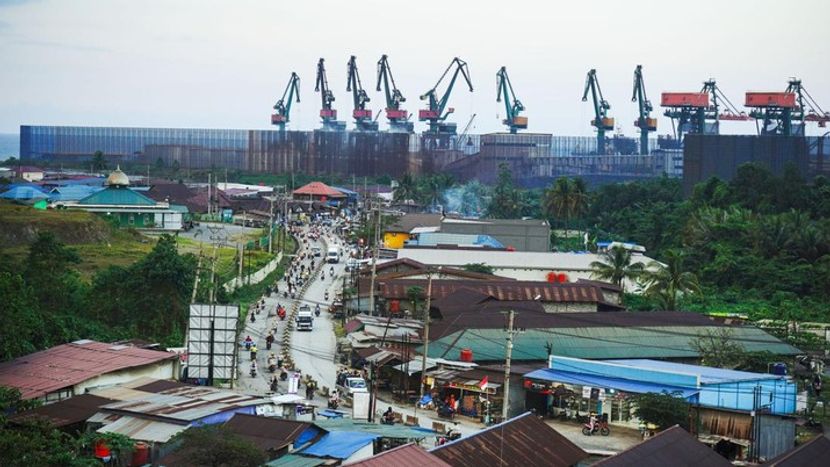
 The Indonesia Morowali Industrial Park (IMIP), inaugurated by President Joko Widodo in 2015, has brought development to the community, especially in the Bahodopi area, one of the sub-districts of Morowali Regency. At least two nickel processing smelters are operating in the area: the first is IMIP and the second is Wanxiang Nickel Indonesia. The IMIP industrial zone itself was designated a National Strategic Project and National Vital Object (Obvitnas) in 2019. Covering an area of approximately 3,000 hectares, it employs over 83,000 workers. The social transformation from an agricultural to an industrial society is very evident in Bahodopi. One example is the surge in population migration from Central Sulawesi and other provinces in Indonesia. The effects of industrial development have led both locals and migrants to seize business opportunities by setting up boarding houses for employees. Meanwhile, others have opened food stalls, laundry services, workshops, and more. The boarding house business in Bahodopi began in 2009. One boarding house owner stated that when PT BDM (Bintang Delapan Mineral) first built boarding houses, they were very simple, with wooden frames, plywood walls, and even thatched roofs made from sago palm leaves. The owner is a local from Bahodopi, Morowali, Central Sulawesi, met at his home last weekend. Over time, the Bahodopi sub-district continued to develop. The boarding house business has grown not only in Fatufia Village but also across 12 villages in Bahodopi sub-district. Moreover, after the first smelter in the PT IMIP area under PT Sulawesi Mining Investment began operations, boarding houses in Bahodopi sprang up like mushrooms in the rainy season. Before the establishment of the smelter, boarding house rental prices were still low, adjusted to employees' incomes at the time, with prices at IDR 300,000 per month.
In 2016, he built a boarding house; there happened to be vacant land and sufficient funds. As soon as construction was completed, it was fully occupied. The prospects were excellent, so he built new houses the following year. The building is permanent, covering 35 square meters, with a monthly rent of IDR 1.5 million. Facilities include cable TV network, dining table, private bathroom, bedroom and living room, and free water and electricity. Later, he added 4 subsidized housing units of 70 square meters each, renting at IDR 2.5 million per month. Apart from the boarding house business, he also runs a guesthouse, kiosk, and photocopy service. There are 10 rooms available daily, with rents starting from IDR 300,000. The monthly revenue from these various businesses is estimated to reach IDR 90 million to IDR 120 million. Another landlord said the first boarding house he built is not far from the Koramil 1311/BS office, with a total of seven rooms. Establishing a boarding house business has good potential and is very promising. Additionally, he owns land spread across four villages; boarding houses have been built near almost all schools, totaling 66 rooms. Rental prices vary, from IDR 850,000 per room to IDR 1.3 million per room. He also owns some land leased for food courts, restaurants, and other venues. They have their own businesses and currently supply food to contractors. In addition, there is a transportation service company with employees. He manages three businesses, with the main turnover coming from the boarding house business. Within a month, the total turnover from his various enterprises can reach hundreds of millions of rupiah. Another local villager said that a good business to develop in the area is boarding houses. He currently rents out 22 rooms, estimating a monthly income of IDR 20 million to IDR 25 million. Room sizes vary from 12 to 20 square meters, with rental prices ranging from IDR 900,000 to IDR 1.5 million per month. Before starting the boarding house business, he supplied fish to PT BDM, earning up to IDR 50 million per month. He used these funds to build boarding houses and now focuses on the boarding house business, as turnover may exceed IDR 50 million.
In fact, establishing a boarding house business can provide local residents with opportunities to earn additional income. This also helps reduce poverty and has a positive long-term impact on local economic activity. The growth of the boarding house business around the IMIP industrial zone is inseparable from the continuous increase in the number of workers in the area, which in turn drives housing demand. The head of the HR department at PT IMIP stated that as of July 2024, the IMIP industrial zone had a total of 83,428 employees, and this number is expected to continue increasing, reaching 90,000 by the end of 2024. An independent survey conducted by PT IMIP's Research and Branding Department as of February 2024 recorded 16,596 boarding house businesses in the surrounding area. This means that if the average price per room is IDR 1 million per month, the local boarding house turnover could reach IDR 16,596,000,000. Research independently conducted by PT IMIP shows significant business growth in the area from 2021 to 2023. In 2021, 4,697 new businesses were added in the area; the following year, 2022, saw 5,034 new businesses, an increase of 6.67% from the previous year. By 2023, the number of businesses in the area increased to 6,617, up 24% from the previous year. In terms of business growth, the 10 most widely engaged businesses in the area include kiosks, non-building food stalls, basic food kiosks or grocery stores, food stalls, non-building beverage stalls, motorcycle and/or car repair shops, clothing stores, credit counters and/or mobile phone service points, laundry services, and kiosks, which also include bank agents without offices, such as BRI-Link.
A motorcycle repair shop owner from Wajo Regency, South Sulawesi, often sees his shop crowded with customers bringing in motorcycles for repair. From an income perspective, opening a repair shop in the area is more promising than in his hometown. A year ago, precisely in February 2023, he moved from Wajo to Bahodopi and immediately opened his repair business. Initially, he wanted to give it a try, especially after the industrial development in Morowali. It turned out that the income was significantly better than in his village. Another migrant resident also saw an opportunity to start a business in the area rather than in his hometown. His motorcycle repair shop already has a branch in the area. For them, less capital is needed to develop a business in Morowali. In terms of land for business locations, land rental prices in Makassar are much higher than in Morowali. And in terms of income, opening a repair shop in Morowali is more promising. Here, about 10 to 30 motorcycles are repaired per day, with a gross monthly profit of IDR 60 million to IDR 70 million. They use this money to pay mechanics' salaries, shop operating costs, and procurement expenses, resulting in a net monthly income of up to IDR 20 million.
The Indonesia Morowali Industrial Park (IMIP), inaugurated by President Joko Widodo in 2015, has brought development to the community, especially in the Bahodopi area, one of the sub-districts of Morowali Regency. At least two nickel processing smelters are operating in the area: the first is IMIP and the second is Wanxiang Nickel Indonesia. The IMIP industrial zone itself was designated a National Strategic Project and National Vital Object (Obvitnas) in 2019. Covering an area of approximately 3,000 hectares, it employs over 83,000 workers. The social transformation from an agricultural to an industrial society is very evident in Bahodopi. One example is the surge in population migration from Central Sulawesi and other provinces in Indonesia. The effects of industrial development have led both locals and migrants to seize business opportunities by setting up boarding houses for employees. Meanwhile, others have opened food stalls, laundry services, workshops, and more. The boarding house business in Bahodopi began in 2009. One boarding house owner stated that when PT BDM (Bintang Delapan Mineral) first built boarding houses, they were very simple, with wooden frames, plywood walls, and even thatched roofs made from sago palm leaves. The owner is a local from Bahodopi, Morowali, Central Sulawesi, met at his home last weekend. Over time, the Bahodopi sub-district continued to develop. The boarding house business has grown not only in Fatufia Village but also across 12 villages in Bahodopi sub-district. Moreover, after the first smelter in the PT IMIP area under PT Sulawesi Mining Investment began operations, boarding houses in Bahodopi sprang up like mushrooms in the rainy season. Before the establishment of the smelter, boarding house rental prices were still low, adjusted to employees' incomes at the time, with prices at IDR 300,000 per month.
In 2016, he built a boarding house; there happened to be vacant land and sufficient funds. As soon as construction was completed, it was fully occupied. The prospects were excellent, so he built new houses the following year. The building is permanent, covering 35 square meters, with a monthly rent of IDR 1.5 million. Facilities include cable TV network, dining table, private bathroom, bedroom and living room, and free water and electricity. Later, he added 4 subsidized housing units of 70 square meters each, renting at IDR 2.5 million per month. Apart from the boarding house business, he also runs a guesthouse, kiosk, and photocopy service. There are 10 rooms available daily, with rents starting from IDR 300,000. The monthly revenue from these various businesses is estimated to reach IDR 90 million to IDR 120 million. Another landlord said the first boarding house he built is not far from the Koramil 1311/BS office, with a total of seven rooms. Establishing a boarding house business has good potential and is very promising. Additionally, he owns land spread across four villages; boarding houses have been built near almost all schools, totaling 66 rooms. Rental prices vary, from IDR 850,000 per room to IDR 1.3 million per room. He also owns some land leased for food courts, restaurants, and other venues. They have their own businesses and currently supply food to contractors. In addition, there is a transportation service company with employees. He manages three businesses, with the main turnover coming from the boarding house business. Within a month, the total turnover from his various enterprises can reach hundreds of millions of rupiah. Another local villager said that a good business to develop in the area is boarding houses. He currently rents out 22 rooms, estimating a monthly income of IDR 20 million to IDR 25 million. Room sizes vary from 12 to 20 square meters, with rental prices ranging from IDR 900,000 to IDR 1.5 million per month. Before starting the boarding house business, he supplied fish to PT BDM, earning up to IDR 50 million per month. He used these funds to build boarding houses and now focuses on the boarding house business, as turnover may exceed IDR 50 million.
In fact, establishing a boarding house business can provide local residents with opportunities to earn additional income. This also helps reduce poverty and has a positive long-term impact on local economic activity. The growth of the boarding house business around the IMIP industrial zone is inseparable from the continuous increase in the number of workers in the area, which in turn drives housing demand. The head of the HR department at PT IMIP stated that as of July 2024, the IMIP industrial zone had a total of 83,428 employees, and this number is expected to continue increasing, reaching 90,000 by the end of 2024. An independent survey conducted by PT IMIP's Research and Branding Department as of February 2024 recorded 16,596 boarding house businesses in the surrounding area. This means that if the average price per room is IDR 1 million per month, the local boarding house turnover could reach IDR 16,596,000,000. Research independently conducted by PT IMIP shows significant business growth in the area from 2021 to 2023. In 2021, 4,697 new businesses were added in the area; the following year, 2022, saw 5,034 new businesses, an increase of 6.67% from the previous year. By 2023, the number of businesses in the area increased to 6,617, up 24% from the previous year. In terms of business growth, the 10 most widely engaged businesses in the area include kiosks, non-building food stalls, basic food kiosks or grocery stores, food stalls, non-building beverage stalls, motorcycle and/or car repair shops, clothing stores, credit counters and/or mobile phone service points, laundry services, and kiosks, which also include bank agents without offices, such as BRI-Link.
A motorcycle repair shop owner from Wajo Regency, South Sulawesi, often sees his shop crowded with customers bringing in motorcycles for repair. From an income perspective, opening a repair shop in the area is more promising than in his hometown. A year ago, precisely in February 2023, he moved from Wajo to Bahodopi and immediately opened his repair business. Initially, he wanted to give it a try, especially after the industrial development in Morowali. It turned out that the income was significantly better than in his village. Another migrant resident also saw an opportunity to start a business in the area rather than in his hometown. His motorcycle repair shop already has a branch in the area. For them, less capital is needed to develop a business in Morowali. In terms of land for business locations, land rental prices in Makassar are much higher than in Morowali. And in terms of income, opening a repair shop in Morowali is more promising. Here, about 10 to 30 motorcycles are repaired per day, with a gross monthly profit of IDR 60 million to IDR 70 million. They use this money to pay mechanics' salaries, shop operating costs, and procurement expenses, resulting in a net monthly income of up to IDR 20 million.
The Indonesia Morowali Industrial Park (IMIP), inaugurated by President Joko Widodo in 2015, has brought development to the community, especially in the Bahodopi area, one of the sub-districts of Morowali Regency. At least two nickel processing smelters are operating in the area: the first is IMIP and the second is Wanxiang Nickel Indonesia. The IMIP industrial zone itself was designated a National Strategic Project and National Vital Object (Obvitnas) in 2019. Covering an area of approximately 3,000 hectares, it employs over 83,000 workers. The social transformation from an agricultural to an industrial society is very evident in Bahodopi. One example is the surge in population migration from Central Sulawesi and other provinces in Indonesia. The effects of industrial development have led both locals and migrants to seize business opportunities by setting up boarding houses for employees. Meanwhile, others have opened food stalls, laundry services, workshops, and more. The boarding house business in Bahodopi began in 2009. One boarding house owner stated that when PT BDM (Bintang Delapan Mineral) first built boarding houses, they were very simple, with wooden frames, plywood walls, and even thatched roofs made from sago palm leaves. The owner is a local from Bahodopi, Morowali, Central Sulawesi, met at his home last weekend. Over time, the Bahodopi sub-district continued to develop. The boarding house business has grown not only in Fatufia Village but also across 12 villages in Bahodopi sub-district. Moreover, after the first smelter in the PT IMIP area under PT Sulawesi Mining Investment began operations, boarding houses in Bahodopi sprang up like mushrooms in the rainy season. Before the establishment of the smelter, boarding house rental prices were still low, adjusted to employees' incomes at the time, with prices at IDR 300,000 per month.
In 2016, he built a boarding house; there happened to be vacant land and sufficient funds. As soon as construction was completed, it was fully occupied. The prospects were excellent, so he built new houses the following year. The building is permanent, covering 35 square meters, with a monthly rent of IDR 1.5 million. Facilities include cable TV network, dining table, private bathroom, bedroom and living room, and free water and electricity. Later, he added 4 subsidized housing units of 70 square meters each, renting at IDR 2.5 million per month. Apart from the boarding house business, he also runs a guesthouse, kiosk, and photocopy service. There are 10 rooms available daily, with rents starting from IDR 300,000. The monthly revenue from these various businesses is estimated to reach IDR 90 million to IDR 120 million. Another landlord said the first boarding house he built is not far from the Koramil 1311/BS office, with a total of seven rooms. Establishing a boarding house business has good potential and is very promising. Additionally, he owns land spread across four villages; boarding houses have been built near almost all schools, totaling 66 rooms. Rental prices vary, from IDR 850,000 per room to IDR 1.3 million per room. He also owns some land leased for food courts, restaurants, and other venues. They have their own businesses and currently supply food to contractors. In addition, there is a transportation service company with employees. He manages three businesses, with the main turnover coming from the boarding house business. Within a month, the total turnover from his various enterprises can reach hundreds of millions of rupiah. Another local villager said that a good business to develop in the area is boarding houses. He currently rents out 22 rooms, estimating a monthly income of IDR 20 million to IDR 25 million. Room sizes vary from 12 to 20 square meters, with rental prices ranging from IDR 900,000 to IDR 1.5 million per month. Before starting the boarding house business, he supplied fish to PT BDM, earning up to IDR 50 million per month. He used these funds to build boarding houses and now focuses on the boarding house business, as turnover may exceed IDR 50 million.
In fact, establishing a boarding house business can provide local residents with opportunities to earn additional income. This also helps reduce poverty and has a positive long-term impact on local economic activity. The growth of the boarding house business around the IMIP industrial zone is inseparable from the continuous increase in the number of workers in the area, which in turn drives housing demand. The head of the HR department at PT IMIP stated that as of July 2024, the IMIP industrial zone had a total of 83,428 employees, and this number is expected to continue increasing, reaching 90,000 by the end of 2024. An independent survey conducted by PT IMIP's Research and Branding Department as of February 2024 recorded 16,596 boarding house businesses in the surrounding area. This means that if the average price per room is IDR 1 million per month, the local boarding house turnover could reach IDR 16,596,000,000. Research independently conducted by PT IMIP shows significant business growth in the area from 2021 to 2023. In 2021, 4,697 new businesses were added in the area; the following year, 2022, saw 5,034 new businesses, an increase of 6.67% from the previous year. By 2023, the number of businesses in the area increased to 6,617, up 24% from the previous year. In terms of business growth, the 10 most widely engaged businesses in the area include kiosks, non-building food stalls, basic food kiosks or grocery stores, food stalls, non-building beverage stalls, motorcycle and/or car repair shops, clothing stores, credit counters and/or mobile phone service points, laundry services, and kiosks, which also include bank agents without offices, such as BRI-Link.
A motorcycle repair shop owner from Wajo Regency, South Sulawesi, often sees his shop crowded with customers bringing in motorcycles for repair. From an income perspective, opening a repair shop in the area is more promising than in his hometown. A year ago, precisely in February 2023, he moved from Wajo to Bahodopi and immediately opened his repair business. Initially, he wanted to give it a try, especially after the industrial development in Morowali. It turned out that the income was significantly better than in his village. Another migrant resident also saw an opportunity to start a business in the area rather than in his hometown. His motorcycle repair shop already has a branch in the area. For them, less capital is needed to develop a business in Morowali. In terms of land for business locations, land rental prices in Makassar are much higher than in Morowali. And in terms of income, opening a repair shop in Morowali is more promising. Here, about 10 to 30 motorcycles are repaired per day, with a gross monthly profit of IDR 60 million to IDR 70 million. They use this money to pay mechanics' salaries, shop operating costs, and procurement expenses, resulting in a net monthly income of up to IDR 20 million.
The Indonesia Morowali Industrial Park (IMIP), inaugurated by President Joko Widodo in 2015, has brought development to the community, especially in the Bahodopi area, one of the sub-districts of Morowali Regency. At least two nickel processing smelters are operating in the area: the first is IMIP and the second is Wanxiang Nickel Indonesia. The IMIP industrial zone itself was designated a National Strategic Project and National Vital Object (Obvitnas) in 2019. Covering an area of approximately 3,000 hectares, it employs over 83,000 workers. The social transformation from an agricultural to an industrial society is very evident in Bahodopi. One example is the surge in population migration from Central Sulawesi and other provinces in Indonesia. The effects of industrial development have led both locals and migrants to seize business opportunities by setting up boarding houses for employees. Meanwhile, others have opened food stalls, laundry services, workshops, and more. The boarding house business in Bahodopi began in 2009. One boarding house owner stated that when PT BDM (Bintang Delapan Mineral) first built boarding houses, they were very simple, with wooden frames, plywood walls, and even thatched roofs made from sago palm leaves. The owner is a local from Bahodopi, Morowali, Central Sulawesi, met at his home last weekend. Over time, the Bahodopi sub-district continued to develop. The boarding house business has grown not only in Fatufia Village but also across 12 villages in Bahodopi sub-district. Moreover, after the first smelter in the PT IMIP area under PT Sulawesi Mining Investment began operations, boarding houses in Bahodopi sprang up like mushrooms in the rainy season. Before the establishment of the smelter, boarding house rental prices were still low, adjusted to employees' incomes at the time, with prices at IDR 300,000 per month.
In 2016, he built a boarding house; there happened to be vacant land and sufficient funds. As soon as construction was completed, it was fully occupied. The prospects were excellent, so he built new houses the following year. The building is permanent, covering 35 square meters, with a monthly rent of IDR 1.5 million. Facilities include cable TV network, dining table, private bathroom, bedroom and living room, and free water and electricity. Later, he added 4 subsidized housing units of 70 square meters each, renting at IDR 2.5 million per month. Apart from the boarding house business, he also runs a guesthouse, kiosk, and photocopy service. There are 10 rooms available daily, with rents starting from IDR 300,000. The monthly revenue from these various businesses is estimated to reach IDR 90 million to IDR 120 million. Another landlord said the first boarding house he built is not far from the Koramil 1311/BS office, with a total of seven rooms. Establishing a boarding house business has good potential and is very promising. Additionally, he owns land spread across four villages; boarding houses have been built near almost all schools, totaling 66 rooms. Rental prices vary, from IDR 850,000 per room to IDR 1.3 million per room. He also owns some land leased for food courts, restaurants, and other venues. They have their own businesses and currently supply food to contractors. In addition, there is a transportation service company with employees. He manages three businesses, with the main turnover coming from the boarding house business. Within a month, the total turnover from his various enterprises can reach hundreds of millions of rupiah. Another local villager said that a good business to develop in the area is boarding houses. He currently rents out 22 rooms, estimating a monthly income of IDR 20 million to IDR 25 million. Room sizes vary from 12 to 20 square meters, with rental prices ranging from IDR 900,000 to IDR 1.5 million per month. Before starting the boarding house business, he supplied fish to PT BDM, earning up to IDR 50 million per month. He used these funds to build boarding houses and now focuses on the boarding house business, as turnover may exceed IDR 50 million.
In fact, establishing a boarding house business can provide local residents with opportunities to earn additional income. This also helps reduce poverty and has a positive long-term impact on local economic activity. The growth of the boarding house business around the IMIP industrial zone is inseparable from the continuous increase in the number of workers in the area, which in turn drives housing demand. The head of the HR department at PT IMIP stated that as of July 2024, the IMIP industrial zone had a total of 83,428 employees, and this number is expected to continue increasing, reaching 90,000 by the end of 2024. An independent survey conducted by PT IMIP's Research and Branding Department as of February 2024 recorded 16,596 boarding house businesses in the surrounding area. This means that if the average price per room is IDR 1 million per month, the local boarding house turnover could reach IDR 16,596,000,000. Research independently conducted by PT IMIP shows significant business growth in the area from 2021 to 2023. In 2021, 4,697 new businesses were added in the area; the following year, 2022, saw 5,034 new businesses, an increase of 6.67% from the previous year. By 2023, the number of businesses in the area increased to 6,617, up 24% from the previous year. In terms of business growth, the 10 most widely engaged businesses in the area include kiosks, non-building food stalls, basic food kiosks or grocery stores, food stalls, non-building beverage stalls, motorcycle and/or car repair shops, clothing stores, credit counters and/or mobile phone service points, laundry services, and kiosks, which also include bank agents without offices, such as BRI-Link.
A motorcycle repair shop owner from Wajo Regency, South Sulawesi, often sees his shop crowded with customers bringing in motorcycles for repair. From an income perspective, opening a repair shop in the area is more promising than in his hometown. A year ago, precisely in February 2023, he moved from Wajo to Bahodopi and immediately opened his repair business. Initially, he wanted to give it a try, especially after the industrial development in Morowali. It turned out that the income was significantly better than in his village. Another migrant resident also saw an opportunity to start a business in the area rather than in his hometown. His motorcycle repair shop already has a branch in the area. For them, less capital is needed to develop a business in Morowali. In terms of land for business locations, land rental prices in Makassar are much higher than in Morowali. And in terms of income, opening a repair shop in Morowali is more promising. Here, about 10 to 30 motorcycles are repaired per day, with a gross monthly profit of IDR 60 million to IDR 70 million. They use this money to pay mechanics' salaries, shop operating costs, and procurement expenses, resulting in a net monthly income of up to IDR 20 million.