
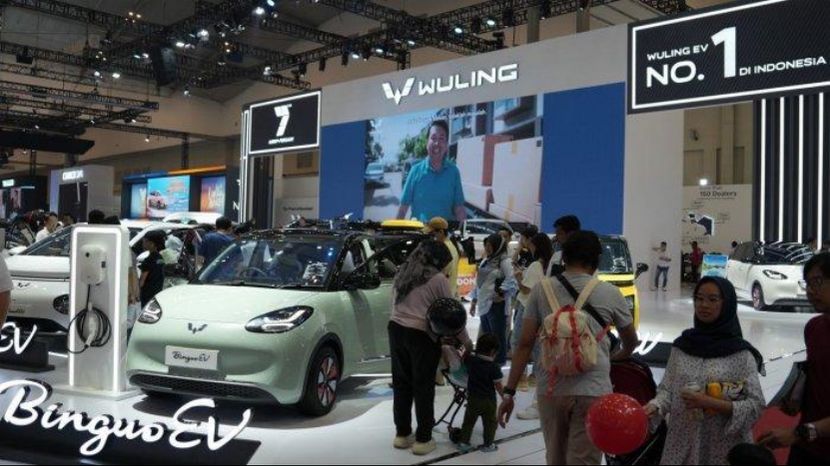
 The government plans to increase the use of electric vehicles at increasingly affordable prices, while traditional vehicles using gasoline (BBM) will be restricted due to a sales ban. The Coordinating Ministry for Maritime and Investment Affairs (Kemenko Marves) stated that it is formulating a ban on the sale of traditional vehicles based on internal combustion engines (ICE) using gasoline. The Deputy for Infrastructure and Transportation Coordination at Marves said that banning the sale of gasoline vehicles will be part of efforts to accelerate the adoption of electric vehicles or battery electric vehicles (BEV). They continue to work on formulating a policy mechanism to ban the sale of traditional vehicles. In this context, the government targets that by 2045, no new internal combustion engine vehicles will be sold in the domestic market. On the surface, the plan to stop selling traditional vehicles is quite challenging, although the remaining period for this policy is only 21 years, because most new cars sold in the Indonesian market are still powered by fossil fuels. Previously, the Coordinating Minister for Economic Affairs revealed that the policies implemented by the government have successfully attracted investor interest in electric vehicle development. The advancement of electric vehicle technology not only reflects global trends but is also a key element in the transition to a green and sustainable economy. Electric vehicle (EV) technology is undergoing very rapid development, especially in battery efficiency and charging networks. In the battery sector, there are the latest innovations, such as sodium-ion technology, which is currently in the further research stage. To support investment in the electric vehicle industry, the government has introduced various incentive policies, including the elimination of import duties on imported four-wheeled electric vehicles (BEV), luxury goods sales tax (PPnBM) incentives for four-wheeled electric vehicles, and a IDR 7 million incentive program for electric motorcycles. This policy has proven effective, with Gaikindo data showing rapid growth in Indonesian EV sales. From January to July 2024, EV sales reached 17,826 units, more than doubling compared to the previous year.
Several car manufacturers claim that before September, they will offer discount programs or significant discounts for battery electric vehicle (BEV) products. Wuling, Chery, and Hyundai are offering discounts on several of their products. These products include the Wuling Air EV, Wuling Binguo EV, Wuling Cloud EV, Omoda E5, and Hyundai Ioniq 5. Meanwhile, discounts offered range from IDR 15 million to IDR 60 million depending on the model. The first offer comes from Chery, with its first pure electric vehicle and flagship product, the Omoda E5. The Omoda E5 starts at IDR 419 million, with a discount of IDR 15 million. If purchasing the RZ (non-electric) Omoda 5, the discount could be up to IDR 40 million. The price reduction is not much different from the Ioniq 5, one of the best-selling pure electric vehicles in Indonesia since its launch last year, with discounts reaching IDR 20 million. However, the discount only applies to the Signature Long Range trim level, as the Prime standard range is key. Wuling offers significant discounts on three different electric vehicle series: Air EV IDR 56 million, Binguo EV IDR 33 million to IDR 60 million, and Cloud EV IDR 38 million. According to records, the delivery time for all Air EV models is now about one month, as car inventory at dealerships is nearly depleted. The Binguo also depends on the model; the long-range 333 km version has a discount of IDR 33 million, while the premium range 410 km version is priced from IDR 408 million to IDR 342 million (IDR 60 million discount).
The government plans to increase the use of electric vehicles at increasingly affordable prices, while traditional vehicles using gasoline (BBM) will be restricted due to a sales ban. The Coordinating Ministry for Maritime and Investment Affairs (Kemenko Marves) stated that it is formulating a ban on the sale of traditional vehicles based on internal combustion engines (ICE) using gasoline. The Deputy for Infrastructure and Transportation Coordination at Marves said that banning the sale of gasoline vehicles will be part of efforts to accelerate the adoption of electric vehicles or battery electric vehicles (BEV). They continue to work on formulating a policy mechanism to ban the sale of traditional vehicles. In this context, the government targets that by 2045, no new internal combustion engine vehicles will be sold in the domestic market. On the surface, the plan to stop selling traditional vehicles is quite challenging, although the remaining period for this policy is only 21 years, because most new cars sold in the Indonesian market are still powered by fossil fuels. Previously, the Coordinating Minister for Economic Affairs revealed that the policies implemented by the government have successfully attracted investor interest in electric vehicle development. The advancement of electric vehicle technology not only reflects global trends but is also a key element in the transition to a green and sustainable economy. Electric vehicle (EV) technology is undergoing very rapid development, especially in battery efficiency and charging networks. In the battery sector, there are the latest innovations, such as sodium-ion technology, which is currently in the further research stage. To support investment in the electric vehicle industry, the government has introduced various incentive policies, including the elimination of import duties on imported four-wheeled electric vehicles (BEV), luxury goods sales tax (PPnBM) incentives for four-wheeled electric vehicles, and a IDR 7 million incentive program for electric motorcycles. This policy has proven effective, with Gaikindo data showing rapid growth in Indonesian EV sales. From January to July 2024, EV sales reached 17,826 units, more than doubling compared to the previous year.
Several car manufacturers claim that before September, they will offer discount programs or significant discounts for battery electric vehicle (BEV) products. Wuling, Chery, and Hyundai are offering discounts on several of their products. These products include the Wuling Air EV, Wuling Binguo EV, Wuling Cloud EV, Omoda E5, and Hyundai Ioniq 5. Meanwhile, discounts offered range from IDR 15 million to IDR 60 million depending on the model. The first offer comes from Chery, with its first pure electric vehicle and flagship product, the Omoda E5. The Omoda E5 starts at IDR 419 million, with a discount of IDR 15 million. If purchasing the RZ (non-electric) Omoda 5, the discount could be up to IDR 40 million. The price reduction is not much different from the Ioniq 5, one of the best-selling pure electric vehicles in Indonesia since its launch last year, with discounts reaching IDR 20 million. However, the discount only applies to the Signature Long Range trim level, as the Prime standard range is key. Wuling offers significant discounts on three different electric vehicle series: Air EV IDR 56 million, Binguo EV IDR 33 million to IDR 60 million, and Cloud EV IDR 38 million. According to records, the delivery time for all Air EV models is now about one month, as car inventory at dealerships is nearly depleted. The Binguo also depends on the model; the long-range 333 km version has a discount of IDR 33 million, while the premium range 410 km version is priced from IDR 408 million to IDR 342 million (IDR 60 million discount).
Indonesia Plans to Ban Sales of Fuel Vehicles by 2045
www.indoent.com
2024-09-27
The government plans to increase the use of electric vehicles at increasingly affordable prices, while traditional vehicles using gasoline (BBM) will be restricted due to a sales ban. The Coordinating Ministry for Maritime and Investment Affairs (Kemenko Marves) stated that it is formulating a ban on the sale of traditional vehicles based on internal combustion engines (ICE) using gasoline. The Deputy for Infrastructure and Transportation Coordination at Marves said that banning the sale of gasoline vehicles will be part of efforts to accelerate the adoption of electric vehicles or battery electric vehicles (BEV). They continue to work on formulating a policy mechanism to ban the sale of traditional vehicles.
The government plans to increase the use of electric vehicles at increasingly affordable prices, while traditional vehicles using gasoline (BBM) will be restricted due to a sales ban. The Coordinating Ministry for Maritime and Investment Affairs (Kemenko Marves) stated that it is formulating a ban on the sale of traditional vehicles based on internal combustion engines (ICE) using gasoline. The Deputy for Infrastructure and Transportation Coordination at Marves said that banning the sale of gasoline vehicles will be part of efforts to accelerate the adoption of electric vehicles or battery electric vehicles (BEV). They continue to work on formulating a policy mechanism to ban the sale of traditional vehicles. In this context, the government targets that by 2045, no new internal combustion engine vehicles will be sold in the domestic market. On the surface, the plan to stop selling traditional vehicles is quite challenging, although the remaining period for this policy is only 21 years, because most new cars sold in the Indonesian market are still powered by fossil fuels. Previously, the Coordinating Minister for Economic Affairs revealed that the policies implemented by the government have successfully attracted investor interest in electric vehicle development. The advancement of electric vehicle technology not only reflects global trends but is also a key element in the transition to a green and sustainable economy. Electric vehicle (EV) technology is undergoing very rapid development, especially in battery efficiency and charging networks. In the battery sector, there are the latest innovations, such as sodium-ion technology, which is currently in the further research stage. To support investment in the electric vehicle industry, the government has introduced various incentive policies, including the elimination of import duties on imported four-wheeled electric vehicles (BEV), luxury goods sales tax (PPnBM) incentives for four-wheeled electric vehicles, and a IDR 7 million incentive program for electric motorcycles. This policy has proven effective, with Gaikindo data showing rapid growth in Indonesian EV sales. From January to July 2024, EV sales reached 17,826 units, more than doubling compared to the previous year.
Several car manufacturers claim that before September, they will offer discount programs or significant discounts for battery electric vehicle (BEV) products. Wuling, Chery, and Hyundai are offering discounts on several of their products. These products include the Wuling Air EV, Wuling Binguo EV, Wuling Cloud EV, Omoda E5, and Hyundai Ioniq 5. Meanwhile, discounts offered range from IDR 15 million to IDR 60 million depending on the model. The first offer comes from Chery, with its first pure electric vehicle and flagship product, the Omoda E5. The Omoda E5 starts at IDR 419 million, with a discount of IDR 15 million. If purchasing the RZ (non-electric) Omoda 5, the discount could be up to IDR 40 million. The price reduction is not much different from the Ioniq 5, one of the best-selling pure electric vehicles in Indonesia since its launch last year, with discounts reaching IDR 20 million. However, the discount only applies to the Signature Long Range trim level, as the Prime standard range is key. Wuling offers significant discounts on three different electric vehicle series: Air EV IDR 56 million, Binguo EV IDR 33 million to IDR 60 million, and Cloud EV IDR 38 million. According to records, the delivery time for all Air EV models is now about one month, as car inventory at dealerships is nearly depleted. The Binguo also depends on the model; the long-range 333 km version has a discount of IDR 33 million, while the premium range 410 km version is priced from IDR 408 million to IDR 342 million (IDR 60 million discount).
Tags
Policy Information
Share to
Related Reading
 Policy Information
Chinese Mainland and Hong Kong Enterprises Eligible for Relaxed Foreign Exchange Deposit Rules in Indonesia
2026-08-30 Policy Information
China-Indonesia Multi-Sector Strategic Cooperation Upgrade Blueprint
2026-08-23 Policy Information