
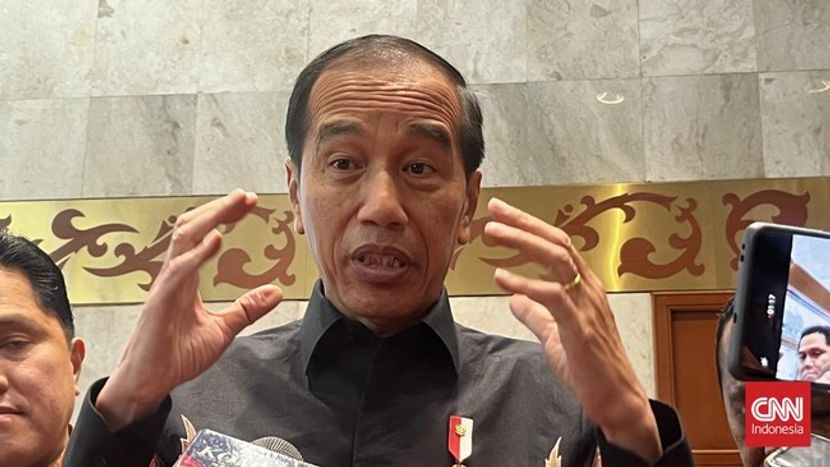
 PT Freeport Indonesia (PTFI) is preparing to commence initial production of cathode copper at its new processing and refining facility (smelter) in Gresik, East Java (Jatim). The production of cathode copper will mark an important milestone in Indonesia's downstream natural resource industry. The world's largest single-line smelter has an annual copper concentrate refining capacity of up to 1.7 million tons. Combined with the already operational first smelter, PT Smelting, the two companies will refine 3 million tons of copper concentrate annually, producing approximately 1 million tons of cathode copper, 50 tons of gold, and 220 tons of silver annually. The President Director of PT Freeport Indonesia (PTFI) stated that the plan is for President Joko Widodo to inaugurate the first batch of cathode copper production, which is undoubtedly a sign of the government's full support for the development of the domestic processing industry. The copper concentrate smelter located at JIIPE is one of the National Strategic Projects, with an investment of USD 3.7 billion or IDR 58 trillion. Once the smelter is operational, PTFI will also find buyers or off-takers that can absorb 100,000 tons of cathode copper annually, with the buyer being their neighbor, PT Hailiang Group. This company has already requested approximately 100,000 tons per year, hoping that other derivative industries can also replace cathode copper. Meanwhile, in terms of gold production, PT Aneka Tambang Tbk (ANTM) is reportedly committed to producing 20 tons of gold. The Minister of Energy and Mineral Resources (ESDM) stated that the world's largest single-line copper concentrate plant has been completed, and the first cathode copper production line will be directly launched by President Joko Widodo. It will be inaugurated by President Joko Widodo. For Freeport, the concentrate extracted from Timika amounts to 3 million tons.
The Coordinating Minister for Economic Affairs believes that the construction of the Freeport Indonesia smelter, covering an area of 100 hectares, is an extraordinary achievement. This project demonstrates Freeport Indonesia's capability and commitment to large-scale development of the domestic mineral processing industry. This is part of the IUPK agreement, and today's results are the best, as they see that in the next 3-4 years, no one will be able to build such a smelter anywhere on a 100-hectare plot of land. The construction of the Gresik Freeport smelter is timely and will have a significant impact on Indonesia's industrial downstream sector. This is a large number, and downstream is certainly important, especially for the power generation industry, and then in the electric vehicle sector, the transition from internal combustion engines (ICE) to electric vehicles (EV). The presence of this smelter brings at least several positive impacts. The President Director of PT Freeport Indonesia stated that the Manyar smelter has accumulated approximately 40,000 workers during construction; once operational, the number of workers required will indeed decrease. When the smelter is in commercial operation, the required workforce will be around 2,000, with priority given to local Gresik residents. In terms of construction, the cumulative workforce reached 40,000 people. The Freeport smelter in Gresik has enormous potential to encourage further investment in the downstream copper industry. One of the main products of this smelter is cathode copper, and they have already found buyers or off-takers that can absorb 100,000 tons of cathode copper annually from the smelter, with the buyer being their neighbor, PT Hailiang Group. Cathode copper itself is an important raw material for various industries, such as the cable industry in the electric vehicle (EV) ecosystem, electronics, electrical equipment manufacturing, and the automotive industry. In addition to absorbing labor and encouraging new investment, this copper smelter will make a significant contribution to the regional and national economy.
PT Freeport Indonesia (PTFI) is preparing to commence initial production of cathode copper at its new processing and refining facility (smelter) in Gresik, East Java (Jatim). The production of cathode copper will mark an important milestone in Indonesia's downstream natural resource industry. The world's largest single-line smelter has an annual copper concentrate refining capacity of up to 1.7 million tons. Combined with the already operational first smelter, PT Smelting, the two companies will refine 3 million tons of copper concentrate annually, producing approximately 1 million tons of cathode copper, 50 tons of gold, and 220 tons of silver annually. The President Director of PT Freeport Indonesia (PTFI) stated that the plan is for President Joko Widodo to inaugurate the first batch of cathode copper production, which is undoubtedly a sign of the government's full support for the development of the domestic processing industry. The copper concentrate smelter located at JIIPE is one of the National Strategic Projects, with an investment of USD 3.7 billion or IDR 58 trillion. Once the smelter is operational, PTFI will also find buyers or off-takers that can absorb 100,000 tons of cathode copper annually, with the buyer being their neighbor, PT Hailiang Group. This company has already requested approximately 100,000 tons per year, hoping that other derivative industries can also replace cathode copper. Meanwhile, in terms of gold production, PT Aneka Tambang Tbk (ANTM) is reportedly committed to producing 20 tons of gold. The Minister of Energy and Mineral Resources (ESDM) stated that the world's largest single-line copper concentrate plant has been completed, and the first cathode copper production line will be directly launched by President Joko Widodo. It will be inaugurated by President Joko Widodo. For Freeport, the concentrate extracted from Timika amounts to 3 million tons.
The Coordinating Minister for Economic Affairs believes that the construction of the Freeport Indonesia smelter, covering an area of 100 hectares, is an extraordinary achievement. This project demonstrates Freeport Indonesia's capability and commitment to large-scale development of the domestic mineral processing industry. This is part of the IUPK agreement, and today's results are the best, as they see that in the next 3-4 years, no one will be able to build such a smelter anywhere on a 100-hectare plot of land. The construction of the Gresik Freeport smelter is timely and will have a significant impact on Indonesia's industrial downstream sector. This is a large number, and downstream is certainly important, especially for the power generation industry, and then in the electric vehicle sector, the transition from internal combustion engines (ICE) to electric vehicles (EV). The presence of this smelter brings at least several positive impacts. The President Director of PT Freeport Indonesia stated that the Manyar smelter has accumulated approximately 40,000 workers during construction; once operational, the number of workers required will indeed decrease. When the smelter is in commercial operation, the required workforce will be around 2,000, with priority given to local Gresik residents. In terms of construction, the cumulative workforce reached 40,000 people. The Freeport smelter in Gresik has enormous potential to encourage further investment in the downstream copper industry. One of the main products of this smelter is cathode copper, and they have already found buyers or off-takers that can absorb 100,000 tons of cathode copper annually from the smelter, with the buyer being their neighbor, PT Hailiang Group. Cathode copper itself is an important raw material for various industries, such as the cable industry in the electric vehicle (EV) ecosystem, electronics, electrical equipment manufacturing, and the automotive industry. In addition to absorbing labor and encouraging new investment, this copper smelter will make a significant contribution to the regional and national economy.
World's Largest Single-Line Copper Smelter Begins Initial Production
www.indoent.com
2024-09-29
PT Freeport Indonesia (PTFI) is preparing to commence initial production of cathode copper at its new processing and refining facility (smelter) in Gresik, East Java (Jatim). The production of cathode copper will mark an important milestone in Indonesia's downstream natural resource industry. The world's largest single-line smelter has an annual copper concentrate refining capacity of up to 1.7 million tons. Combined with the already operational first smelter, PT Smelting, the two companies will refine 3 million tons of copper concentrate annually, producing approximately 1 million tons of cathode copper, 50 tons of gold, and 220 tons of silver annually.
PT Freeport Indonesia (PTFI) is preparing to commence initial production of cathode copper at its new processing and refining facility (smelter) in Gresik, East Java (Jatim). The production of cathode copper will mark an important milestone in Indonesia's downstream natural resource industry. The world's largest single-line smelter has an annual copper concentrate refining capacity of up to 1.7 million tons. Combined with the already operational first smelter, PT Smelting, the two companies will refine 3 million tons of copper concentrate annually, producing approximately 1 million tons of cathode copper, 50 tons of gold, and 220 tons of silver annually. The President Director of PT Freeport Indonesia (PTFI) stated that the plan is for President Joko Widodo to inaugurate the first batch of cathode copper production, which is undoubtedly a sign of the government's full support for the development of the domestic processing industry. The copper concentrate smelter located at JIIPE is one of the National Strategic Projects, with an investment of USD 3.7 billion or IDR 58 trillion. Once the smelter is operational, PTFI will also find buyers or off-takers that can absorb 100,000 tons of cathode copper annually, with the buyer being their neighbor, PT Hailiang Group. This company has already requested approximately 100,000 tons per year, hoping that other derivative industries can also replace cathode copper. Meanwhile, in terms of gold production, PT Aneka Tambang Tbk (ANTM) is reportedly committed to producing 20 tons of gold. The Minister of Energy and Mineral Resources (ESDM) stated that the world's largest single-line copper concentrate plant has been completed, and the first cathode copper production line will be directly launched by President Joko Widodo. It will be inaugurated by President Joko Widodo. For Freeport, the concentrate extracted from Timika amounts to 3 million tons.
The Coordinating Minister for Economic Affairs believes that the construction of the Freeport Indonesia smelter, covering an area of 100 hectares, is an extraordinary achievement. This project demonstrates Freeport Indonesia's capability and commitment to large-scale development of the domestic mineral processing industry. This is part of the IUPK agreement, and today's results are the best, as they see that in the next 3-4 years, no one will be able to build such a smelter anywhere on a 100-hectare plot of land. The construction of the Gresik Freeport smelter is timely and will have a significant impact on Indonesia's industrial downstream sector. This is a large number, and downstream is certainly important, especially for the power generation industry, and then in the electric vehicle sector, the transition from internal combustion engines (ICE) to electric vehicles (EV). The presence of this smelter brings at least several positive impacts. The President Director of PT Freeport Indonesia stated that the Manyar smelter has accumulated approximately 40,000 workers during construction; once operational, the number of workers required will indeed decrease. When the smelter is in commercial operation, the required workforce will be around 2,000, with priority given to local Gresik residents. In terms of construction, the cumulative workforce reached 40,000 people. The Freeport smelter in Gresik has enormous potential to encourage further investment in the downstream copper industry. One of the main products of this smelter is cathode copper, and they have already found buyers or off-takers that can absorb 100,000 tons of cathode copper annually from the smelter, with the buyer being their neighbor, PT Hailiang Group. Cathode copper itself is an important raw material for various industries, such as the cable industry in the electric vehicle (EV) ecosystem, electronics, electrical equipment manufacturing, and the automotive industry. In addition to absorbing labor and encouraging new investment, this copper smelter will make a significant contribution to the regional and national economy.
Tags
Industry News
Share to
Related Reading
 Industry Flash
Cheap Chinese Plastics Impact Indonesia's Petrochemical Industry, Association Calls for Protection
2026-09-03 Industry News
Investment Heat in Two Key Industrial Parks in Central Java Continues to Rise
2026-08-31 Industry News