


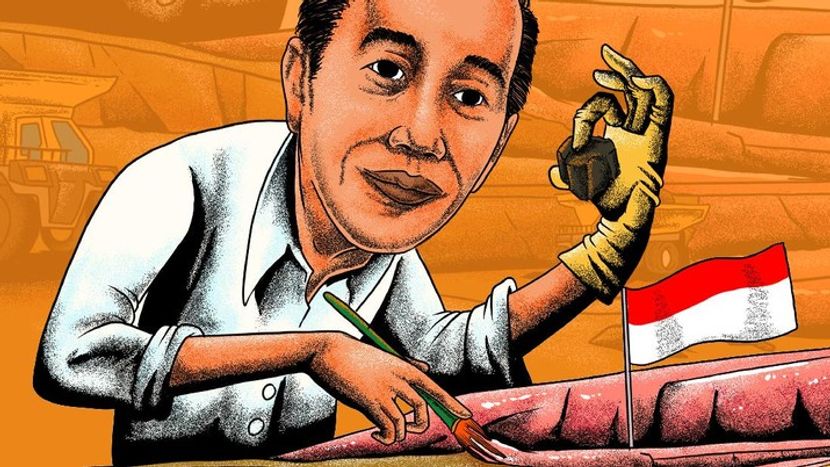
 One of the achievements of the Jokowi administration is the downstream mining industry. This program has become Indonesia's backbone and has successfully increased the added value from raw mining production to finished goods. Therefore, it is understandable that Indonesia has ultimately reaped a windfall several times over from this downstream project. Now nickel exports are valued at US$34 billion, jumping from around IDR 33 trillion to approximately IDR 510 trillion. The success of domestic nickel downstream stems from the ban on nickel ore exports abroad since 2020, which has not been without challenges. This export ban policy has also faced international resistance, including a challenge from the European Union (EU) at the World Trade Organization. Although Indonesia lost the case, the country is a sovereign nation, and national interests come first; the government cannot be dictated to by anyone. What matters most now is that Indonesia has begun to develop the nickel industry into a large ecosystem for electric vehicles (EVs), and the dream of building a strong, integrated EV ecosystem is starting to be realized one by one. According to the Ministry of Energy and Mineral Resources (ESDM), the total number of nickel processing and refining facilities (smelters) in Indonesia, whether operational, under construction, or planned, has reached 116, as stated by the Special Staff to the Minister of Energy and Mineral Resources for Accelerating Mineral and Coal Governance.
Indonesia has 97 smelters using pyrometallurgical processes, or those processing high-grade nickel (saprolite), and 19 smelters using hydrometallurgical processes that utilize low-grade nickel (limonite). To date, the total number of available smelters is 116, not to mention the newest ones. The scale of secondary nickel smelters (pyrometallurgical type) is increasingly large, with 28 new smelters planned for construction, and 10 smelters using hydrometallurgical processes currently in the planning stage. Their respective demands are 130 million tons per year (pyrometallurgical) and 54 million tons per year (hydrometallurgical). Indonesia has 44 pyrometallurgical nickel smelters and 3 hydrometallurgical nickel smelters. In his data from early 2024, there was still one nickel smelter under construction. There are 25 pyrometallurgical smelters under construction and 6 hydrometallurgical smelters.
Previously, the Coordinating Ministry for Maritime and Investment Affairs (Kemenko Marves) revealed that Indonesia currently has nickel metal reserves of about 50-60 million tons. According to the Deputy for Investment and Mining Coordination at the Coordinating Ministry for Maritime and Investment Affairs, at this rate, the remaining nickel reserves are expected to last about 25-30 years. However, with the start of nickel smelter projects currently under construction, the remaining life of nickel reserves is expected to shorten to 20 years. The issue now is capacity. Projects under construction require approximately 1 million tons of nickel metal, so if mines are prepared to produce 1 million tons, capacity may decline, which would further reduce reserves to under 20 years. Their target is to maintain a lifespan of 20-25 years. Therefore, the government is also working to develop the electric vehicle battery recycling plant industry, because from this process at least 99% of the nickel can be extracted again. The technology they now have can recover 99% of nickel from used batteries. There is already a battery recycling facility in Morowali, and they plan to build another one, so eventually Indonesia will not only produce nickel from mining but also through recycling.
One of the achievements of the Jokowi administration is the downstream mining industry. This program has become Indonesia's backbone and has successfully increased the added value from raw mining production to finished goods. Therefore, it is understandable that Indonesia has ultimately reaped a windfall several times over from this downstream project. Now nickel exports are valued at US$34 billion, jumping from around IDR 33 trillion to approximately IDR 510 trillion. The success of domestic nickel downstream stems from the ban on nickel ore exports abroad since 2020, which has not been without challenges. This export ban policy has also faced international resistance, including a challenge from the European Union (EU) at the World Trade Organization. Although Indonesia lost the case, the country is a sovereign nation, and national interests come first; the government cannot be dictated to by anyone. What matters most now is that Indonesia has begun to develop the nickel industry into a large ecosystem for electric vehicles (EVs), and the dream of building a strong, integrated EV ecosystem is starting to be realized one by one. According to the Ministry of Energy and Mineral Resources (ESDM), the total number of nickel processing and refining facilities (smelters) in Indonesia, whether operational, under construction, or planned, has reached 116, as stated by the Special Staff to the Minister of Energy and Mineral Resources for Accelerating Mineral and Coal Governance.
Indonesia has 97 smelters using pyrometallurgical processes, or those processing high-grade nickel (saprolite), and 19 smelters using hydrometallurgical processes that utilize low-grade nickel (limonite). To date, the total number of available smelters is 116, not to mention the newest ones. The scale of secondary nickel smelters (pyrometallurgical type) is increasingly large, with 28 new smelters planned for construction, and 10 smelters using hydrometallurgical processes currently in the planning stage. Their respective demands are 130 million tons per year (pyrometallurgical) and 54 million tons per year (hydrometallurgical). Indonesia has 44 pyrometallurgical nickel smelters and 3 hydrometallurgical nickel smelters. In his data from early 2024, there was still one nickel smelter under construction. There are 25 pyrometallurgical smelters under construction and 6 hydrometallurgical smelters.
Previously, the Coordinating Ministry for Maritime and Investment Affairs (Kemenko Marves) revealed that Indonesia currently has nickel metal reserves of about 50-60 million tons. According to the Deputy for Investment and Mining Coordination at the Coordinating Ministry for Maritime and Investment Affairs, at this rate, the remaining nickel reserves are expected to last about 25-30 years. However, with the start of nickel smelter projects currently under construction, the remaining life of nickel reserves is expected to shorten to 20 years. The issue now is capacity. Projects under construction require approximately 1 million tons of nickel metal, so if mines are prepared to produce 1 million tons, capacity may decline, which would further reduce reserves to under 20 years. Their target is to maintain a lifespan of 20-25 years. Therefore, the government is also working to develop the electric vehicle battery recycling plant industry, because from this process at least 99% of the nickel can be extracted again. The technology they now have can recover 99% of nickel from used batteries. There is already a battery recycling facility in Morowali, and they plan to build another one, so eventually Indonesia will not only produce nickel from mining but also through recycling.
One of the achievements of the Jokowi administration is the downstream mining industry. This program has become Indonesia's backbone and has successfully increased the added value from raw mining production to finished goods. Therefore, it is understandable that Indonesia has ultimately reaped a windfall several times over from this downstream project. Now nickel exports are valued at US$34 billion, jumping from around IDR 33 trillion to approximately IDR 510 trillion. The success of domestic nickel downstream stems from the ban on nickel ore exports abroad since 2020, which has not been without challenges. This export ban policy has also faced international resistance, including a challenge from the European Union (EU) at the World Trade Organization. Although Indonesia lost the case, the country is a sovereign nation, and national interests come first; the government cannot be dictated to by anyone. What matters most now is that Indonesia has begun to develop the nickel industry into a large ecosystem for electric vehicles (EVs), and the dream of building a strong, integrated EV ecosystem is starting to be realized one by one. According to the Ministry of Energy and Mineral Resources (ESDM), the total number of nickel processing and refining facilities (smelters) in Indonesia, whether operational, under construction, or planned, has reached 116, as stated by the Special Staff to the Minister of Energy and Mineral Resources for Accelerating Mineral and Coal Governance.
Indonesia has 97 smelters using pyrometallurgical processes, or those processing high-grade nickel (saprolite), and 19 smelters using hydrometallurgical processes that utilize low-grade nickel (limonite). To date, the total number of available smelters is 116, not to mention the newest ones. The scale of secondary nickel smelters (pyrometallurgical type) is increasingly large, with 28 new smelters planned for construction, and 10 smelters using hydrometallurgical processes currently in the planning stage. Their respective demands are 130 million tons per year (pyrometallurgical) and 54 million tons per year (hydrometallurgical). Indonesia has 44 pyrometallurgical nickel smelters and 3 hydrometallurgical nickel smelters. In his data from early 2024, there was still one nickel smelter under construction. There are 25 pyrometallurgical smelters under construction and 6 hydrometallurgical smelters.
Previously, the Coordinating Ministry for Maritime and Investment Affairs (Kemenko Marves) revealed that Indonesia currently has nickel metal reserves of about 50-60 million tons. According to the Deputy for Investment and Mining Coordination at the Coordinating Ministry for Maritime and Investment Affairs, at this rate, the remaining nickel reserves are expected to last about 25-30 years. However, with the start of nickel smelter projects currently under construction, the remaining life of nickel reserves is expected to shorten to 20 years. The issue now is capacity. Projects under construction require approximately 1 million tons of nickel metal, so if mines are prepared to produce 1 million tons, capacity may decline, which would further reduce reserves to under 20 years. Their target is to maintain a lifespan of 20-25 years. Therefore, the government is also working to develop the electric vehicle battery recycling plant industry, because from this process at least 99% of the nickel can be extracted again. The technology they now have can recover 99% of nickel from used batteries. There is already a battery recycling facility in Morowali, and they plan to build another one, so eventually Indonesia will not only produce nickel from mining but also through recycling.
One of the achievements of the Jokowi administration is the downstream mining industry. This program has become Indonesia's backbone and has successfully increased the added value from raw mining production to finished goods. Therefore, it is understandable that Indonesia has ultimately reaped a windfall several times over from this downstream project. Now nickel exports are valued at US$34 billion, jumping from around IDR 33 trillion to approximately IDR 510 trillion. The success of domestic nickel downstream stems from the ban on nickel ore exports abroad since 2020, which has not been without challenges. This export ban policy has also faced international resistance, including a challenge from the European Union (EU) at the World Trade Organization. Although Indonesia lost the case, the country is a sovereign nation, and national interests come first; the government cannot be dictated to by anyone. What matters most now is that Indonesia has begun to develop the nickel industry into a large ecosystem for electric vehicles (EVs), and the dream of building a strong, integrated EV ecosystem is starting to be realized one by one. According to the Ministry of Energy and Mineral Resources (ESDM), the total number of nickel processing and refining facilities (smelters) in Indonesia, whether operational, under construction, or planned, has reached 116, as stated by the Special Staff to the Minister of Energy and Mineral Resources for Accelerating Mineral and Coal Governance.
Indonesia has 97 smelters using pyrometallurgical processes, or those processing high-grade nickel (saprolite), and 19 smelters using hydrometallurgical processes that utilize low-grade nickel (limonite). To date, the total number of available smelters is 116, not to mention the newest ones. The scale of secondary nickel smelters (pyrometallurgical type) is increasingly large, with 28 new smelters planned for construction, and 10 smelters using hydrometallurgical processes currently in the planning stage. Their respective demands are 130 million tons per year (pyrometallurgical) and 54 million tons per year (hydrometallurgical). Indonesia has 44 pyrometallurgical nickel smelters and 3 hydrometallurgical nickel smelters. In his data from early 2024, there was still one nickel smelter under construction. There are 25 pyrometallurgical smelters under construction and 6 hydrometallurgical smelters.
Previously, the Coordinating Ministry for Maritime and Investment Affairs (Kemenko Marves) revealed that Indonesia currently has nickel metal reserves of about 50-60 million tons. According to the Deputy for Investment and Mining Coordination at the Coordinating Ministry for Maritime and Investment Affairs, at this rate, the remaining nickel reserves are expected to last about 25-30 years. However, with the start of nickel smelter projects currently under construction, the remaining life of nickel reserves is expected to shorten to 20 years. The issue now is capacity. Projects under construction require approximately 1 million tons of nickel metal, so if mines are prepared to produce 1 million tons, capacity may decline, which would further reduce reserves to under 20 years. Their target is to maintain a lifespan of 20-25 years. Therefore, the government is also working to develop the electric vehicle battery recycling plant industry, because from this process at least 99% of the nickel can be extracted again. The technology they now have can recover 99% of nickel from used batteries. There is already a battery recycling facility in Morowali, and they plan to build another one, so eventually Indonesia will not only produce nickel from mining but also through recycling.