
 With the world's largest nickel ore reserves, a young labor force, and continuously improving investment policies, Indonesia has become the preferred destination for Chinese enterprises' overseas industrial and energy investments. Data from the General Administration of Customs of China shows that in the first 11 months of 2025, bilateral trade between China and Indonesia reached US$150.3 billion, already exceeding the total trade volume for the entire year of 2024. Indonesia's downstream industry strategy, which requires mineral resources to be processed domestically rather than exported as raw ore, precisely provides China with a stable source of critical minerals and a strategic manufacturing base.
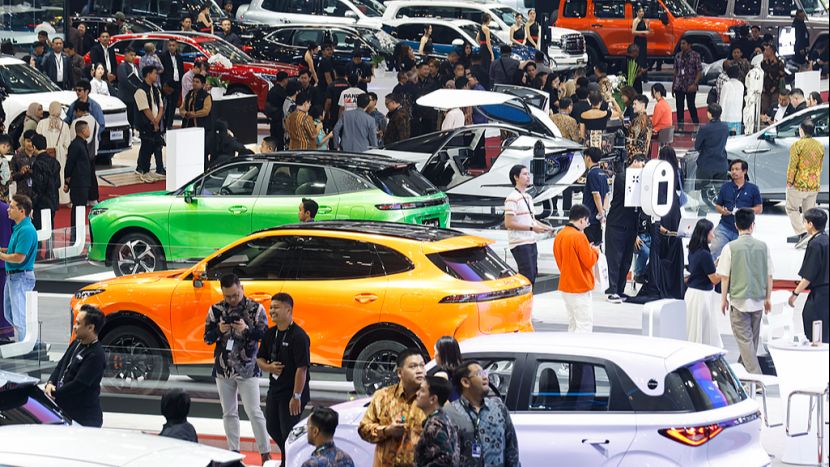
The electric vehicle industry chain is a core area of cooperation between the two countries. In June 2025, a consortium led by a subsidiary of China's leading battery company CATL launched a project with an investment of US$6 billion, covering the entire process from nickel mining to battery production. Upon completion, the project is expected to meet the battery demand for 300,000 electric vehicles annually, creating 8,000 direct jobs and 35,000 indirect jobs. Meanwhile, the demand for electric vehicles in Indonesia has surged, with pure electric vehicle sales in the first half of 2025 increasing by 267% year-on-year to 35,749 units, with Chinese brands dominating the market.
Demographic structure is another advantage of Indonesia. The country's median age is below 30, forming a huge consumer market while also providing abundant young labor. In addition, Indonesia has continuously lowered market access barriers and simplified approval processes to attract foreign investment. Under the tariff trade agreement between Indonesia and the United States, the final tariff rate is as low as 19%, the lowest among Southeast Asian countries, making it a highly attractive export hub.
Cooperation between the two countries also extends to the renewable energy sector. Indonesia is currently heavily reliant on coal but plans to achieve net-zero emissions by 2060. Chinese enterprises are helping to achieve this goal through several infrastructure projects. The Lumut Balai Phase II Geothermal Project, jointly developed by PowerChina and an Indonesian state-owned enterprise, serves as a model. The project commenced commercial operations in July 2025 and can supply electricity to 80,000 households, with annual carbon dioxide emission reductions equivalent to planting 12 million trees.
Data from the Indonesian government shows that from 2020 to the first half of 2025, total Chinese investment in Indonesia reached US$35.3 billion, with an average annual growth rate of 31%, primarily flowing into energy, manufacturing, logistics, and digital technology—sectors crucial to Indonesia's industrial upgrading. Today, China-Indonesia cooperation has transcended traditional trade and is moving toward deep industrial integration, providing a viable blueprint for cooperation among developing major nations in the Global South.
With the world's largest nickel ore reserves, a young labor force, and continuously improving investment policies, Indonesia has become the preferred destination for Chinese enterprises' overseas industrial and energy investments. Data from the General Administration of Customs of China shows that in the first 11 months of 2025, bilateral trade between China and Indonesia reached US$150.3 billion, already exceeding the total trade volume for the entire year of 2024. Indonesia's downstream industry strategy, which requires mineral resources to be processed domestically rather than exported as raw ore, precisely provides China with a stable source of critical minerals and a strategic manufacturing base.
The electric vehicle industry chain is a core area of cooperation between the two countries. In June 2025, a consortium led by a subsidiary of China's leading battery company CATL launched a project with an investment of US$6 billion, covering the entire process from nickel mining to battery production. Upon completion, the project is expected to meet the battery demand for 300,000 electric vehicles annually, creating 8,000 direct jobs and 35,000 indirect jobs. Meanwhile, the demand for electric vehicles in Indonesia has surged, with pure electric vehicle sales in the first half of 2025 increasing by 267% year-on-year to 35,749 units, with Chinese brands dominating the market.
Demographic structure is another advantage of Indonesia. The country's median age is below 30, forming a huge consumer market while also providing abundant young labor. In addition, Indonesia has continuously lowered market access barriers and simplified approval processes to attract foreign investment. Under the tariff trade agreement between Indonesia and the United States, the final tariff rate is as low as 19%, the lowest among Southeast Asian countries, making it a highly attractive export hub.
Cooperation between the two countries also extends to the renewable energy sector. Indonesia is currently heavily reliant on coal but plans to achieve net-zero emissions by 2060. Chinese enterprises are helping to achieve this goal through several infrastructure projects. The Lumut Balai Phase II Geothermal Project, jointly developed by PowerChina and an Indonesian state-owned enterprise, serves as a model. The project commenced commercial operations in July 2025 and can supply electricity to 80,000 households, with annual carbon dioxide emission reductions equivalent to planting 12 million trees.
Data from the Indonesian government shows that from 2020 to the first half of 2025, total Chinese investment in Indonesia reached US$35.3 billion, with an average annual growth rate of 31%, primarily flowing into energy, manufacturing, logistics, and digital technology—sectors crucial to Indonesia's industrial upgrading. Today, China-Indonesia cooperation has transcended traditional trade and is moving toward deep industrial integration, providing a viable blueprint for cooperation among developing major nations in the Global South.
Indonesia Becomes Top Overseas Investment Destination for Chinese Enterprises
www.indoent.com
2026-01-05
With the world's largest nickel ore reserves, a young labor force, and continuously improving investment policies, Indonesia has become the preferred destination for Chinese enterprises' overseas industrial and energy investments. Data from the General Administration of Customs of China shows that in the first 11 months of 2025, bilateral trade between China and Indonesia reached US$150.3 billion, already exceeding the total trade volume for the entire year of 2024. Indonesia's downstream industry strategy, which requires mineral resources to be processed domestically rather than exported as raw ore, precisely provides China with a stable source of critical minerals and a strategic manufacturing base. The electric vehicle industry chain is a key area of cooperation between the two countries.
With the world's largest nickel ore reserves, a young labor force, and continuously improving investment policies, Indonesia has become the preferred destination for Chinese enterprises' overseas industrial and energy investments. Data from the General Administration of Customs of China shows that in the first 11 months of 2025, bilateral trade between China and Indonesia reached US$150.3 billion, already exceeding the total trade volume for the entire year of 2024. Indonesia's downstream industry strategy, which requires mineral resources to be processed domestically rather than exported as raw ore, precisely provides China with a stable source of critical minerals and a strategic manufacturing base.
The electric vehicle industry chain is a core area of cooperation between the two countries. In June 2025, a consortium led by a subsidiary of China's leading battery company CATL launched a project with an investment of US$6 billion, covering the entire process from nickel mining to battery production. Upon completion, the project is expected to meet the battery demand for 300,000 electric vehicles annually, creating 8,000 direct jobs and 35,000 indirect jobs. Meanwhile, the demand for electric vehicles in Indonesia has surged, with pure electric vehicle sales in the first half of 2025 increasing by 267% year-on-year to 35,749 units, with Chinese brands dominating the market.
Demographic structure is another advantage of Indonesia. The country's median age is below 30, forming a huge consumer market while also providing abundant young labor. In addition, Indonesia has continuously lowered market access barriers and simplified approval processes to attract foreign investment. Under the tariff trade agreement between Indonesia and the United States, the final tariff rate is as low as 19%, the lowest among Southeast Asian countries, making it a highly attractive export hub.
Cooperation between the two countries also extends to the renewable energy sector. Indonesia is currently heavily reliant on coal but plans to achieve net-zero emissions by 2060. Chinese enterprises are helping to achieve this goal through several infrastructure projects. The Lumut Balai Phase II Geothermal Project, jointly developed by PowerChina and an Indonesian state-owned enterprise, serves as a model. The project commenced commercial operations in July 2025 and can supply electricity to 80,000 households, with annual carbon dioxide emission reductions equivalent to planting 12 million trees.
Data from the Indonesian government shows that from 2020 to the first half of 2025, total Chinese investment in Indonesia reached US$35.3 billion, with an average annual growth rate of 31%, primarily flowing into energy, manufacturing, logistics, and digital technology—sectors crucial to Indonesia's industrial upgrading. Today, China-Indonesia cooperation has transcended traditional trade and is moving toward deep industrial integration, providing a viable blueprint for cooperation among developing major nations in the Global South.
Tags
Industry News
Share to
Related Reading
 Industry Flash
Cheap Chinese Plastics Impact Indonesia's Petrochemical Industry, Association Calls for Protection
2026-09-03 Industry News
Investment Heat in Two Key Industrial Parks in Central Java Continues to Rise
2026-08-31 Industry News