 The Indonesia Investment Authority (INA) announced that it will immediately launch the second round of tenders for Waste-to-Energy (PSEL) projects after announcing the results of the first round in mid-February 2026. Six additional regencies/cities that have completed preparations will be added, with partner recruitment expected to officially begin at the end of the first quarter of 2026. Together, the two rounds cover 10 regencies/cities. However, the head of INA's waste-to-energy business has not yet disclosed the specific list of regencies/cities involved in the second round.
The four core areas in the first round are Bogor City, Bogor Regency, Denpasar City, Yogyakarta City, and Bekasi City. These areas have completed all preparatory work since the end of 2025. After the first-round winners are determined, ground-breaking ceremonies for the relevant projects will be held at the end of March.
Consistent with the first-round requirements, winning companies in the second round must also form joint ventures with local Indonesian companies to carry out project construction. According to Indonesia's Presidential Regulation No. 109 of 2025, the cooperation contract period for waste-to-energy projects signed between the winning joint venture and the local government is 30 years.
INA will ensure that local governments stably supply waste feedstock to the joint venture and continuously monitor waste supply volumes. If the joint venture refuses to accept waste without cause, it may face corresponding penalties.
A senior researcher at the Institute for Strategic Studies of Southeast Asia stated that the presidential regulation also clarifies the feed-in tariff increase for waste-to-energy, compensation mechanisms for state electricity company PLN, priority dispatch rules, and requires projects to adopt mature and environmentally friendly technologies.
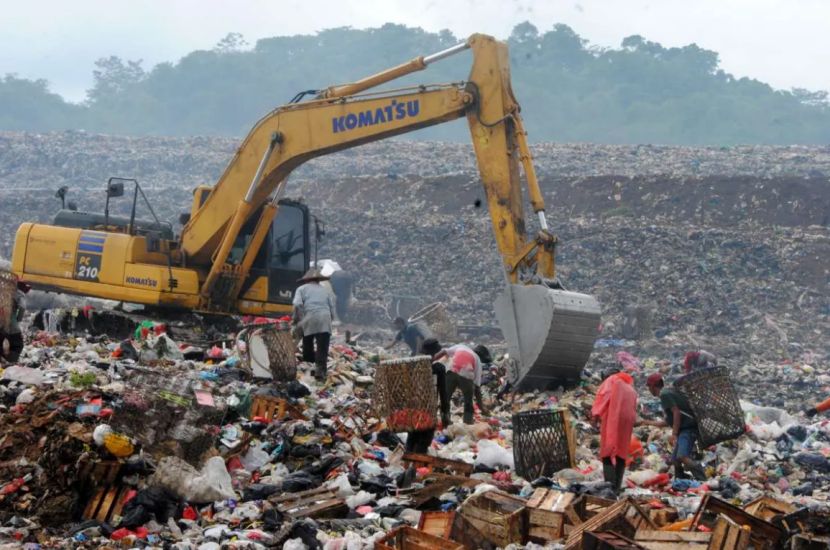
Indonesia plans to build 33 waste-to-energy plants by 2029, with 7 plants to be realized in 2026, accelerating project implementation to alleviate the waste crisis in major cities. Although many challenges remain, waste-to-energy remains one of the most realistic solutions to Indonesia's national waste crisis.
The Indonesia Investment Authority (INA) announced that it will immediately launch the second round of tenders for Waste-to-Energy (PSEL) projects after announcing the results of the first round in mid-February 2026. Six additional regencies/cities that have completed preparations will be added, with partner recruitment expected to officially begin at the end of the first quarter of 2026. Together, the two rounds cover 10 regencies/cities. However, the head of INA's waste-to-energy business has not yet disclosed the specific list of regencies/cities involved in the second round.
The four core areas in the first round are Bogor City, Bogor Regency, Denpasar City, Yogyakarta City, and Bekasi City. These areas have completed all preparatory work since the end of 2025. After the first-round winners are determined, ground-breaking ceremonies for the relevant projects will be held at the end of March.
Consistent with the first-round requirements, winning companies in the second round must also form joint ventures with local Indonesian companies to carry out project construction. According to Indonesia's Presidential Regulation No. 109 of 2025, the cooperation contract period for waste-to-energy projects signed between the winning joint venture and the local government is 30 years.
INA will ensure that local governments stably supply waste feedstock to the joint venture and continuously monitor waste supply volumes. If the joint venture refuses to accept waste without cause, it may face corresponding penalties.
A senior researcher at the Institute for Strategic Studies of Southeast Asia stated that the presidential regulation also clarifies the feed-in tariff increase for waste-to-energy, compensation mechanisms for state electricity company PLN, priority dispatch rules, and requires projects to adopt mature and environmentally friendly technologies.
Indonesia plans to build 33 waste-to-energy plants by 2029, with 7 plants to be realized in 2026, accelerating project implementation to alleviate the waste crisis in major cities. Although many challenges remain, waste-to-energy remains one of the most realistic solutions to Indonesia's national waste crisis.
Indonesia to Launch Second Round of Waste-to-Energy Tender in Mid-February
www.indoent.com
2026-01-23
The Indonesia Investment Authority (INA) announced that it will immediately launch the second round of tenders for Waste-to-Energy (PSEL) projects after announcing the results of the first round in mid-February 2026. Six additional regencies/cities that have completed preparations will be added, with partner recruitment expected to officially begin at the end of the first quarter of 2026. Together, the two rounds cover 10 regencies/cities. However, the head of INA's waste-to-energy business has not yet disclosed the specific list of regencies/cities involved in the second round. The four core areas in the first round are Bogor City, Bogor Regency, Denpasar City, Yogyakarta City, and Bekasi City. These areas have
The Indonesia Investment Authority (INA) announced that it will immediately launch the second round of tenders for Waste-to-Energy (PSEL) projects after announcing the results of the first round in mid-February 2026. Six additional regencies/cities that have completed preparations will be added, with partner recruitment expected to officially begin at the end of the first quarter of 2026. Together, the two rounds cover 10 regencies/cities. However, the head of INA's waste-to-energy business has not yet disclosed the specific list of regencies/cities involved in the second round.
The four core areas in the first round are Bogor City, Bogor Regency, Denpasar City, Yogyakarta City, and Bekasi City. These areas have completed all preparatory work since the end of 2025. After the first-round winners are determined, ground-breaking ceremonies for the relevant projects will be held at the end of March.
Consistent with the first-round requirements, winning companies in the second round must also form joint ventures with local Indonesian companies to carry out project construction. According to Indonesia's Presidential Regulation No. 109 of 2025, the cooperation contract period for waste-to-energy projects signed between the winning joint venture and the local government is 30 years.
INA will ensure that local governments stably supply waste feedstock to the joint venture and continuously monitor waste supply volumes. If the joint venture refuses to accept waste without cause, it may face corresponding penalties.
A senior researcher at the Institute for Strategic Studies of Southeast Asia stated that the presidential regulation also clarifies the feed-in tariff increase for waste-to-energy, compensation mechanisms for state electricity company PLN, priority dispatch rules, and requires projects to adopt mature and environmentally friendly technologies.
Indonesia plans to build 33 waste-to-energy plants by 2029, with 7 plants to be realized in 2026, accelerating project implementation to alleviate the waste crisis in major cities. Although many challenges remain, waste-to-energy remains one of the most realistic solutions to Indonesia's national waste crisis.
Tags
Industry News
Share to
Related Reading
 Industry Flash
Cheap Chinese Plastics Impact Indonesia's Petrochemical Industry, Association Calls for Protection
2026-09-03 Industry News
Investment Heat in Two Key Industrial Parks in Central Java Continues to Rise
2026-08-31 Industry News