
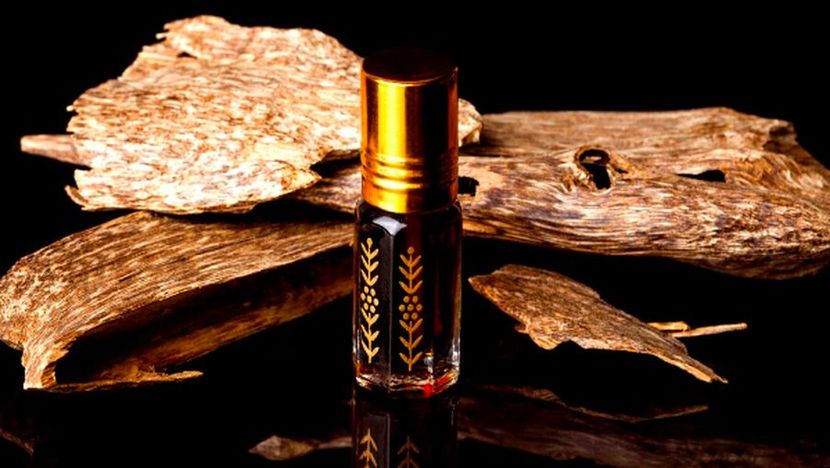
 The rainforests of Indonesia's Sumatra and Kalimantan harbor a precious wood that can be more valuable than gold—agarwood (also known as "gaharu" or "agarwood"), derived from the agarwood tree (especially Aquilaria malaccensis).
This tree only when injured or infected by fungi initiates its self-protection mechanism to secrete resin, thereby forming fragrant agarwood. Top-grade agarwood commands extremely high prices on the international market, reaching USD 20,000 to 100,000 per kilogram (equivalent to millions to billions of rupiah).
Although Indonesia's export volume of agarwood has declined in recent years—from about 2,000 tons in 2021 to approximately 1,200 tons in 2023—its total export value has risen instead of falling.
In 2023, the export value was about USD 16.6 million, higher than the USD 16.4 million in 2022, demonstrating its strong bargaining power under tightening supply.
Saudi Arabia is the largest buyer of Indonesian agarwood, with imports of about USD 10.9 million in 2023. The UAE, South Korea, Singapore, and Kuwait are also important markets.
The agarwood trade has a long history, dating back to the Srivijaya Kingdom from the 7th to 11th centuries AD, and was exported to Arabia through maritime trade networks.
Compared with Malaysia and Vietnam, Indonesian agarwood, with its rich, deep, and long-lasting aroma profile, still holds an important position in the global high-end market.
The rainforests of Indonesia's Sumatra and Kalimantan harbor a precious wood that can be more valuable than gold—agarwood (also known as "gaharu" or "agarwood"), derived from the agarwood tree (especially Aquilaria malaccensis).
This tree only when injured or infected by fungi initiates its self-protection mechanism to secrete resin, thereby forming fragrant agarwood. Top-grade agarwood commands extremely high prices on the international market, reaching USD 20,000 to 100,000 per kilogram (equivalent to millions to billions of rupiah).
Although Indonesia's export volume of agarwood has declined in recent years—from about 2,000 tons in 2021 to approximately 1,200 tons in 2023—its total export value has risen instead of falling.
In 2023, the export value was about USD 16.6 million, higher than the USD 16.4 million in 2022, demonstrating its strong bargaining power under tightening supply.
Saudi Arabia is the largest buyer of Indonesian agarwood, with imports of about USD 10.9 million in 2023. The UAE, South Korea, Singapore, and Kuwait are also important markets.
The agarwood trade has a long history, dating back to the Srivijaya Kingdom from the 7th to 11th centuries AD, and was exported to Arabia through maritime trade networks.
Compared with Malaysia and Vietnam, Indonesian agarwood, with its rich, deep, and long-lasting aroma profile, still holds an important position in the global high-end market.
Indonesian Agarwood Priced Higher Than Gold, Widely Welcomed Overseas
www.indoent.com
2026-02-22
The rainforests of Sumatra and Kalimantan in Indonesia harbor a precious wood that can be more valuable than gold—agarwood (also known as "gaharu" or "agarwood"), derived from the agarwood tree (especially Aquilaria malaccensis). This tree only produces resin as a self-protection mechanism when injured or infected by fungi, thereby forming fragrant agarwood. Top-grade agarwood commands extremely high prices on the international market, reaching USD 20,000 to 100,000 per kilogram (equivalent to millions to billions of rupiah).
The rainforests of Indonesia's Sumatra and Kalimantan harbor a precious wood that can be more valuable than gold—agarwood (also known as "gaharu" or "agarwood"), derived from the agarwood tree (especially Aquilaria malaccensis).
This tree only when injured or infected by fungi initiates its self-protection mechanism to secrete resin, thereby forming fragrant agarwood. Top-grade agarwood commands extremely high prices on the international market, reaching USD 20,000 to 100,000 per kilogram (equivalent to millions to billions of rupiah).
Although Indonesia's export volume of agarwood has declined in recent years—from about 2,000 tons in 2021 to approximately 1,200 tons in 2023—its total export value has risen instead of falling.
In 2023, the export value was about USD 16.6 million, higher than the USD 16.4 million in 2022, demonstrating its strong bargaining power under tightening supply.
Saudi Arabia is the largest buyer of Indonesian agarwood, with imports of about USD 10.9 million in 2023. The UAE, South Korea, Singapore, and Kuwait are also important markets.
The agarwood trade has a long history, dating back to the Srivijaya Kingdom from the 7th to 11th centuries AD, and was exported to Arabia through maritime trade networks.
Compared with Malaysia and Vietnam, Indonesian agarwood, with its rich, deep, and long-lasting aroma profile, still holds an important position in the global high-end market.
Tags
Industry Flash
Share to
Related Reading
 Industry Flash
Cheap Chinese Plastics Impact Indonesia's Petrochemical Industry, Association Calls for Protection
2026-09-03 Industry News
Investment Heat in Two Key Industrial Parks in Central Java Continues to Rise
2026-08-31 Industry News