
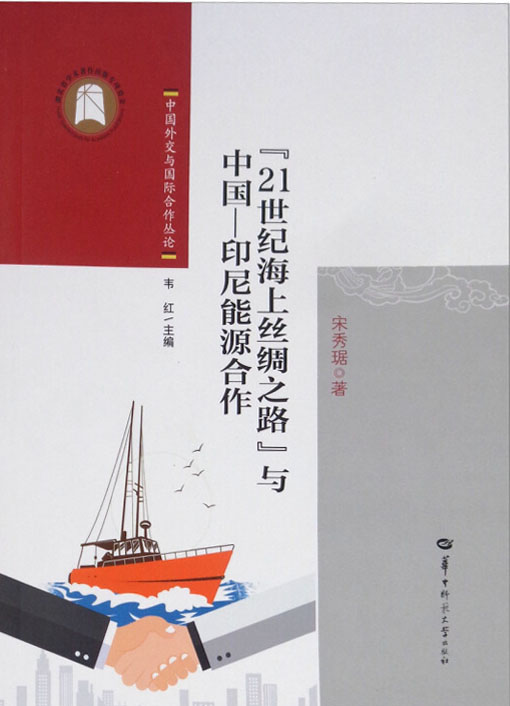
Detailed Content
Song Xiuju, male, native of Zigui County, Hubei Province, is Deputy Director of the Center for China-Indonesia People-to-People and Cultural Exchange at Central China Normal University, Associate Professor and Master's Supervisor at the School of Political Science and International Relations. He obtained his master's degree in Modern World History from Central China Normal University in 2000. In 2003, he entered the Institute of Political Science at Central China Normal University to pursue a doctoral degree in International Relations, earning his PhD (Law) in 2006, primarily engaged in theoretical research on international cooperation. From 2012 to 2013, he was a visiting scholar at the Department of Political Science at Duke University, USA. Since 2013, he has focused on research on Indonesia and China-Indonesia relations.
Content Summary
The book is divided into four chapters: Energy — Indonesia's abundant energy resources serve as the foundation for cooperation; Legal — the legal framework for China-Indonesia energy cooperation; Risks — the risks and difficulties in cooperation with Indonesia's energy sector; Cooperation — the current status and future of China-Indonesia energy cooperation.
In China-Indonesia energy cooperation, China is the side actively "going global." In addition to fully understanding Indonesia's energy resources, Chinese energy enterprises must also comply with Indonesian domestic legal regulations such as the Energy and Mineral Resources Law, Land Law, Investment Law, Labor Law, and Environmental Protection Law. Furthermore, Chinese energy enterprises must have a clear understanding of the risks existing in Indonesia's natural, political, social security, commercial, and health sectors. The "localization" of Chinese energy enterprises in Indonesia is the fundamental path to the sustainable development of China-Indonesia energy cooperation.