
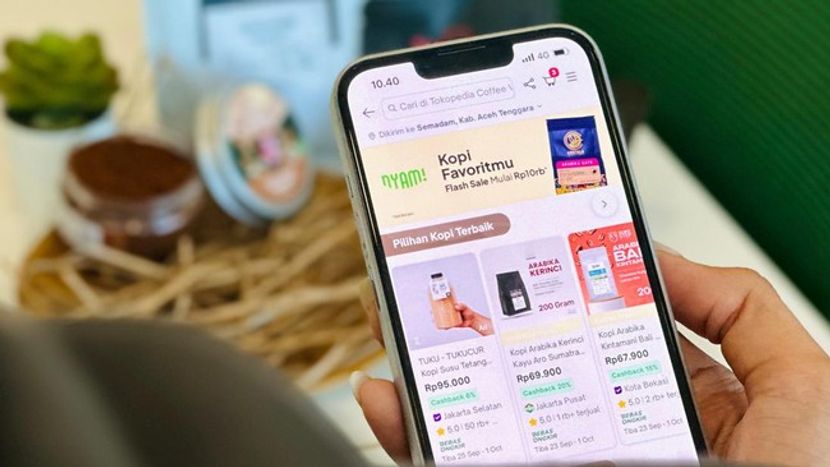
Tokopedia Increases Merchant Service Fee by 10% Starting September 16
Starting September 16, 2024, Tokopedia will increase merchant service fees by up to 10%, applicable to Power Merchant and Power Merchant PRO sellers (depending on product category). The service fee is charged per completed order, based on a percentage that varies by subcategory of the product sold. According to Tokopedia's official announcement, Regular Merchant sellers who changed their membership status to Power Merchant before May 1, 2024, and have more than 50 orders will be charged the Power Merchant service fee.
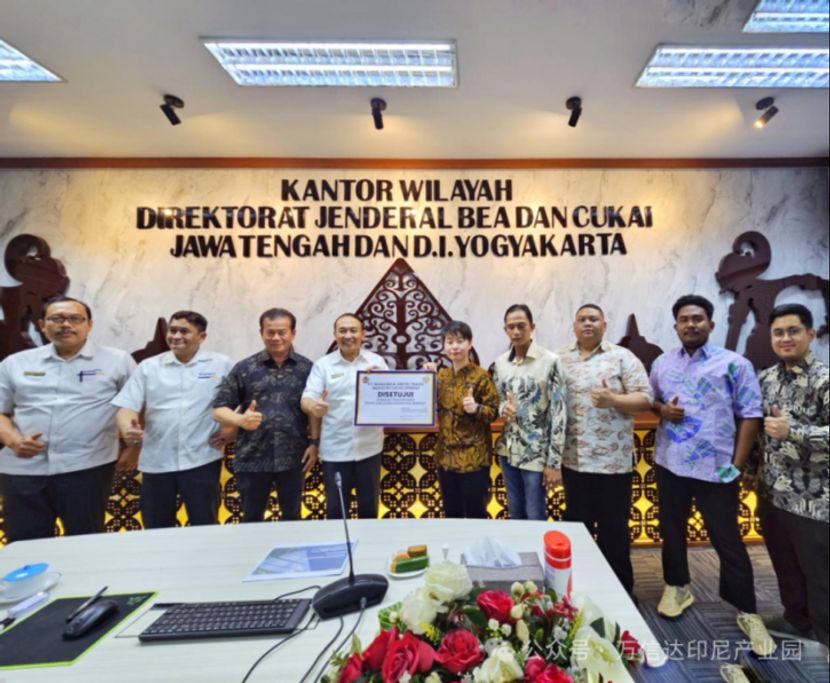
China-Indonesia Two Countries Twin Parks Batang Industrial Park Receives Large Bonded Zone Qualification
Indonesia's Ministry of Industry Shifts Entry Points of Seven Imported Goods to the East
Shopkeeper Says: How to Import and Operate Compliantly in Indonesia
Food and Beverage Industry Hit by Mass Layoffs Due to Indonesian Health Regulations
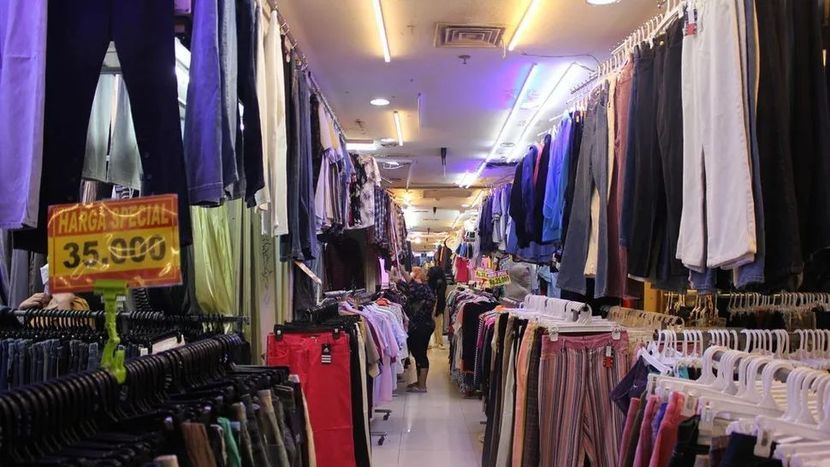
China Remains Main Source of Indonesia's Garment Imports
The Central Statistics Agency (BPS) acknowledged that the import value of garments under HS codes 61 and 62 increased by 55.46% and 29.61% month-on-month (mtm). By country of origin, HS 61 goods, consisting of knitted garments and accessories, come from China, Bangladesh, Turkey, and Italy. Meanwhile, HS 62 goods, comprising non-knitted garments and accessories, come mostly from China, Bangladesh, Vietnam, Hong Kong, and Morocco. In fact, imports of ready-made garments have increased, particularly HS 61 knitted garments and accessories and HS 62
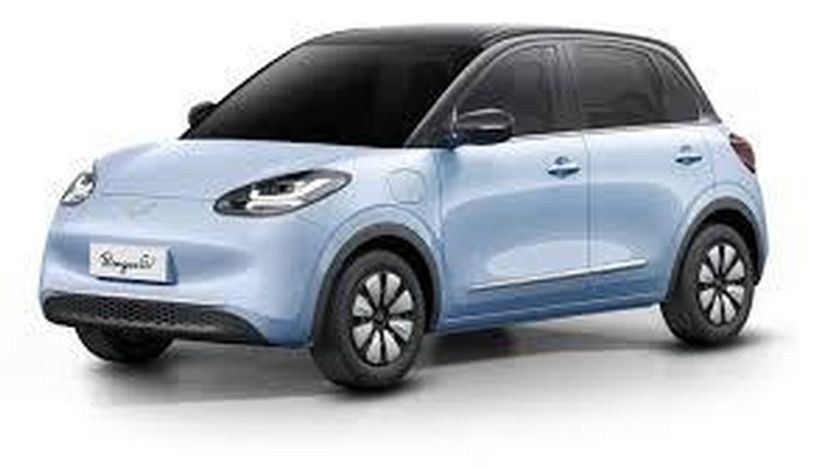
Changes in Indonesia's Best-Selling Electric Vehicles
Wuling Air EV made waves when it was first launched in 2022 as the first locally produced electric vehicle in Indonesia, priced at around IDR 240 million. At the same time, rival Hyundai was selling the Ioniq 5 at IDR 800 million. Wuling Air EV was once the king of EVs in Indonesia, selling thousands of units monthly, but now Air EV must face many competitors, including models from the same brand, and its sales are shrinking. A Wuling PR manager stated that consumers now have more choices, as Wuling also has
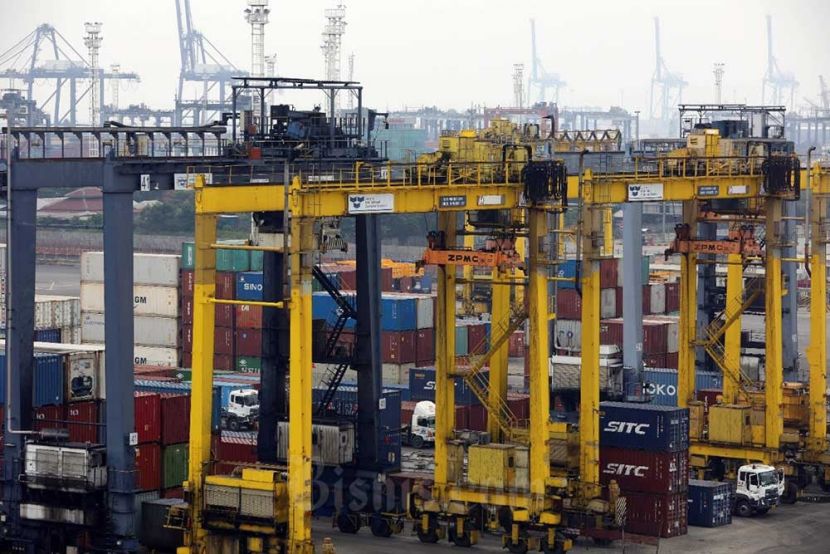
Indonesia Customs Reveals Content Data of Containers Stranded at Ports
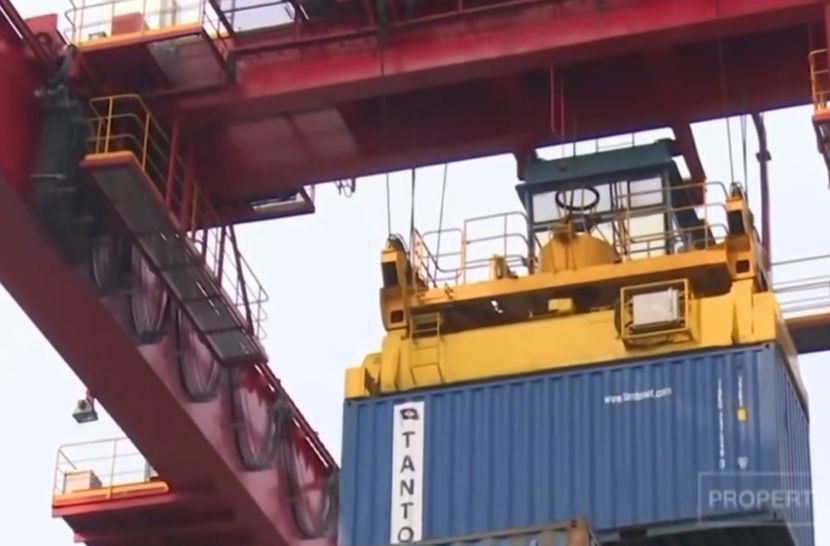
The Directorate General of Customs and Excise has disclosed the content data of 26,415 containers stranded at multiple ports due to import prohibition and restriction (lartas) regulations. Most of the contents of these containers are industrial raw and auxiliary materials. The Director of Customs Communication and User Guidance stated that the 26,415 stranded containers are in BC 1.1 status, which is the inward manifest. There are 21,166 containers (80%) containing raw and auxiliary materials, while approximately 3,356 containers (about 12.7%) are consumer goods, and 7.17% (about 1,893 containers) are capital goods. This can be interpreted as
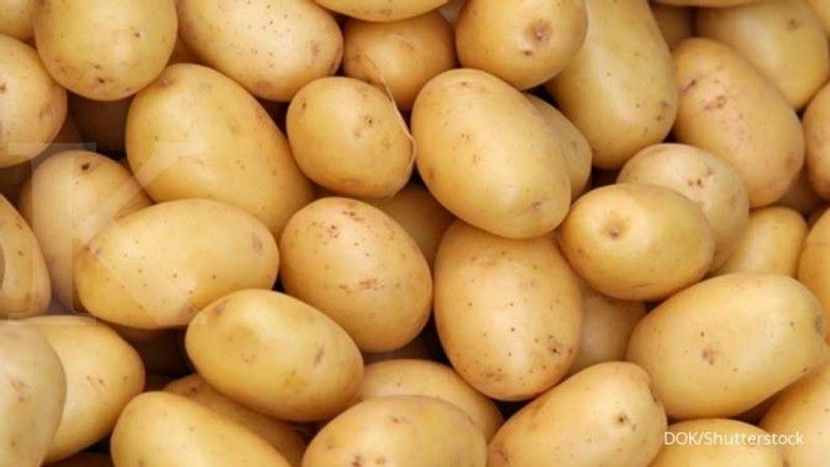
Southeast Asia's First Frozen French Fry Factory Begins Operations
This year, PT Indo Agro Plus (PT IAP) is preparing to start production at its frozen french fry factory in West Java. PT IAP is a holding company that will operate the first and only frozen french fry factory in Indonesia and Southeast Asia, using local potato raw materials. Not only in Indonesia, PT IAP is also a pioneer in the Southeast Asian region and the only frozen french fry factory using domestic raw materials. PT IAP's Chief Director stated that everything from seeding, planting, to processing harvested potatoes into frozen french fries is done in Indonesia.
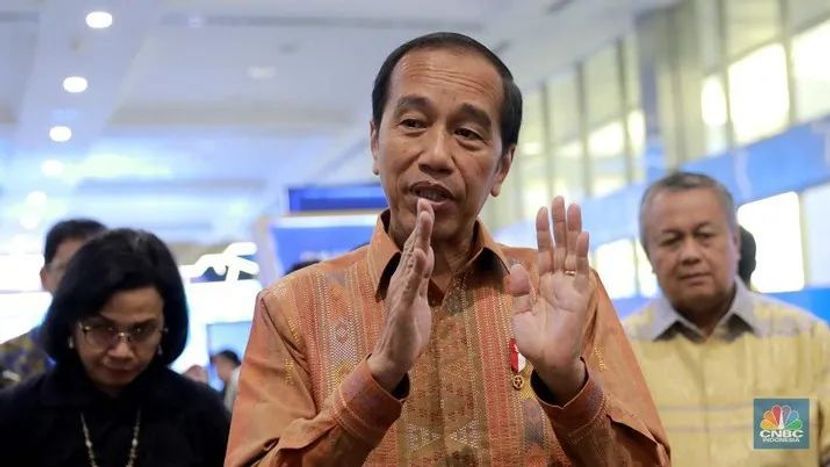
Indonesia's Nickel Downstream Exports Soar to 510 Trillion IDR
President Joko Widodo showcased the results of his "pride program," in this case the downstreaming of nickel, which has significantly increased the export value of downstream products. The export value of nickel downstream products has soared multiple times, from only 33 trillion IDR to 510 trillion IDR. At the inauguration of the lithium battery anode material factory owned by PT Indonesia BTR New Energy Materials in Kendal, East Java, he stated, as Coordinating Minister Luhut said, that the current nickel export value has reached 34 billion USD, jumping from the previous 33 trillion IDR to approximately 510 trillion IDR. By blocking the export of nickel ore products abroad to carry out downstream development, his policy has brought benefits, including the lawsuit from the European Union (EU) to the World Trade Organization (WTO). Although they lost, the country is a sovereign state where national interests come first, and they cannot be dictated by anyone.
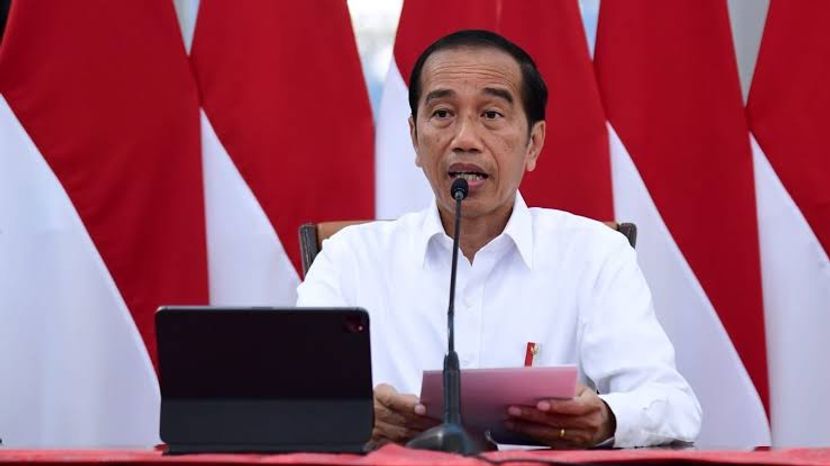
Indonesian Government Plans to Tax Processed Foods for Health Reasons
The Joko Widodo administration has enacted new health regulations, one of which imposes excise tax on processed foods, including ready-to-eat processed foods. The regulation is contained in Article 194 of Government Regulation No. 28 of 2024 concerning the Implementing Regulations of Law No. 17 of 2023 on Health. The central government may determine excise tax on certain processed foods according to legal provisions. Processed foods refer to food or beverages processed by certain methods or means, whether or not additional ingredients are added. Meanwhile, ready-to-eat processed foods refer to food and/or beverages that have been processed and can be provided directly at or outside business premises, such as food services provided in catering, hotels, restaurants, cafeterias, canteens, street vendors, mobile food stalls, and similar businesses. The Director of Communication and Service User Guidance at the Directorate General of Customs and Excise of the Ministry of Finance stated that the provisions in the PP are still only based on recommendations from the Ministry of Health, and DJBC has not yet conducted research on processed goods as new excisable goods (BKC).
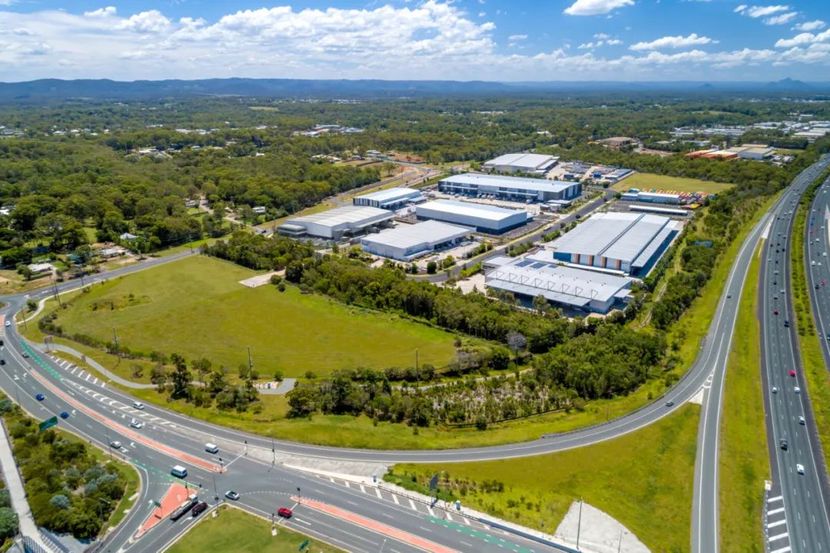
Boss Says: What Industrial Parks Are in Central Java Industrial Belt, Indonesia
Java Island is the center of Indonesia's manufacturing industry, and the Central Java Industrial Belt is an emerging and vibrant industrial belt among the three industrial belts on Java Island. Land and labor costs are highly competitive, with land costs around 50-100 USD and labor costs around 150-200 USD. What industrial parks are in the Central Java Industrial Belt? Boss Wang will explain in detail: First, the Batang Industrial Park, located in Batang Regency, 60 km west of Semarang Airport. Established in 2020, covering 4,300 hectares, it is the only large-scale government-led industrial zone on Java Island. It is not only a national strategic project of Indonesia but also became the Indonesian park for the China-Indonesia Two Countries Twin Parks project in 2021. Among the companies入驻 the park, there is a Chinese-invested company, Wanxinda. Founder Chen Riling of Wanxinda is a firm practitioner of the Two Countries Twin Parks. As the Chinese operator of Batang Industrial Park, they pioneered a one-stop factory delivery solution for Chinese enterprises in Indonesia. In May 2023, they signed a land purchase agreement with the park, and on December 10 of the same year, they held a groundbreaking ceremony. They plan to complete and deliver 1 million square meters of factory space within 2024 and strive to build over 10 million square meters of industrial factory space within five years. This is very suitable for export-oriented and labor-intensive manufacturing enterprises, with 14 companies already入驻 the park. Second, the Kendal Industrial Park (KIP), located in Kendal Regency, 30 km west of Semarang Airport. <strong>It is a joint venture between Singapore's Sembcorp Group and Indonesia's Jababeka Group,</strong> covering approximately 2,200 hectares. It was inaugurated in 2016 by Indonesian President Joko Widodo and then-Singapore Prime Minister Lee Hsien Loong. Kendal Industrial Park is one of the two special economic zones on Java Island, offering preferential treatment in corporate income tax, value-added tax, and import duties. <strong>Companies such as Lopal Tech, BTR, and Zhongce Rubber have already入驻 the park.</strong> Third, the JIPS Park, established in 2013, located in Demak Regency, east of Semarang. It has a total planned area of 300 hectares and currently hosts 22 large enterprises, including Chinese-invested companies such as Liansu, Huafeng, Xinbao, Sailun, and Huagang Group. With the rise of trade protectionism in Europe and America, more and more Chinese labor-intensive and export-oriented enterprises are choosing Indonesia, especially the Central Java Industrial Belt, as their overseas production base. This makes it easier to access European and American markets without barriers. Coupled with Indonesia's population of 280 million, the fourth largest in the world, and its huge consumption power, Indonesia has enormous development potential.