
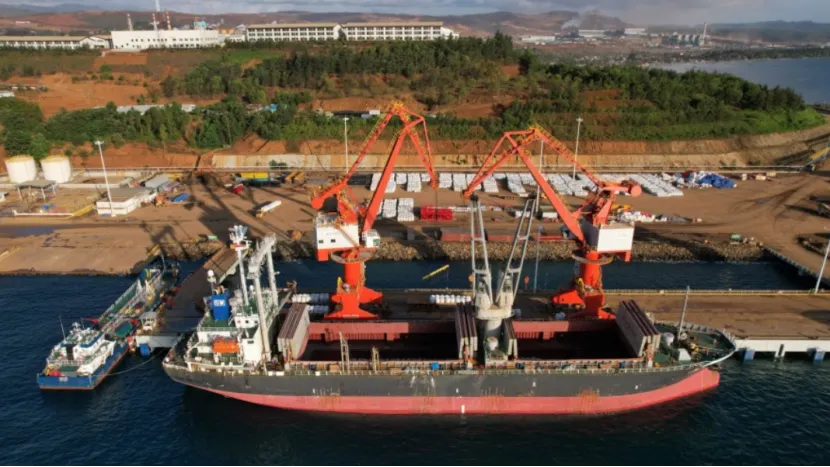
 rnrnThe Indonesian Ministry of Energy and Mineral Resources has officially responded to the exhaustion of mining quotas for Weda Bay Nickel (WBN). The tightening of quotas at this mining area could lead to a shortfall of 30 million tons of nickel ore raw materials for the Indonesia Weda Bay Industrial Park (IWIP) smelters. rnrnThe Director General of Minerals and Coal stated that local smelting companies can supplement supply through two channels: purchasing ore from other private mining companies, or importing nickel ore from the Philippines. He also denied the industry perception that imported ore from the Philippines is more expensive, emphasizing that the overall price of local ore remains competitive. rnrnIn response to widespread industry concerns about the new mineral benchmark price (HPM) increase driving up local ore prices, the authorities provided a special explanation: the adjustment to the pricing formula aims primarily to enhance the international competitiveness of local minerals, while ensuring national mineral royalty revenues and preventing unfair industry practices where companies mine ores at low prices and underpay taxes, thereby regulating the mining operation order. rnrnPrior to this, PT Era Mitra Sejati (Eramet Indonesia) had already disclosed raw material supply risks: if the 2026 Work Plan and Budget (RKAB) for WBN is not approved for extension, IWIP smelters will face a huge shortfall in raw materials. Data shows that in 2025, the industrial park's smelters consumed a total of 120 million tons of nickel ore, of which the WBN mining area supplied 42 million tons, making it the core source of raw materials for the park. However, in 2026, WBN's approved mining quota is only 12 million tons and has been fully exhausted, directly resulting in a 30 million ton raw material gap. rnrnCompany executives admitted that currently they can only supplement raw materials through two channels: procurement from Sulawesi mining areas and imports from the Philippines. The procurement costs from both sources are significantly higher than the cost of ore self-produced by WBN, which will inevitably directly increase the overall nickel smelting production costs in the park. rnrnIndustry forecast data from the Indonesian Nickel Industry Forum (FINI) shows that Indonesia's national nickel ore imports in 2026 will reach 25 million tons, a significant increase from the 15.33 million tons imported in 2025, indicating a notable rise in import dependency. rnrnThe trend of increasing imports has already emerged in advance. As of May 2026, Indonesia had imported only 5 million tons of nickel ore from the Philippines. The core reason for the sharp increase in nickel ore imports is the Ministry of Energy and Mineral Resources' substantial reduction in domestic mining output: Indonesia's total approved mining quota for nickel ore in 2026 is only 260 to 270 million tons, a significant decrease from the 320 million tons quota in 2025. rnrnIt is reported that the Indonesian Nickel Industry Forum had initially estimated nickel ore imports in 2026 at 30 million tons, but later revised the estimate downward, mainly because some smelters actively reduced operating rates and scaled down raw material procurement, leading to an overall decline in import demand. rnrnFrom a supply-demand perspective, Indonesia's total Class I and II nickel metal smelting capacity in 2026 is 2.7 million dry metric tons, driving the total annual nickel ore demand to rise to 340 to 350 million wet metric tons, an increase of 40 to 50 million tons of saprolite and limonite nickel ore compared to previous years. Against the backdrop of significantly reduced quotas in core domestic mining areas, imported nickel ore from the Philippines has become an important supplementary channel for Indonesia's nickel industry chain. In response, the Indonesian Ministry of Energy and Mineral Resources stated that a multi-channel raw material sourcing model can smoothly mitigate the risk of domestic nickel ore shortages and ensure the stable operation of the nickel industry.
Indonesia Plans to Fill Nickel Ore Gap with Imports from Philippines
www.indoent.com
2026-06-25
rnrnThe Indonesian Ministry of Energy and Mineral Resources has officially responded to the exhaustion of mining quotas for Weda Bay Nickel (WBN). The tightening of quotas at this mining area could lead to a shortfall of 30 million tons of nickel ore raw materials for the Indonesia Weda Bay Industrial Park (IWIP) smelters. rnrnThe Director General of Minerals and Coal stated that local smelting companies can supplement supply through two channels: purchasing ore from other private mining companies, or importing nickel ore from the Philippines. He also denied the industry perception that imported ore from the Philippines is more expensive, emphasizing that the overall price of local ore remains competitive. rnrnIn response to widespread industry concerns about the new mineral benchmark price (HPM
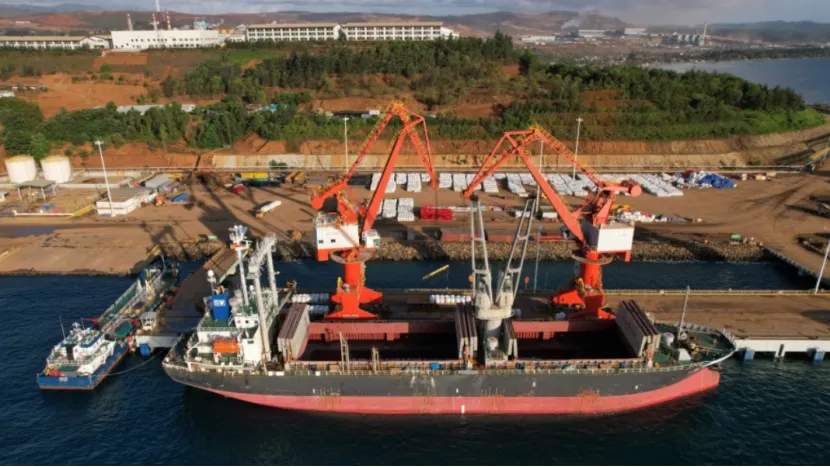
rnrnThe Indonesian Ministry of Energy and Mineral Resources has officially responded to the exhaustion of mining quotas for Weda Bay Nickel (WBN). The tightening of quotas at this mining area could lead to a shortfall of 30 million tons of nickel ore raw materials for the Indonesia Weda Bay Industrial Park (IWIP) smelters. rnrnThe Director General of Minerals and Coal stated that local smelting companies can supplement supply through two channels: purchasing ore from other private mining companies, or importing nickel ore from the Philippines. He also denied the industry perception that imported ore from the Philippines is more expensive, emphasizing that the overall price of local ore remains competitive. rnrnIn response to widespread industry concerns about the new mineral benchmark price (HPM) increase driving up local ore prices, the authorities provided a special explanation: the adjustment to the pricing formula aims primarily to enhance the international competitiveness of local minerals, while ensuring national mineral royalty revenues and preventing unfair industry practices where companies mine ores at low prices and underpay taxes, thereby regulating the mining operation order. rnrnPrior to this, PT Era Mitra Sejati (Eramet Indonesia) had already disclosed raw material supply risks: if the 2026 Work Plan and Budget (RKAB) for WBN is not approved for extension, IWIP smelters will face a huge shortfall in raw materials. Data shows that in 2025, the industrial park's smelters consumed a total of 120 million tons of nickel ore, of which the WBN mining area supplied 42 million tons, making it the core source of raw materials for the park. However, in 2026, WBN's approved mining quota is only 12 million tons and has been fully exhausted, directly resulting in a 30 million ton raw material gap. rnrnCompany executives admitted that currently they can only supplement raw materials through two channels: procurement from Sulawesi mining areas and imports from the Philippines. The procurement costs from both sources are significantly higher than the cost of ore self-produced by WBN, which will inevitably directly increase the overall nickel smelting production costs in the park. rnrnIndustry forecast data from the Indonesian Nickel Industry Forum (FINI) shows that Indonesia's national nickel ore imports in 2026 will reach 25 million tons, a significant increase from the 15.33 million tons imported in 2025, indicating a notable rise in import dependency. rnrnThe trend of increasing imports has already emerged in advance. As of May 2026, Indonesia had imported only 5 million tons of nickel ore from the Philippines. The core reason for the sharp increase in nickel ore imports is the Ministry of Energy and Mineral Resources' substantial reduction in domestic mining output: Indonesia's total approved mining quota for nickel ore in 2026 is only 260 to 270 million tons, a significant decrease from the 320 million tons quota in 2025. rnrnIt is reported that the Indonesian Nickel Industry Forum had initially estimated nickel ore imports in 2026 at 30 million tons, but later revised the estimate downward, mainly because some smelters actively reduced operating rates and scaled down raw material procurement, leading to an overall decline in import demand. rnrnFrom a supply-demand perspective, Indonesia's total Class I and II nickel metal smelting capacity in 2026 is 2.7 million dry metric tons, driving the total annual nickel ore demand to rise to 340 to 350 million wet metric tons, an increase of 40 to 50 million tons of saprolite and limonite nickel ore compared to previous years. Against the backdrop of significantly reduced quotas in core domestic mining areas, imported nickel ore from the Philippines has become an important supplementary channel for Indonesia's nickel industry chain. In response, the Indonesian Ministry of Energy and Mineral Resources stated that a multi-channel raw material sourcing model can smoothly mitigate the risk of domestic nickel ore shortages and ensure the stable operation of the nickel industry.
Tags
Industry News
Share to
Related Reading
 Industry Flash
Cheap Chinese Plastics Impact Indonesia's Petrochemical Industry, Association Calls for Protection
2026-09-03 Industry News
Investment Heat in Two Key Industrial Parks in Central Java Continues to Rise
2026-08-31 Industry News