
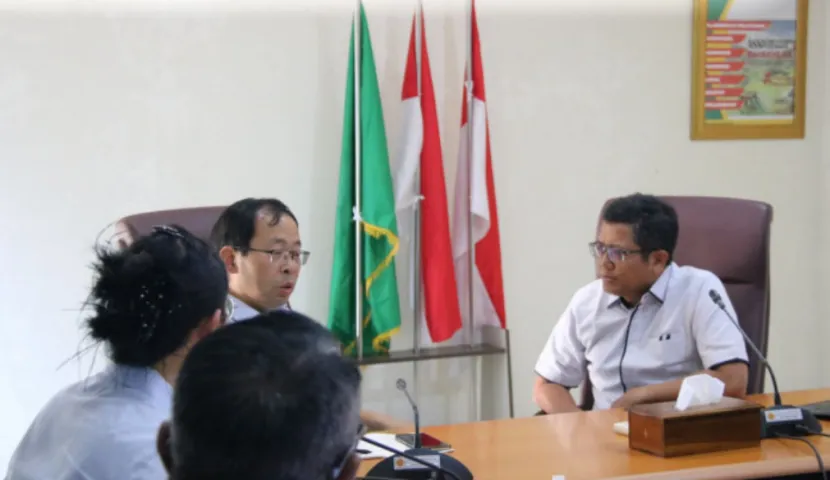
 rnrnThe Indonesian Center for Agricultural Mechanization Assembly and Modernization Development recently held a special meeting in the Tangerang office area to officially discuss strategic cooperation with China's largest agricultural machinery manufacturer, YTO Group, aiming to accelerate Indonesia's agricultural mechanization upgrade, strengthen the local agricultural machinery industry, and enhance the country's agricultural self-sufficiency. During the meeting, YTO Group participated together with its exclusive tractor dealer in Indonesia, CV. Palupi Agri Berdikari. The cooperation dimension goes beyond simple product trade, focusing on deeper industrial collaboration such as technology research and development, equipment testing, and technology transfer. rnrnAffiliated with Sinomach, YTO Group was founded in 1955 and possesses mature R&D laboratories, testing systems, and modern production lines. Its products cover full series of tractors from 24 to 400 horsepower, harvesters, and various supporting agricultural machinery. The company is also equipped with digital after-sales systems, and its products are exported to nearly 120 countries worldwide, demonstrating strong technical accumulation and global industrial strength, making it a preferred strategic partner for Indonesia. rnrnIndonesia has clearly stated that its current biggest industrial weakness is the lack of a domestic tractor engine manufacturing industry, and relying solely on imported equipment cannot achieve independent agricultural modernization. Therefore, Indonesia is no longer limited to agricultural machinery procurement cooperation but urgently hopes to achieve core technology transfer, talent capability improvement, and scientific research facility enhancement through YTO Group, gradually building a local agricultural machinery assembly industry system to completely shake off dependence on foreign sources. rnrnDuring the meeting, Indonesian officials proposed specific technical adaptation requirements, hoping that the jointly developed agricultural machinery would suit local agricultural characteristics. Key areas include optimizing tractor weight, dimensions, paddy field traction, fuel efficiency, and operational flexibility, while ensuring adequate parts supply and stable equipment operation. Both sides also discussed local content requirements (TKDN) in depth, proposing to establish local assembly plants to align with Indonesian industrial policies and support long-term investment layout. rnrnTo ensure efficient implementation of the cooperation, Indonesia proposed establishing a G2G (Government to Government) cooperation mechanism between China and Indonesia, involving both countries' officials and the Chinese Embassy in Indonesia to promote project implementation and deepen comprehensive collaboration in agricultural machinery research, testing, and technology iteration. The two sides reached a preliminary consensus to leverage this cooperation to accelerate Indonesia's agricultural mechanization process, cultivate the local agricultural machinery industry, and enhance the international competitiveness of Indonesia's agricultural machinery sector.
Chinese Agricultural Machinery Giant Builds Assembly Industry Chain in Indonesia
www.indoent.com
2026-07-08
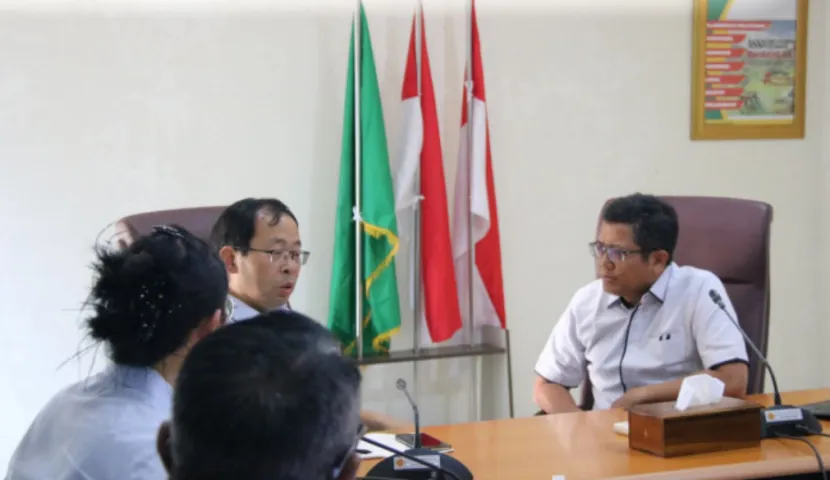
rnrnThe Indonesian Center for Agricultural Mechanization Assembly and Modernization Development recently held a special meeting in the Tangerang office area to officially discuss strategic cooperation with China's largest agricultural machinery manufacturer, YTO Group, aiming to accelerate Indonesia's agricultural mechanization upgrade, strengthen the local agricultural machinery industry, and enhance the country's agricultural self-sufficiency. During the meeting, YTO Group participated together with its exclusive tractor dealer in Indonesia, CV. Palupi Agri Berdikari. The cooperation dimension goes beyond simple product trade, focusing on deeper industrial collaboration such as technology research and development, equipment testing, and technology transfer. rn
rnrnThe Indonesian Center for Agricultural Mechanization Assembly and Modernization Development recently held a special meeting in the Tangerang office area to officially discuss strategic cooperation with China's largest agricultural machinery manufacturer, YTO Group, aiming to accelerate Indonesia's agricultural mechanization upgrade, strengthen the local agricultural machinery industry, and enhance the country's agricultural self-sufficiency. During the meeting, YTO Group participated together with its exclusive tractor dealer in Indonesia, CV. Palupi Agri Berdikari. The cooperation dimension goes beyond simple product trade, focusing on deeper industrial collaboration such as technology research and development, equipment testing, and technology transfer. rnrnAffiliated with Sinomach, YTO Group was founded in 1955 and possesses mature R&D laboratories, testing systems, and modern production lines. Its products cover full series of tractors from 24 to 400 horsepower, harvesters, and various supporting agricultural machinery. The company is also equipped with digital after-sales systems, and its products are exported to nearly 120 countries worldwide, demonstrating strong technical accumulation and global industrial strength, making it a preferred strategic partner for Indonesia. rnrnIndonesia has clearly stated that its current biggest industrial weakness is the lack of a domestic tractor engine manufacturing industry, and relying solely on imported equipment cannot achieve independent agricultural modernization. Therefore, Indonesia is no longer limited to agricultural machinery procurement cooperation but urgently hopes to achieve core technology transfer, talent capability improvement, and scientific research facility enhancement through YTO Group, gradually building a local agricultural machinery assembly industry system to completely shake off dependence on foreign sources. rnrnDuring the meeting, Indonesian officials proposed specific technical adaptation requirements, hoping that the jointly developed agricultural machinery would suit local agricultural characteristics. Key areas include optimizing tractor weight, dimensions, paddy field traction, fuel efficiency, and operational flexibility, while ensuring adequate parts supply and stable equipment operation. Both sides also discussed local content requirements (TKDN) in depth, proposing to establish local assembly plants to align with Indonesian industrial policies and support long-term investment layout. rnrnTo ensure efficient implementation of the cooperation, Indonesia proposed establishing a G2G (Government to Government) cooperation mechanism between China and Indonesia, involving both countries' officials and the Chinese Embassy in Indonesia to promote project implementation and deepen comprehensive collaboration in agricultural machinery research, testing, and technology iteration. The two sides reached a preliminary consensus to leverage this cooperation to accelerate Indonesia's agricultural mechanization process, cultivate the local agricultural machinery industry, and enhance the international competitiveness of Indonesia's agricultural machinery sector.
Share to
Related Reading
 China Investment News
China's AiMOGA Humanoid Robot Obtains Three International Certifications
2026-09-07 China Investment News
Only Three Chinese Automakers Have Independently Built Factories in Indonesia
2026-09-05 Chinese Investment News