
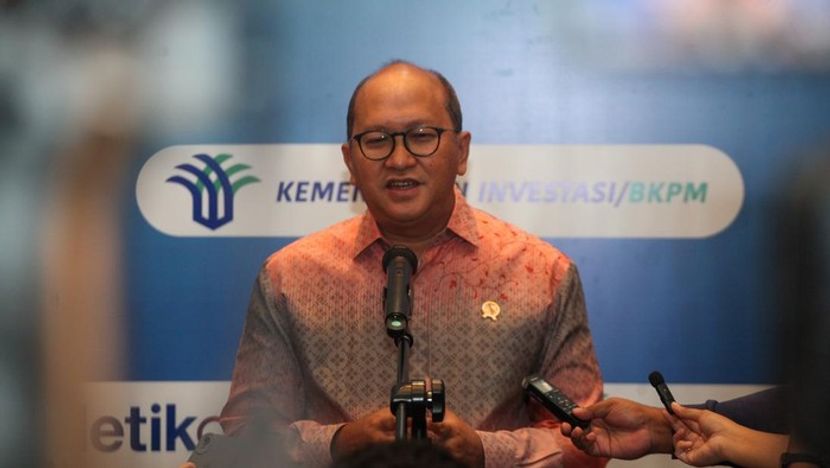
 Indonesia's Minister of Investment and Downstreaming, among others, stated that investment is key to economic growth, and the government prioritizes increasing high-quality investment flows. President Prabowo targets 8% economic growth. Currently, Indonesia's economic growth is driven by domestic consumption (contributing 53-54%), investment (around 24-35%), government expenditure (about 8%-9%), and imports/exports (each about 2%), and the country is increasingly open to foreign investment, with the negative list of industries greatly reduced. The Chairman of the National Economic Council, Luhut, said that despite global challenges, Indonesia's economy still grew 5.2% last year, with optimistic expectations of reaching 6% in 2024, and will also focus on reform and efficiency improvement to enhance economic competitiveness. Indonesia's economy is stable, with a low debt-to-GDP ratio and a budget deficit of 2.5%-3%, leaving ample room for growth.
Indonesia Reduces Industry Sectors Closed to Foreign Investment from Over a Hundred to Five
www.indoent.com
2024-12-27
Indonesia's Minister of Investment and Downstreaming, among others, stated that investment is key to economic growth, and the government prioritizes increasing high-quality investment flows. President Prabowo targets 8% economic growth. Currently, Indonesia's economic growth is driven by domestic consumption (contributing 53-54%), investment (around 24-35%), government expenditure (about 8%-9%), and imports/exports (each about 2%), and the country is increasingly open to foreign investment, with the negative list of industries greatly reduced. The Chairman of the National Economic Council, Luhut, said that despite global challenges, Indonesia's economy still grew 5.2% last year, with optimistic expectations of reaching 6% in 2024, and will also
Indonesia's Minister of Investment and Downstreaming, among others, stated that investment is key to economic growth, and the government prioritizes increasing high-quality investment flows. President Prabowo targets 8% economic growth. Currently, Indonesia's economic growth is driven by domestic consumption (contributing 53-54%), investment (around 24-35%), government expenditure (about 8%-9%), and imports/exports (each about 2%), and the country is increasingly open to foreign investment, with the negative list of industries greatly reduced. The Chairman of the National Economic Council, Luhut, said that despite global challenges, Indonesia's economy still grew 5.2% last year, with optimistic expectations of reaching 6% in 2024, and will also focus on reform and efficiency improvement to enhance economic competitiveness. Indonesia's economy is stable, with a low debt-to-GDP ratio and a budget deficit of 2.5%-3%, leaving ample room for growth.
Tags
Policy Information
Share to
Related Reading
 Policy Information
Chinese Mainland and Hong Kong Enterprises Eligible for Relaxed Foreign Exchange Deposit Rules in Indonesia
2026-08-30 Policy Information
China-Indonesia Multi-Sector Strategic Cooperation Upgrade Blueprint
2026-08-23 Policy Information