
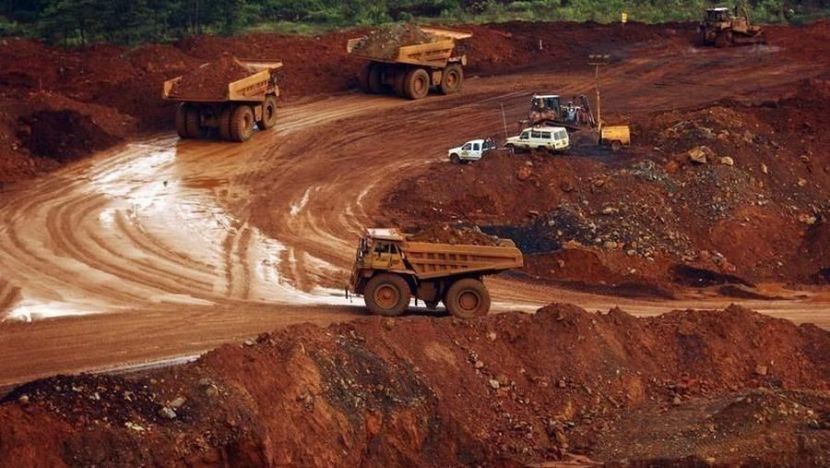
 The Secretary General of the Indonesian Nickel Miners Association (APNI) stated that in 2024, Indonesia's nickel production approached 300 million metric tons per year, reaching 298.4 million metric tons. From 2023 to 2024, Indonesia's nickel production has been increasing, mainly due to the large-scale production of mixed hydroxide precipitate (MHP) and nickel matte, with nickel production growth reaching 30% of existing capacity. Meanwhile, Indonesia's nickel production dominates the international nickel market with a share of up to 65%. On the other hand, the Minister of Energy and Mineral Resources acknowledged that the government is considering re-examining the work plans and budget expenditures (RKAB) for the nickel industry to balance industrial demand and the sustainable development of local entrepreneurs, ensuring that RKAB adjustments better align with actual industrial needs. This policy aims to provide opportunities for local enterprises to sell their products. Without allocation regulation, local entrepreneurs would find it difficult to sell their minerals. For example, if a company applies for an RKAB of 20 million, in order to meet factory inventory, the government would grant it 60% while requiring it to purchase 40% of local products, ensuring that local people have sales channels.
Nickel Production Increases, Indonesian Government Adjusts Policies to Support Local Development
www.indoent.com
2025-02-14
The Secretary General of the Indonesian Nickel Miners Association (APNI) stated that in 2024, Indonesia's nickel production approached 300 million metric tons per year, reaching 298.4 million metric tons. From 2023 to 2024, Indonesia's nickel production has been increasing, mainly due to the large-scale production of mixed hydroxide precipitate (MHP) and nickel matte, with nickel production growth reaching 30% of existing capacity. Meanwhile, Indonesia's nickel production dominates the international nickel market with a share of up to 65%. On the other hand, the Minister of Energy and Mineral Resources acknowledged that the government is considering re-examining the work plans and budget expenditures (RKAB) for the nickel industry to balance industrial demand and local
The Secretary General of the Indonesian Nickel Miners Association (APNI) stated that in 2024, Indonesia's nickel production approached 300 million metric tons per year, reaching 298.4 million metric tons. From 2023 to 2024, Indonesia's nickel production has been increasing, mainly due to the large-scale production of mixed hydroxide precipitate (MHP) and nickel matte, with nickel production growth reaching 30% of existing capacity. Meanwhile, Indonesia's nickel production dominates the international nickel market with a share of up to 65%. On the other hand, the Minister of Energy and Mineral Resources acknowledged that the government is considering re-examining the work plans and budget expenditures (RKAB) for the nickel industry to balance industrial demand and the sustainable development of local entrepreneurs, ensuring that RKAB adjustments better align with actual industrial needs. This policy aims to provide opportunities for local enterprises to sell their products. Without allocation regulation, local entrepreneurs would find it difficult to sell their minerals. For example, if a company applies for an RKAB of 20 million, in order to meet factory inventory, the government would grant it 60% while requiring it to purchase 40% of local products, ensuring that local people have sales channels.
Tags
Policy Information
Share to
Related Reading
 Policy Information
Chinese Mainland and Hong Kong Enterprises Eligible for Relaxed Foreign Exchange Deposit Rules in Indonesia
2026-08-30 Policy Information
China-Indonesia Multi-Sector Strategic Cooperation Upgrade Blueprint
2026-08-23 Policy Information