
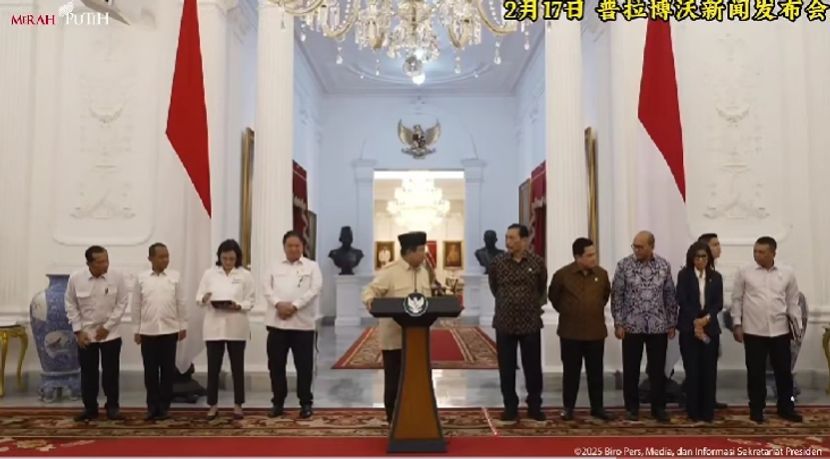
 On February 17, Indonesian President Prabowo issued Presidential Regulation No. 8 of 2025, announcing foreign exchange control policies for natural resource exports (DHE SDA). Starting March 1, 2025, exporters in the mining, plantation, forestry, and fisheries sectors must deposit 100% of their foreign exchange earnings into special bank accounts at state banks for a period of 12 months, with the exception of the oil and gas industry. Wang Zhanggui’s personal understanding is that this mainly targets raw material exports and should not apply to processed products. Once the official document is available, we will verify it. In addition, for exporters who do not comply, the government will impose sanctions of suspending export services. After the policy is implemented, exports are expected to generate an additional USD 80 billion in 2025. Based on a 12-month calculation, this means nearly USD 100 billion per year will be "locked" into the domestic financial system. But don’t be mistaken—this money is not actually locked or frozen; it is mandatory storage for 12 months, and companies can still use these foreign exchange for cross-border procurement settlements, shareholder dividends, or convert them into Indonesian rupiah for local business operations.
What are the pros and cons of this policy? Let me try to analyze them for you:
First, for the Indonesian government, this policy is expected to significantly boost foreign exchange reserves, with exports generating an additional USD 80 billion in 2025. This will stabilize the Indonesian economy and exchange rate, giving foreign investors less concern about a sharp depreciation of the Indonesian rupiah and making investment returns more secure. To promote industrial upgrading, Indonesia is likely to increase investment in infrastructure, improving transportation, energy supply, and other conditions.
Second, for investors, capital liquidity will be somewhat restricted. For example, if you invest USD 10 million in a mining project in Indonesia and make a profit, that profit must be deposited in a local Indonesian bank and cannot be freely transferred back to your home country. However, it can still be used for normal business operations. Additionally, failure to comply with the policy will result in suspension of export services. For instance, if you fail to deposit funds as required, your export business will be halted, causing significant losses. Exporters in the palm oil, coal, bauxite, and fisheries industries are expected to be most affected.
In summary, this policy acts like a combination punch: it retains the function of earning foreign exchange while, like a magnet, attracting industrial value to stay within the country, strengthening the government’s dominance over resource exports and enhancing the regulatory power of Indonesia's financial system. What do you think of this policy? I am Wang Zhanggui, who has been in Indonesia for 20 years, an expert on Indonesian business, helping factories establish operations efficiently in Indonesia.
On February 17, Indonesian President Prabowo issued Presidential Regulation No. 8 of 2025, announcing foreign exchange control policies for natural resource exports (DHE SDA). Starting March 1, 2025, exporters in the mining, plantation, forestry, and fisheries sectors must deposit 100% of their foreign exchange earnings into special bank accounts at state banks for a period of 12 months, with the exception of the oil and gas industry. Wang Zhanggui’s personal understanding is that this mainly targets raw material exports and should not apply to processed products. Once the official document is available, we will verify it. In addition, for exporters who do not comply, the government will impose sanctions of suspending export services. After the policy is implemented, exports are expected to generate an additional USD 80 billion in 2025. Based on a 12-month calculation, this means nearly USD 100 billion per year will be "locked" into the domestic financial system. But don’t be mistaken—this money is not actually locked or frozen; it is mandatory storage for 12 months, and companies can still use these foreign exchange for cross-border procurement settlements, shareholder dividends, or convert them into Indonesian rupiah for local business operations.
What are the pros and cons of this policy? Let me try to analyze them for you:
First, for the Indonesian government, this policy is expected to significantly boost foreign exchange reserves, with exports generating an additional USD 80 billion in 2025. This will stabilize the Indonesian economy and exchange rate, giving foreign investors less concern about a sharp depreciation of the Indonesian rupiah and making investment returns more secure. To promote industrial upgrading, Indonesia is likely to increase investment in infrastructure, improving transportation, energy supply, and other conditions.
Second, for investors, capital liquidity will be somewhat restricted. For example, if you invest USD 10 million in a mining project in Indonesia and make a profit, that profit must be deposited in a local Indonesian bank and cannot be freely transferred back to your home country. However, it can still be used for normal business operations. Additionally, failure to comply with the policy will result in suspension of export services. For instance, if you fail to deposit funds as required, your export business will be halted, causing significant losses. Exporters in the palm oil, coal, bauxite, and fisheries industries are expected to be most affected.
In summary, this policy acts like a combination punch: it retains the function of earning foreign exchange while, like a magnet, attracting industrial value to stay within the country, strengthening the government’s dominance over resource exports and enhancing the regulatory power of Indonesia's financial system. What do you think of this policy? I am Wang Zhanggui, who has been in Indonesia for 20 years, an expert on Indonesian business, helping factories establish operations efficiently in Indonesia.
Indonesia Imposes Foreign Exchange Controls on Natural Resources – What’s the Impact?
www.indoent.com
2025-02-20
On February 17, Indonesian President Prabowo issued Presidential Regulation No. 8 of 2025, announcing foreign exchange control policies for natural resource exports (DHE SDA). Starting March 1, 2025, exporters in the mining, plantation, forestry, and fisheries sectors must deposit 100% of their foreign exchange earnings into special bank accounts at state banks for a period of 12 months, with the exception of the oil and gas industry. Wang Zhanggui’s personal understanding is that this mainly targets raw material exports and should not apply to processed products. Once the official document is available, we will verify it. In addition, for exporters who do not comply, the government will take
On February 17, Indonesian President Prabowo issued Presidential Regulation No. 8 of 2025, announcing foreign exchange control policies for natural resource exports (DHE SDA). Starting March 1, 2025, exporters in the mining, plantation, forestry, and fisheries sectors must deposit 100% of their foreign exchange earnings into special bank accounts at state banks for a period of 12 months, with the exception of the oil and gas industry. Wang Zhanggui’s personal understanding is that this mainly targets raw material exports and should not apply to processed products. Once the official document is available, we will verify it. In addition, for exporters who do not comply, the government will impose sanctions of suspending export services. After the policy is implemented, exports are expected to generate an additional USD 80 billion in 2025. Based on a 12-month calculation, this means nearly USD 100 billion per year will be "locked" into the domestic financial system. But don’t be mistaken—this money is not actually locked or frozen; it is mandatory storage for 12 months, and companies can still use these foreign exchange for cross-border procurement settlements, shareholder dividends, or convert them into Indonesian rupiah for local business operations.
What are the pros and cons of this policy? Let me try to analyze them for you:
First, for the Indonesian government, this policy is expected to significantly boost foreign exchange reserves, with exports generating an additional USD 80 billion in 2025. This will stabilize the Indonesian economy and exchange rate, giving foreign investors less concern about a sharp depreciation of the Indonesian rupiah and making investment returns more secure. To promote industrial upgrading, Indonesia is likely to increase investment in infrastructure, improving transportation, energy supply, and other conditions.
Second, for investors, capital liquidity will be somewhat restricted. For example, if you invest USD 10 million in a mining project in Indonesia and make a profit, that profit must be deposited in a local Indonesian bank and cannot be freely transferred back to your home country. However, it can still be used for normal business operations. Additionally, failure to comply with the policy will result in suspension of export services. For instance, if you fail to deposit funds as required, your export business will be halted, causing significant losses. Exporters in the palm oil, coal, bauxite, and fisheries industries are expected to be most affected.
In summary, this policy acts like a combination punch: it retains the function of earning foreign exchange while, like a magnet, attracting industrial value to stay within the country, strengthening the government’s dominance over resource exports and enhancing the regulatory power of Indonesia's financial system. What do you think of this policy? I am Wang Zhanggui, who has been in Indonesia for 20 years, an expert on Indonesian business, helping factories establish operations efficiently in Indonesia.
Tags
Policy Information
Share to
Related Reading
 Policy Information
Chinese Mainland and Hong Kong Enterprises Eligible for Relaxed Foreign Exchange Deposit Rules in Indonesia
2026-08-30 Policy Information
China-Indonesia Multi-Sector Strategic Cooperation Upgrade Blueprint
2026-08-23 Policy Information