
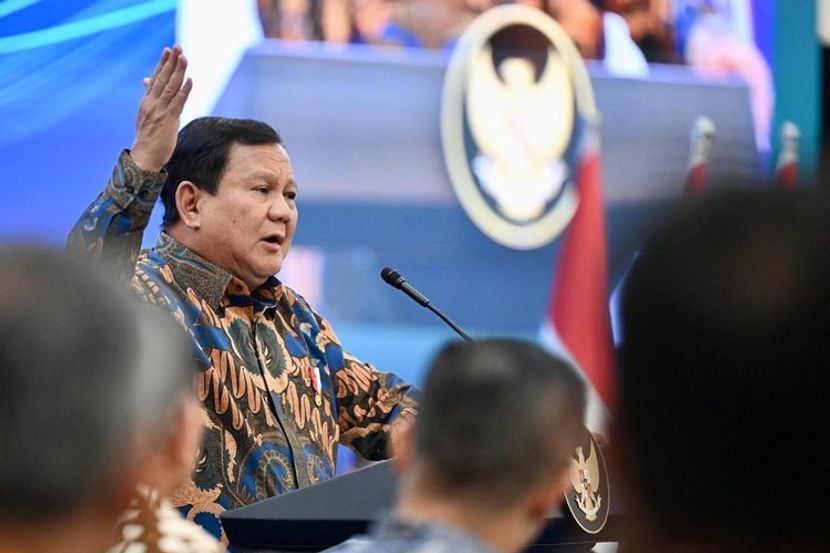
 President Prabowo plans to implement a series of measures in response to U.S. import tariff policies, aiming to enhance the country's economic competitiveness and promote economic growth.He called for relaxing the Domestic Component Level (TKDN) regulation, arguing that while the policy has good intentions, it should not be enforced if it ultimately squeezes the competitiveness of local products, and that improving domestic manufacturing capabilities cannot rely solely on this policy. He also instructed the cancellation of the technical assessment policy during the import process, as it is sometimes stricter than presidential decisions; the abolition of commodity import quotas, considering quota policies discriminatory and believing that the public can decide on the quantity and timing of imports themselves; and the simplification of import quarantine procedures, where if quarantine has already been conducted in the country of origin, domestic quarantine may no longer be required. Earlier, he had instructed the cabinet to simplify regulatory provisions that hinder domestic trade and eliminate non-tariff trade measures, believing this can enhance competitiveness, maintain market confidence, and attract investment, thereby promoting national economic growth. Indonesia has communicated with Malaysia, which holds the rotating ASEAN chairmanship, and given that all ten ASEAN member states are affected by U.S. tariffs, they will take joint action.
Indonesia Takes Multiple Measures to Address High U.S. Tariffs
www.indoent.com
2025-04-11
President Prabowo plans to implement a series of measures in response to U.S. import tariff policies, aiming to enhance the country's economic competitiveness and promote economic growth. He called for relaxing the Domestic Component Level (TKDN) regulation, arguing that while the policy has good intentions, it should not be enforced if it ultimately squeezes the competitiveness of local products, and that improving domestic manufacturing capabilities cannot rely solely on this policy. He also instructed the cancellation of the technical assessment policy during the import process, as it is sometimes stricter than presidential decisions; the abolition of commodity import quotas, considering quota policies discriminatory and believing that the public can decide on the quantity and timing of imports themselves
President Prabowo plans to implement a series of measures in response to U.S. import tariff policies, aiming to enhance the country's economic competitiveness and promote economic growth.He called for relaxing the Domestic Component Level (TKDN) regulation, arguing that while the policy has good intentions, it should not be enforced if it ultimately squeezes the competitiveness of local products, and that improving domestic manufacturing capabilities cannot rely solely on this policy. He also instructed the cancellation of the technical assessment policy during the import process, as it is sometimes stricter than presidential decisions; the abolition of commodity import quotas, considering quota policies discriminatory and believing that the public can decide on the quantity and timing of imports themselves; and the simplification of import quarantine procedures, where if quarantine has already been conducted in the country of origin, domestic quarantine may no longer be required. Earlier, he had instructed the cabinet to simplify regulatory provisions that hinder domestic trade and eliminate non-tariff trade measures, believing this can enhance competitiveness, maintain market confidence, and attract investment, thereby promoting national economic growth. Indonesia has communicated with Malaysia, which holds the rotating ASEAN chairmanship, and given that all ten ASEAN member states are affected by U.S. tariffs, they will take joint action.
Tags
Policy Information
Share to
Related Reading
 Policy Information
Chinese Mainland and Hong Kong Enterprises Eligible for Relaxed Foreign Exchange Deposit Rules in Indonesia
2026-08-30 Policy Information
China-Indonesia Multi-Sector Strategic Cooperation Upgrade Blueprint
2026-08-23 Policy Information