
The International Energy Agency recently reported that due to economic development, population growth, and manufacturing expansion, Southeast Asia will become one of the important engines of global energy demand growth in the next 10 years. By 2035, Southeast Asia will account for 25% of global energy demand growth. Indonesia is the largest economy in Southeast Asia and one of the world's major coal producers and exporters. Its coal and energy industry is leading the global market at an astonishing growth rate. In 2024, the country's coal output reached 836 million tons, exceeding the annual target of 710 million tons by 18%, and compared to the historical peak of 775 million tons in 2023, it set a new high. As the world's largest exporter of thermal coal, Indonesia's annual exports exceeded 555 million tons. These strong figures once again confirm the surging power of the "global energy engine."
Another point worth noting is that to reduce environmental pollution from traditional energy sources, the Indonesian government proposed a national carbon neutrality target in 2021, aiming to achieve net-zero emissions by 2060. Energy transition and potential exploration have created vast investment opportunities for Chinese enterprises, from clean coal technology upgrades and smart mine transformations to photovoltaic and wind power project development and energy storage system construction. The entire industry chain holds enormous blue ocean potential.
I. Why Indonesia for Seizing Opportunities in the Energy Industry Overseas Expansion?
Indonesia, known as the "Tropical Treasure Island," boasts unique resource endowments with abundant reserves of oil, natural gas, coal, nickel, tin, copper, gold, hydropower, and geothermal energy. However, its energy structure shows significant imbalance, dominated by coal (40.46%), oil (30.18%), and natural gas (16.28%), with clean energy accounting for only 13.09%. Renewable energy sources such as wind and solar power still account for a low share in the power structure. Specifically:
On one hand, Indonesia's non-renewable resources are extremely abundant, especially coal. According to the "World Energy Statistics Yearbook 2023," Indonesia's proven coal reserves reach 34.869 billion tons, ranking sixth globally, almost all of which are open-pit mines, with 90% distributed across the islands of Kalimantan and Sumatra. Leveraging its cost advantage in mining, Indonesia has ranked first globally in thermal coal exports for many consecutive years. In 2023, 70% of its exports went to the Asian market, mainly to China, India, Japan, and South Korea.
On the other hand, Indonesia has enormous potential for renewable energy development. Data shows that Indonesia's geothermal resources account for 40% of the global total, and solar radiation reaches 1,600-2,300 kWh/m² per year. However, development progress lags significantly; for example, geothermal energy utilization is only 10%, and installed photovoltaic capacity is less than 1% of the technically exploitable amount.
This "high-carbon lock-in" energy pattern brings multiple challenges to Indonesia's development—coal supports over 60% of the national power supply, making Indonesia the largest carbon emitter in Southeast Asia. In 2023, energy-related CO2 emissions reached 654 million tons, with the power and industrial sectors accounting for 42% and 19% respectively. As global energy transition accelerates, over-reliance on coal not only faces threats from international carbon tariff barriers but also constrains the progress toward its carbon neutrality target. Energy structure reform is urgent.
II. Accelerating Transformation: Indonesia's Energy Revolution: "Breaking" and "Establishing"
In recent years, the Indonesian government has gradually advanced energy transition, introducing a series of policy packages to reshape the national energy landscape, covering renewable energy development, low-carbon transformation of traditional energy, industrial upgrading, and international cooperation, to ensure the realization of energy transition goals.
In 2020, the Mining Law and export ban forced the mining industry to shift from primary extraction to high value-added processing, prohibiting the export of unprocessed nickel ore. When investing in nickel mining projects, enterprises must build smelters and battery material production lines in Indonesia. New regulations in 2025 further tightened, requiring exporters to lock foreign exchange earnings in domestic banks for one year and imposing an additional 15% export tax.
In March 2021, the government issued a "Priority List" for investment, canceling or relaxing restrictions on foreign shareholding in areas such as renewable energy. In 2022, a presidential regulation was issued to accelerate the development of renewable energy in electricity supply to attract more investors in geothermal resource development.
In September 2022, it announced that no new coal-fired power plants would be built except those already planned or under construction, and required the state electricity company (PLN) to accelerate the closure of its coal-fired power plants. PLN proposed a phased roadmap for phasing out coal power and is also compiling a carbon neutrality roadmap, planning to make renewable energy power plants dominate the national power generation map by 2045, and achieve 100% clean energy power generation by 2055-2060.
In 2022, a transmission and distribution system expansion and innovation plan with an investment scale of up to US$3 billion was announced. According to development targets, the country's grid infrastructure is expected to require an annual investment of about US$7 billion between 2030 and 2035.
In December 2023, the "Comprehensive Investment and Policy Plan" was released, detailing carbon reduction plans, priority projects, and financing mechanisms, proposing to increase the share of renewable energy in power generation to 44% by 2030. Over the next 3 to 5 years, Indonesia will also raise about US$20 billion through international financing mechanisms to help achieve its energy transition goals.
In the new energy sector, the Indonesian government has also introduced many investment incentives. In addition to VAT exemptions and vehicle purchase subsidies, the electric vehicle industry is listed as one of the encouraged investment industries in the "Priority List." Investors can enjoy 100% foreign ownership, 100% corporate income tax reduction (if investment exceeds US$35 million) or 50% corporate income tax reduction (if investment is between US$7 million and US$35 million), and other incentives. At the same time, Indonesia has centralized local government licensing and approval functions to the central government and simplified the approval process through digital government services.
III. How Can Chinese Enterprises Seize New Opportunities in Indonesia's Energy Transition?
Indonesia has high coal reserves with excellent quality, characterized by high moisture, low ash, and low sulfur content, making it highly competitive in the global market. At the same time, Indonesia's coal and energy industry faces challenges in mining and processing technology, environmental protection, and international market price fluctuations. China is the world's largest coal producer and the most important export destination for Indonesian coal, having accumulated rich experience in energy transition. China and Indonesia are deeply complementary in the energy transition. In October 2023, the two sides issued a joint statement on deepening comprehensive strategic cooperation, emphasizing high-quality cooperation in energy infrastructure and key clean energy development industries, opening new spaces for cooperation in renewable energy.
■ Coal Deep Processing Cooperation
China's coal deep processing field continues to innovate, such as gasification technology, clean coal technology, and coal chemical technology, significantly improving coal utilization efficiency. Chinese enterprises can participate in Indonesian coal coking, gasification, and other coal chemical projects, further extending the coal chemical industry chain and increasing the added value of coal chemical products.
■ Intelligent Cooperation
China's coal industry has accelerated intelligent transformation, with intelligent production capacity accounting for more than 50% of total coal production capacity. Chinese enterprises have obvious advantages in clean and efficient coal utilization, coal machinery equipment manufacturing, and intelligent mining, and can carry out in-depth cooperation with Indonesia.
■ Mining Investment Cooperation
Indonesia's reserves of coal, nickel, tin, copper, bauxite, and gold are among the top in the world. For example, nickel reserves account for 40%-45% of the world's total. Chinese enterprises can form an integrated industrial chain layout from nickel mining to lithium battery production through investment in factory construction and other means.
■ Infrastructure Construction Cooperation
Over the past decade since the implementation of the "Belt and Road" initiative, Chinese enterprises have developed rapidly in overseas contracting business and accumulated leading infrastructure experience. They can participate in Indonesian photovoltaic, power generation, and comprehensive infrastructure construction projects, providing key equipment and logistics facility construction.
IV. How Can the Indonesia International Coal & Energy Expo Empower China-Indonesia Cooperation?
Based on unique energy resource advantages, strong government support, and continuous expansion of international cooperation, Indonesia's energy transition, although still in its early stages, has achieved initial results and aims to achieve net-zero emissions by 2050, 10 years ahead of the original plan. Energy transition has become a major economic growth engine for the country. To accelerate the energy revolution and further unleash industrial potential, with strong support from the Ministry of Energy and Mineral Resources of Indonesia, the 2025 Indonesia International Coal and Energy Industry Expo and the 2025 Indonesia International Coal Clean Utilization and Green Mining Conference are about to kick off. Connecting Indonesia's top 100 coal companies and leading service providers, the event focuses on high-end, diversified, and low-carbon transformation directions to build a new ecosystem for energy transition.
Precise Matching of Technology Needs. The Indonesia International Coal Expo, with the theme "Coal Clean Utilization and Green Mining," focuses on cutting-edge technology showcases, full industry chain collaboration, and cross-border cooperation opportunities. It provides an international platform for energy enterprises integrating technology exchange, project matching, and industrial upgrading, presenting the latest technological achievements in coal and energy, covering smart mining equipment, clean coal technology, and new energy applications, helping Indonesia achieve its net-zero emission target.
Full-Chain Solutions. In addition to showcasing and exchanging cutting-edge technologies and advanced equipment, the Indonesia International Coal Expo also features concurrent forums and corporate roadshows, building a closed-loop matching platform of "technology showcase - scenario adaptation - investment implementation." Leading domestic enterprises such as Qinfa Group, Yikong Intelligent Driving, China Chemical Group, and CRRC Datong gathered, bringing full-chain low-carbon solutions including SDE coal washing and new energy in mining areas, intelligent driving, coal chemical industry, and electric trucks in coal mining areas, providing replicable experience for Indonesia's energy transition and Chinese enterprises going global.
Efficiently Promoting Industrial Collaboration. To help Chinese and Indonesian enterprises deepen mutual understanding, during the preparation stage of the expo, the organizing committee of the Indonesia International Coal Expo organized domestic enterprises in clean and efficient coal utilization, coal machinery equipment manufacturing, and intelligent fields to conduct a 5-day research and inspection trip to Indonesia. They visited local leading enterprises, engaged with the Indonesia-China Business Council, the Indonesian Mining Services Association, and the Indonesian Coal Mining Association, and held matchmaking meetings for China-Indonesia coal machinery, mining machinery and parts cooperation, and China-Indonesia coal supply chain cooperation, promoting exchanges and cooperation in the coal and energy sectors between China and Indonesia.
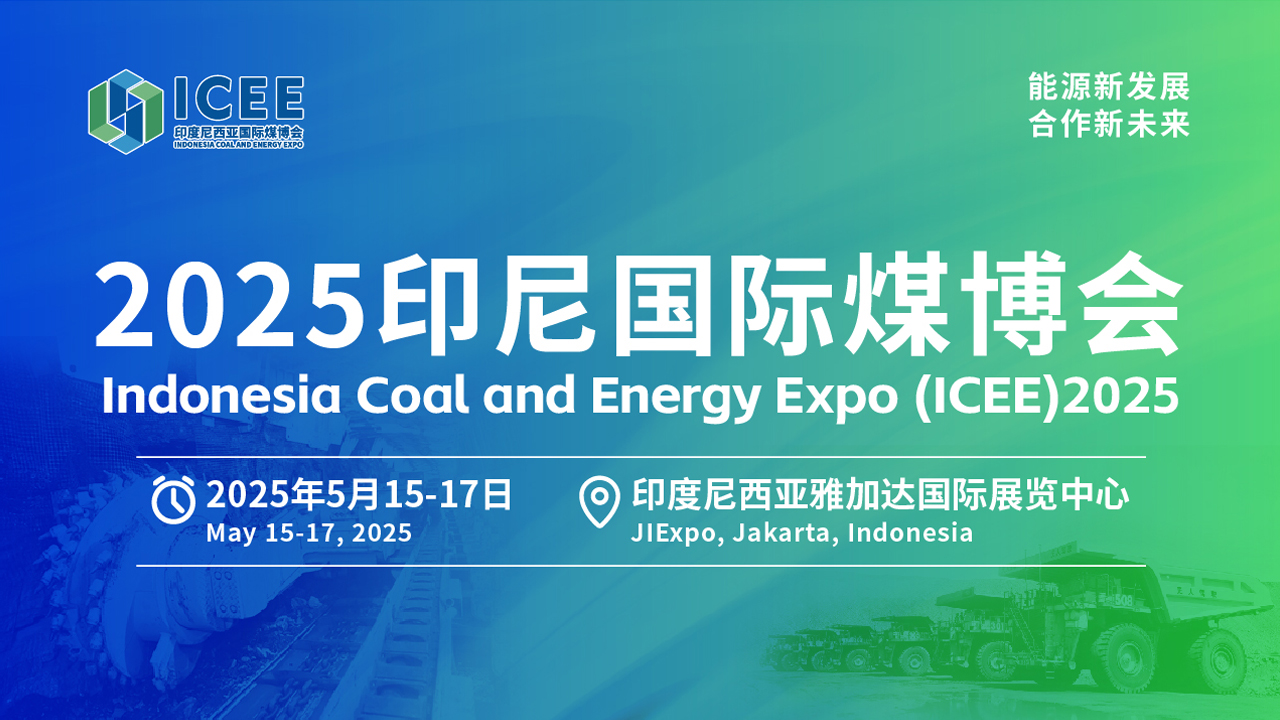
Through the "Exhibition + Conference + Inspection" trinity model, the 2025 Indonesia International Coal Expo will bring together top forces in the coal and energy industry, injecting new transformation momentum into the energy industry of Southeast Asia and even the world. From May 15-17, 2025, we sincerely invite you to meet in Jakarta, seize the opportunities for overseas investment, and explore new tracks in Indonesia's energy transition together!
2025 Indonesia International Coal Expo Organizing Committee
Contact: +8613685001810 081110116323 Email: [email protected]
[Preview: Exhibitor list, highlights exhibits, main forum topics... Next issue brings you more hardcore information!]
[caption id="attachment_4195" align="aligncenter" width="218"] Scan the QR code to register for free visit[/caption]


