
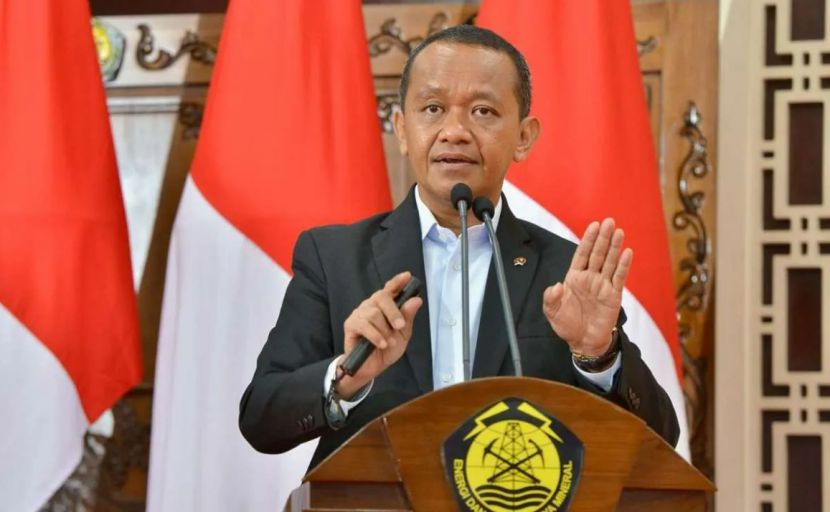
 The Indonesian government has announced a full ban on the export of all rare earth metals and their by-products. The ban was issued by the Minister of Energy and Mineral Resources,aiming to implement President Prabowo's directive to strengthen state control over strategic resources.
Indonesia's rare earth resources are mainly associated with tin mining by-products (such as monazite and xenotime), containing 17 types of rare earth elements, among which neodymium (Nd), praseodymium (Pr), and other permanent magnet materials account for more than 60% of global consumption.
The newly established Mineral Industry Bureau in August will take the lead in rare earth value-added processing, prioritizing the development of mining areas without mining permits (IUP) by state-owned enterprises. Rare earth permanent magnet materials account for 90% of the global market value, and Indonesia plans to obtain higher profits through domestic processing. The current export of tin mining by-products does not fully reflect the strategic value of rare earths, and the ban promotes industrial chain extension.
The government will focus on supervising the flow of by-products from tin mining enterprises, leading the refining and application development of rare earths through BUMN (state-owned enterprises) to build a complete industrial chain. This move is seen as a key step for Indonesia to reduce primary mineral exports and increase the added value of resources.
The Indonesian government has announced a full ban on the export of all rare earth metals and their by-products. The ban was issued by the Minister of Energy and Mineral Resources,aiming to implement President Prabowo's directive to strengthen state control over strategic resources.
Indonesia's rare earth resources are mainly associated with tin mining by-products (such as monazite and xenotime), containing 17 types of rare earth elements, among which neodymium (Nd), praseodymium (Pr), and other permanent magnet materials account for more than 60% of global consumption.
The newly established Mineral Industry Bureau in August will take the lead in rare earth value-added processing, prioritizing the development of mining areas without mining permits (IUP) by state-owned enterprises. Rare earth permanent magnet materials account for 90% of the global market value, and Indonesia plans to obtain higher profits through domestic processing. The current export of tin mining by-products does not fully reflect the strategic value of rare earths, and the ban promotes industrial chain extension.
The government will focus on supervising the flow of by-products from tin mining enterprises, leading the refining and application development of rare earths through BUMN (state-owned enterprises) to build a complete industrial chain. This move is seen as a key step for Indonesia to reduce primary mineral exports and increase the added value of resources.
Indonesia Fully Bans Rare Earth Metal Exports
www.indoent.com
2025-10-15
The Indonesian government has announced a full ban on the export of all rare earth metals and their by-products. The ban was issued by the Minister of Energy and Mineral Resources, aiming to implement President Prabowo's directive to strengthen state control over strategic resources. Indonesia's rare earth resources are mainly associated with tin mining by-products (such as monazite and xenotime), containing 17 rare earth elements, among which neodymium (Nd), praseodymium (Pr), and other permanent magnet materials account for more than 60% of global consumption. The newly established Mineral Industry Bureau in August will take the lead in rare earth value-added processing, prioritizing the development of mining areas without mining permits (IUP) by state-owned enterprises.
The Indonesian government has announced a full ban on the export of all rare earth metals and their by-products. The ban was issued by the Minister of Energy and Mineral Resources,aiming to implement President Prabowo's directive to strengthen state control over strategic resources.
Indonesia's rare earth resources are mainly associated with tin mining by-products (such as monazite and xenotime), containing 17 types of rare earth elements, among which neodymium (Nd), praseodymium (Pr), and other permanent magnet materials account for more than 60% of global consumption.
The newly established Mineral Industry Bureau in August will take the lead in rare earth value-added processing, prioritizing the development of mining areas without mining permits (IUP) by state-owned enterprises. Rare earth permanent magnet materials account for 90% of the global market value, and Indonesia plans to obtain higher profits through domestic processing. The current export of tin mining by-products does not fully reflect the strategic value of rare earths, and the ban promotes industrial chain extension.
The government will focus on supervising the flow of by-products from tin mining enterprises, leading the refining and application development of rare earths through BUMN (state-owned enterprises) to build a complete industrial chain. This move is seen as a key step for Indonesia to reduce primary mineral exports and increase the added value of resources.
Tags
Industry News
Share to
Related Reading
 Industry Flash
Cheap Chinese Plastics Impact Indonesia's Petrochemical Industry, Association Calls for Protection
2026-09-03 Industry News
Investment Heat in Two Key Industrial Parks in Central Java Continues to Rise
2026-08-31 Industry News