
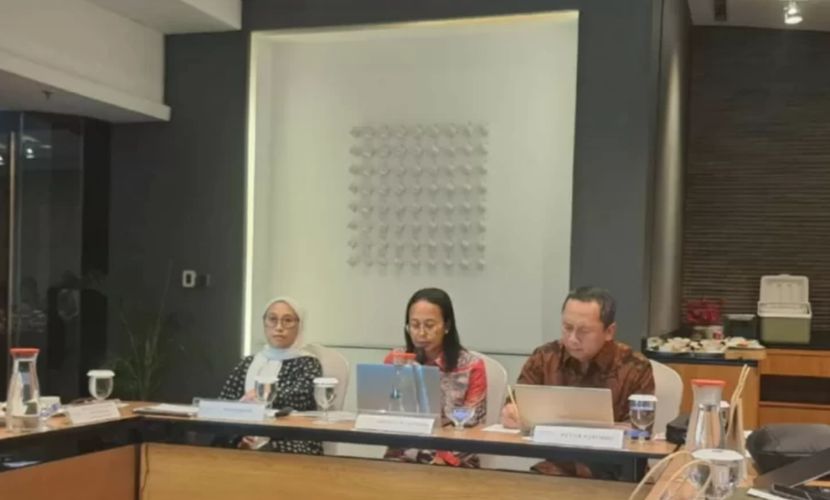
 \n\nThe Chairman of the Indonesian Refractory and Insulation Materials Association (ASRINDO) recently stated that the domestic refractory materials industry will become a catalyst for national industrial growth, supporting President Prabowo's target of 8% economic growth by 2029. This industry plays a key role by supporting the production processes of basic industries such as cement, glass, and ceramics.\n\nAt an industry matching conference held in Bandung, he pointed out that the refractory materials industry has four major advantages: just-in-time supply, on-time delivery, comprehensive after-sales service, and increasing domestic capacity utilization from the current 30% to 70-80%.\n\nCurrently, the industry is promoting the formulation of mandatory Indonesian National Standards (SNI) and professional certification for installation workers, in order to comply with global quality standards (ASTM standards). The Director of Non-Metallic Mineral Processing at the Ministry of Industry chaired the meeting, attended by various industry associations and corporate representatives. The industry expansion plan will significantly increase the participation of refractory materials in thermal production processes, directly contributing to national industrial output growth.
Indonesia's Refractory Materials Industry Becomes a New Engine for Economic Growth
www.indoent.com
2025-11-04
The Chairman of the Indonesian Refractory and Insulation Materials Association (ASRINDO) recently stated that the domestic refractory materials industry will become a catalyst for national industrial growth, supporting President Prabowo's target of 8% economic growth by 2029. This industry plays a key role by supporting the production processes of basic industries such as cement, glass, and ceramics.\r\n\r\nAt an industry matching conference held in Bandung, he pointed out that the refractory materials industry has four major advantages: just-in-time supply, on-time delivery, comprehensive after-sales service, and increasing domestic capacity utilization from the current 30% to 70-80%.
\n\nThe Chairman of the Indonesian Refractory and Insulation Materials Association (ASRINDO) recently stated that the domestic refractory materials industry will become a catalyst for national industrial growth, supporting President Prabowo's target of 8% economic growth by 2029. This industry plays a key role by supporting the production processes of basic industries such as cement, glass, and ceramics.\n\nAt an industry matching conference held in Bandung, he pointed out that the refractory materials industry has four major advantages: just-in-time supply, on-time delivery, comprehensive after-sales service, and increasing domestic capacity utilization from the current 30% to 70-80%.\n\nCurrently, the industry is promoting the formulation of mandatory Indonesian National Standards (SNI) and professional certification for installation workers, in order to comply with global quality standards (ASTM standards). The Director of Non-Metallic Mineral Processing at the Ministry of Industry chaired the meeting, attended by various industry associations and corporate representatives. The industry expansion plan will significantly increase the participation of refractory materials in thermal production processes, directly contributing to national industrial output growth.
Tags
Industry News
Share to
Related Reading
 Industry Flash
Cheap Chinese Plastics Impact Indonesia's Petrochemical Industry, Association Calls for Protection
2026-09-03 Industry News
Investment Heat in Two Key Industrial Parks in Central Java Continues to Rise
2026-08-31 Industry News