
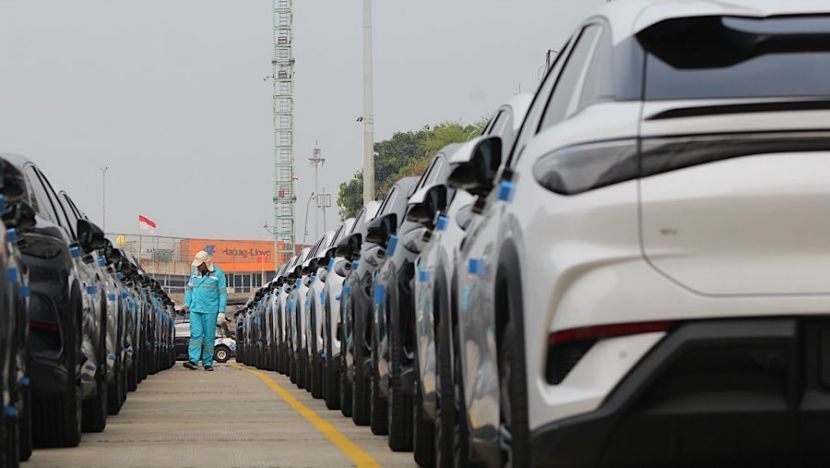
 The Institute for Essential Services Reform (IESR) believes that the government's plan to stop EV incentive policies in 2026 may cause significant economic losses and delay the development of the domestic EV ecosystem. The institute estimates that if the EV transition momentum is interrupted, the cumulative economic benefits of the battery and EV integrated industry will be lost at least 544 trillion rupiah per year by 2060.
The incentive policies include reducing import duties on completely built-up (CBU) EVs from 50% to 0%, value-added tax (PPN) exemptions, etc. Stopping them will directly lead to price increases (losing 10% PPN benefits and import convenience), suppress sales, hinder the growth of supporting industries such as batteries and components, and slow down EV adoption (which is crucial for reducing fuel demand and oil imports).
Currently, although 8 EV manufacturers are producing in Indonesia, it is still difficult to form healthy competition, and they are far from reaching the targets of 60% by 2027 and 80% local component content (TKDN) by 2030. IESR research shows that incentives have a significant effect on promoting EV conversion: in October 2025, national EV sales hit a record of 68,827 units, mostly incentivized models; while after the end of EV motorcycle incentives in 2025, first-quarter sales plunged 80% year-on-year.
The CEO pointed out that vehicle electrification is core to reducing emissions in the transportation sector (contributing 45%-50%), combined with the "avoid-shift-improve" strategy, it can reduce carbon by 76% in the long term and 18% by 2030. IESR recommends that the government reassess the plan to stop incentives to avoid disrupting the investment environment—some manufacturers are still building factories, and it needs to attract global brands to prevent them from turning to Southeast Asian competitors.
The Institute for Essential Services Reform (IESR) believes that the government's plan to stop EV incentive policies in 2026 may cause significant economic losses and delay the development of the domestic EV ecosystem. The institute estimates that if the EV transition momentum is interrupted, the cumulative economic benefits of the battery and EV integrated industry will be lost at least 544 trillion rupiah per year by 2060.
The incentive policies include reducing import duties on completely built-up (CBU) EVs from 50% to 0%, value-added tax (PPN) exemptions, etc. Stopping them will directly lead to price increases (losing 10% PPN benefits and import convenience), suppress sales, hinder the growth of supporting industries such as batteries and components, and slow down EV adoption (which is crucial for reducing fuel demand and oil imports).
Currently, although 8 EV manufacturers are producing in Indonesia, it is still difficult to form healthy competition, and they are far from reaching the targets of 60% by 2027 and 80% local component content (TKDN) by 2030. IESR research shows that incentives have a significant effect on promoting EV conversion: in October 2025, national EV sales hit a record of 68,827 units, mostly incentivized models; while after the end of EV motorcycle incentives in 2025, first-quarter sales plunged 80% year-on-year.
The CEO pointed out that vehicle electrification is core to reducing emissions in the transportation sector (contributing 45%-50%), combined with the "avoid-shift-improve" strategy, it can reduce carbon by 76% in the long term and 18% by 2030. IESR recommends that the government reassess the plan to stop incentives to avoid disrupting the investment environment—some manufacturers are still building factories, and it needs to attract global brands to prevent them from turning to Southeast Asian competitors.
Indonesia's Cancellation of EV Incentives May Impact Industry Development
www.indoent.com
2025-12-23
The Institute for Essential Services Reform (IESR) believes that the government's plan to stop EV incentive policies in 2026 may cause significant economic losses and delay the development of the domestic EV ecosystem. The institute estimates that if the EV transition momentum is interrupted, the cumulative economic benefits of the battery and EV integrated industry will be lost at least 544 trillion rupiah per year by 2060. The incentive policies include reducing import duties on completely built-up (CBU) EVs from 50% to 0%, value-added tax (PPN) exemptions, etc. Stopping them will directly lead to price increases (losing 10% PPN benefits and import convenience), suppressing sales, hindering the growth of supporting industries such as batteries and components, and slowing down EV adoption (which is crucial for reducing fuel demand and oil imports).
The Institute for Essential Services Reform (IESR) believes that the government's plan to stop EV incentive policies in 2026 may cause significant economic losses and delay the development of the domestic EV ecosystem. The institute estimates that if the EV transition momentum is interrupted, the cumulative economic benefits of the battery and EV integrated industry will be lost at least 544 trillion rupiah per year by 2060.
The incentive policies include reducing import duties on completely built-up (CBU) EVs from 50% to 0%, value-added tax (PPN) exemptions, etc. Stopping them will directly lead to price increases (losing 10% PPN benefits and import convenience), suppress sales, hinder the growth of supporting industries such as batteries and components, and slow down EV adoption (which is crucial for reducing fuel demand and oil imports).
Currently, although 8 EV manufacturers are producing in Indonesia, it is still difficult to form healthy competition, and they are far from reaching the targets of 60% by 2027 and 80% local component content (TKDN) by 2030. IESR research shows that incentives have a significant effect on promoting EV conversion: in October 2025, national EV sales hit a record of 68,827 units, mostly incentivized models; while after the end of EV motorcycle incentives in 2025, first-quarter sales plunged 80% year-on-year.
The CEO pointed out that vehicle electrification is core to reducing emissions in the transportation sector (contributing 45%-50%), combined with the "avoid-shift-improve" strategy, it can reduce carbon by 76% in the long term and 18% by 2030. IESR recommends that the government reassess the plan to stop incentives to avoid disrupting the investment environment—some manufacturers are still building factories, and it needs to attract global brands to prevent them from turning to Southeast Asian competitors.
Tags
Social Trends
Share to


