
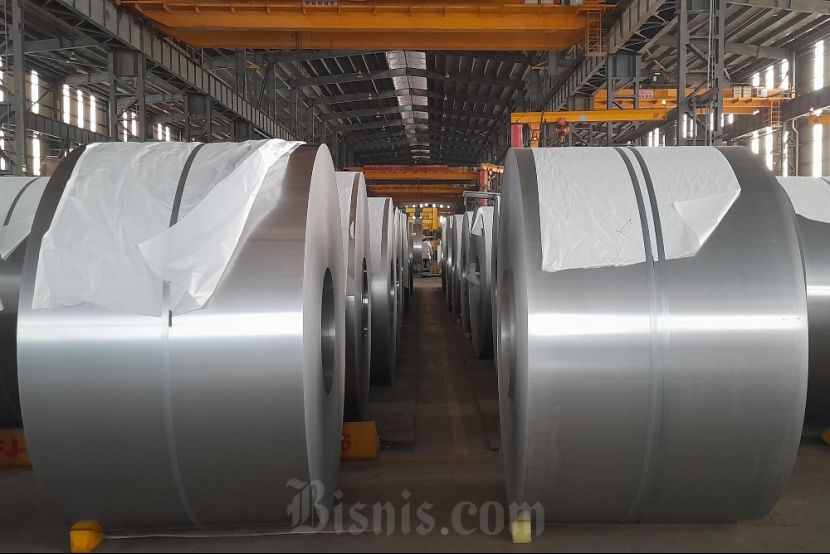
 The Ministry of Industry stated that the local steel industry is facing multiple development challenges, with the core issues being the influx of low-priced imported steel products and outdated domestic production equipment and technology, directly leading to insufficient absorption of local capacity by the domestic market. The Deputy Minister of Industry revealed during a working meeting with a House of Representatives commission that Indonesia's crude steel output in 2025 reached 19 million tons, up from 18.6 million tons in 2024, ranking 13th globally. According to the World Steel Association, global crude steel output in 2025 was 1.849 billion tons, with China ranking first at 960.8 million tons (51.9%), followed by India at 164.9 million tons (8.9%).
Indonesia's domestic steel consumption structure is highly concentrated, with construction accounting for 77.1% as the largest consumer, followed by automotive at 11.6% and household appliances at only 3.3%. Local steel demand is heavily dependent on infrastructure and real estate development progress. Meanwhile, local steel companies' capacity remains focused on serving the construction and infrastructure sectors, failing to meet the raw material needs of rapidly developing industries such as automotive, shipbuilding, and heavy machinery, resulting in a mismatch between market supply and industrial demand.
Additionally, Indonesia's steel industry faces multiple upstream production shortcomings: most domestic production facilities are old, with relatively backward technology and not fully green, directly affecting product quality and raising production costs, making it difficult for local companies to compete with imported products in terms of price and quality. High domestic energy and logistics costs, coupled with the continuous impact of low-priced imported steel, further compress local companies' profit margins.
To address these difficulties, the government has formulated relief measures for the local steel industry, including: preventing unfair trade practices to protect local industry, accelerating the introduction and application of green technology, mandating Indonesian National Standards for downstream steel products, and increasing investment in upstream steel sectors such as crude steel, aiming to boost the competitiveness of the local steel industry through market protection, technology upgrade, standard regulation, and upstream industry layout.
The Ministry of Industry stated that the local steel industry is facing multiple development challenges, with the core issues being the influx of low-priced imported steel products and outdated domestic production equipment and technology, directly leading to insufficient absorption of local capacity by the domestic market. The Deputy Minister of Industry revealed during a working meeting with a House of Representatives commission that Indonesia's crude steel output in 2025 reached 19 million tons, up from 18.6 million tons in 2024, ranking 13th globally. According to the World Steel Association, global crude steel output in 2025 was 1.849 billion tons, with China ranking first at 960.8 million tons (51.9%), followed by India at 164.9 million tons (8.9%).
Indonesia's domestic steel consumption structure is highly concentrated, with construction accounting for 77.1% as the largest consumer, followed by automotive at 11.6% and household appliances at only 3.3%. Local steel demand is heavily dependent on infrastructure and real estate development progress. Meanwhile, local steel companies' capacity remains focused on serving the construction and infrastructure sectors, failing to meet the raw material needs of rapidly developing industries such as automotive, shipbuilding, and heavy machinery, resulting in a mismatch between market supply and industrial demand.
Additionally, Indonesia's steel industry faces multiple upstream production shortcomings: most domestic production facilities are old, with relatively backward technology and not fully green, directly affecting product quality and raising production costs, making it difficult for local companies to compete with imported products in terms of price and quality. High domestic energy and logistics costs, coupled with the continuous impact of low-priced imported steel, further compress local companies' profit margins.
To address these difficulties, the government has formulated relief measures for the local steel industry, including: preventing unfair trade practices to protect local industry, accelerating the introduction and application of green technology, mandating Indonesian National Standards for downstream steel products, and increasing investment in upstream steel sectors such as crude steel, aiming to boost the competitiveness of the local steel industry through market protection, technology upgrade, standard regulation, and upstream industry layout.
Indonesian Government Takes Multiple Measures to Relieve Local Steel Industry
www.indoent.com
2026-02-06
The Ministry of Industry stated that the local steel industry is facing multiple development challenges, with the core issues being the influx of low-priced imported steel products and outdated domestic production equipment and technology, directly leading to insufficient absorption of local capacity by the domestic market. The Deputy Minister of Industry revealed during a working meeting with a House of Representatives commission that Indonesia's crude steel output in 2025 reached 19 million tons, up from 18.6 million tons in 2024, ranking 13th globally. According to the World Steel Association, global crude steel output in 2025 was 1.849 billion tons, with China ranking first at 960.8 million tons (51.9%), followed by India at 164.9 million tons (8.9%).
The Ministry of Industry stated that the local steel industry is facing multiple development challenges, with the core issues being the influx of low-priced imported steel products and outdated domestic production equipment and technology, directly leading to insufficient absorption of local capacity by the domestic market. The Deputy Minister of Industry revealed during a working meeting with a House of Representatives commission that Indonesia's crude steel output in 2025 reached 19 million tons, up from 18.6 million tons in 2024, ranking 13th globally. According to the World Steel Association, global crude steel output in 2025 was 1.849 billion tons, with China ranking first at 960.8 million tons (51.9%), followed by India at 164.9 million tons (8.9%).
Indonesia's domestic steel consumption structure is highly concentrated, with construction accounting for 77.1% as the largest consumer, followed by automotive at 11.6% and household appliances at only 3.3%. Local steel demand is heavily dependent on infrastructure and real estate development progress. Meanwhile, local steel companies' capacity remains focused on serving the construction and infrastructure sectors, failing to meet the raw material needs of rapidly developing industries such as automotive, shipbuilding, and heavy machinery, resulting in a mismatch between market supply and industrial demand.
Additionally, Indonesia's steel industry faces multiple upstream production shortcomings: most domestic production facilities are old, with relatively backward technology and not fully green, directly affecting product quality and raising production costs, making it difficult for local companies to compete with imported products in terms of price and quality. High domestic energy and logistics costs, coupled with the continuous impact of low-priced imported steel, further compress local companies' profit margins.
To address these difficulties, the government has formulated relief measures for the local steel industry, including: preventing unfair trade practices to protect local industry, accelerating the introduction and application of green technology, mandating Indonesian National Standards for downstream steel products, and increasing investment in upstream steel sectors such as crude steel, aiming to boost the competitiveness of the local steel industry through market protection, technology upgrade, standard regulation, and upstream industry layout.
Tags
Industry News
Share to
Related Reading
 Industry Flash
Cheap Chinese Plastics Impact Indonesia's Petrochemical Industry, Association Calls for Protection
2026-09-03 Industry News
Investment Heat in Two Key Industrial Parks in Central Java Continues to Rise
2026-08-31 Industry News