
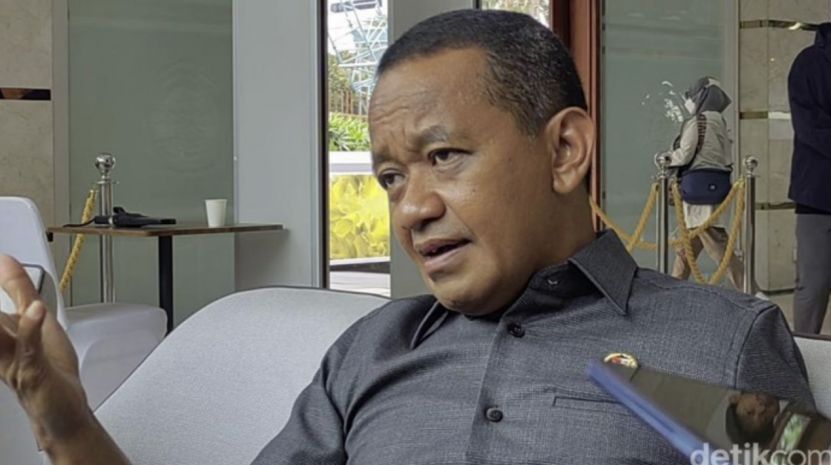
 The Minister of Energy and Mineral Resources recently emphasized that strict measures will be taken against holders of problematic mining business licenses (IUP), including companies that have failed to fulfill their obligations to the state. This demonstrates the government's commitment to overhauling the national mining governance and enabling the mining sector to benefit the public to the greatest extent. He pointed out that good mining management can increase state revenue, which can then be used for regional development, nutritious food, healthcare, education, and infrastructure construction.
Alongside strict enforcement, future mining management will focus on environmental protection to prevent disasters such as floods and landslides caused by mining activities; mining activities should also promote community empowerment alongside environmental protection, enabling surrounding communities to gain additional value. In the oil and gas sector, the government is accelerating oil and gas exploration in eastern Indonesia through more attractive cooperation models and incentive measures; at the same time, it is implementing a "people-friendly oil and gas" policy to regulate community oil wells, protecting people's operations while ensuring compliance with environmental and mining safety regulations.
According to the results of sector review and consolidation, over 45,000 community oil wells can be legally and efficiently operated, expected to increase daily crude oil production by approximately 10,000 barrels and create 225,000 new jobs across multiple regions. He stated that this is a practice of implementing Article 33 of the 1945 Constitution, emphasizing that oil and gas resources should not be solely controlled by foreign capital or large corporations, and the public must receive the maximum benefits.
The Minister of Energy and Mineral Resources recently emphasized that strict measures will be taken against holders of problematic mining business licenses (IUP), including companies that have failed to fulfill their obligations to the state. This demonstrates the government's commitment to overhauling the national mining governance and enabling the mining sector to benefit the public to the greatest extent. He pointed out that good mining management can increase state revenue, which can then be used for regional development, nutritious food, healthcare, education, and infrastructure construction.
Alongside strict enforcement, future mining management will focus on environmental protection to prevent disasters such as floods and landslides caused by mining activities; mining activities should also promote community empowerment alongside environmental protection, enabling surrounding communities to gain additional value. In the oil and gas sector, the government is accelerating oil and gas exploration in eastern Indonesia through more attractive cooperation models and incentive measures; at the same time, it is implementing a "people-friendly oil and gas" policy to regulate community oil wells, protecting people's operations while ensuring compliance with environmental and mining safety regulations.
According to the results of sector review and consolidation, over 45,000 community oil wells can be legally and efficiently operated, expected to increase daily crude oil production by approximately 10,000 barrels and create 225,000 new jobs across multiple regions. He stated that this is a practice of implementing Article 33 of the 1945 Constitution, emphasizing that oil and gas resources should not be solely controlled by foreign capital or large corporations, and the public must receive the maximum benefits.
Indonesian Government to Overhaul Mining and Oil & Gas Sectors
www.indoent.com
2026-01-03
The Minister of Energy and Mineral Resources recently emphasized that strict measures will be taken against holders of problematic mining business licenses (IUP), including companies that have failed to fulfill their obligations to the state. This demonstrates the government's commitment to overhauling the national mining governance and maximizing benefits for the public. He noted that sound mining management can increase state revenue, which can then be used for regional development, nutritious food, healthcare, education, and infrastructure construction. Alongside strict enforcement, future mining management will focus on environmental protection to prevent disasters such as floods and landslides caused by mining activities; mining activities should also promote
The Minister of Energy and Mineral Resources recently emphasized that strict measures will be taken against holders of problematic mining business licenses (IUP), including companies that have failed to fulfill their obligations to the state. This demonstrates the government's commitment to overhauling the national mining governance and enabling the mining sector to benefit the public to the greatest extent. He pointed out that good mining management can increase state revenue, which can then be used for regional development, nutritious food, healthcare, education, and infrastructure construction.
Alongside strict enforcement, future mining management will focus on environmental protection to prevent disasters such as floods and landslides caused by mining activities; mining activities should also promote community empowerment alongside environmental protection, enabling surrounding communities to gain additional value. In the oil and gas sector, the government is accelerating oil and gas exploration in eastern Indonesia through more attractive cooperation models and incentive measures; at the same time, it is implementing a "people-friendly oil and gas" policy to regulate community oil wells, protecting people's operations while ensuring compliance with environmental and mining safety regulations.
According to the results of sector review and consolidation, over 45,000 community oil wells can be legally and efficiently operated, expected to increase daily crude oil production by approximately 10,000 barrels and create 225,000 new jobs across multiple regions. He stated that this is a practice of implementing Article 33 of the 1945 Constitution, emphasizing that oil and gas resources should not be solely controlled by foreign capital or large corporations, and the public must receive the maximum benefits.
Tags
Industry News
Share to
Related Reading
 Industry Flash
Cheap Chinese Plastics Impact Indonesia's Petrochemical Industry, Association Calls for Protection
2026-09-03 Industry News
Investment Heat in Two Key Industrial Parks in Central Java Continues to Rise
2026-08-31 Industry News