
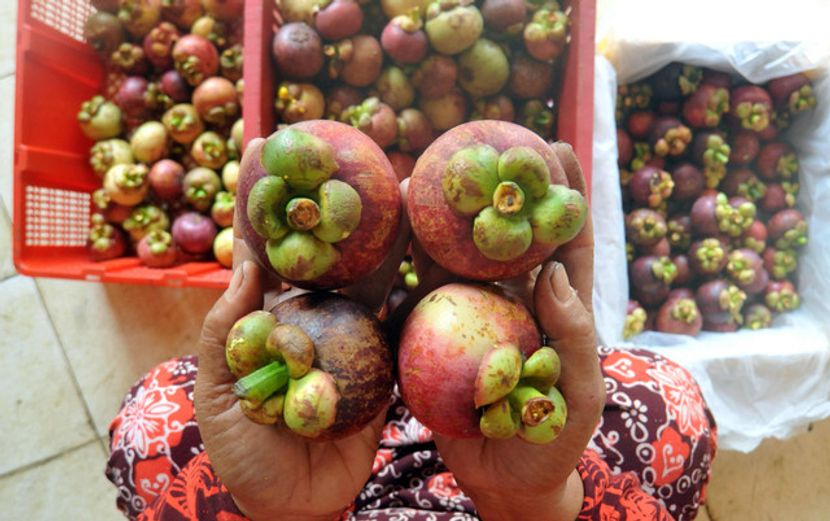
 The Bali Animal, Fish and Plant Quarantine Agency recorded that from January 1 to February 9, 2026, total mangosteen exports from Bali to China reached 79.5 tons, worth approximately 2.6 billion rupiah. This export volume compared to 9.7 tons in December 2025, an increase of about 700%. The head of the agency said the surge was mainly driven by high demand from the Chinese market ahead of the Chinese New Year, as mangosteens are very popular during the Chinese New Year because they symbolize good luck, prosperity, and health, and their color and taste are also suitable as festival offerings and specialty fruits.
To ensure smooth exports, the quarantine department strictly inspects to ensure mangosteens meet Chinese inspection requirements, including being free from pests such as whiteflies, fruit flies, scale insects, and snails, in line with the export quarantine protocol signed between the two countries. However, he also noted that exports in early 2026 were lower than the 365 tons recorded in the same period of 2025, a significant decline. The main reason is seasonal changes and extreme weather, leading to lower mangosteen production. Nonetheless, the strong short-term rebound in exports still shows the robust demand from the Chinese market for Bali mangosteens, providing important support for local farmers and agricultural exports. The quarantine agency stated it will continue to strengthen supervision and services to help Bali's high-quality fruits enter the Chinese market steadily, while assisting farmers in coping with climate impacts to stabilize production capacity and export scale.
The Bali Animal, Fish and Plant Quarantine Agency recorded that from January 1 to February 9, 2026, total mangosteen exports from Bali to China reached 79.5 tons, worth approximately 2.6 billion rupiah. This export volume compared to 9.7 tons in December 2025, an increase of about 700%. The head of the agency said the surge was mainly driven by high demand from the Chinese market ahead of the Chinese New Year, as mangosteens are very popular during the Chinese New Year because they symbolize good luck, prosperity, and health, and their color and taste are also suitable as festival offerings and specialty fruits.
To ensure smooth exports, the quarantine department strictly inspects to ensure mangosteens meet Chinese inspection requirements, including being free from pests such as whiteflies, fruit flies, scale insects, and snails, in line with the export quarantine protocol signed between the two countries. However, he also noted that exports in early 2026 were lower than the 365 tons recorded in the same period of 2025, a significant decline. The main reason is seasonal changes and extreme weather, leading to lower mangosteen production. Nonetheless, the strong short-term rebound in exports still shows the robust demand from the Chinese market for Bali mangosteens, providing important support for local farmers and agricultural exports. The quarantine agency stated it will continue to strengthen supervision and services to help Bali's high-quality fruits enter the Chinese market steadily, while assisting farmers in coping with climate impacts to stabilize production capacity and export scale.
Bali Mangosteen Exports to China Surge Due to Chinese New Year
www.indoent.com
2026-02-14
The Bali Animal, Fish and Plant Quarantine Agency recorded that from January 1 to February 9, 2026, total mangosteen exports from Bali to China reached 79.5 tons, worth approximately 2.6 billion rupiah. This export volume increased by about 700% compared to 9.7 tons in December 2025. The head of the agency stated that the surge was driven by high demand from the Chinese market ahead of the Chinese New Year, as mangosteens are very popular during the Chinese New Year due to their symbolism of good luck, prosperity, and health, and their color and taste are suitable as festive offerings and specialty fruits. To ensure smooth exports, the quarantine department strictly inspects to ensure mangosteens meet Chinese inspection requirements, including being free from pests such as whiteflies, fruit flies, scale insects, and snails, in line with the export quarantine protocol signed between the two countries.
The Bali Animal, Fish and Plant Quarantine Agency recorded that from January 1 to February 9, 2026, total mangosteen exports from Bali to China reached 79.5 tons, worth approximately 2.6 billion rupiah. This export volume compared to 9.7 tons in December 2025, an increase of about 700%. The head of the agency said the surge was mainly driven by high demand from the Chinese market ahead of the Chinese New Year, as mangosteens are very popular during the Chinese New Year because they symbolize good luck, prosperity, and health, and their color and taste are also suitable as festival offerings and specialty fruits.
To ensure smooth exports, the quarantine department strictly inspects to ensure mangosteens meet Chinese inspection requirements, including being free from pests such as whiteflies, fruit flies, scale insects, and snails, in line with the export quarantine protocol signed between the two countries. However, he also noted that exports in early 2026 were lower than the 365 tons recorded in the same period of 2025, a significant decline. The main reason is seasonal changes and extreme weather, leading to lower mangosteen production. Nonetheless, the strong short-term rebound in exports still shows the robust demand from the Chinese market for Bali mangosteens, providing important support for local farmers and agricultural exports. The quarantine agency stated it will continue to strengthen supervision and services to help Bali's high-quality fruits enter the Chinese market steadily, while assisting farmers in coping with climate impacts to stabilize production capacity and export scale.
Tags
Industry News
Share to
Related Reading
 Industry Flash
Cheap Chinese Plastics Impact Indonesia's Petrochemical Industry, Association Calls for Protection
2026-09-03 Industry News
Investment Heat in Two Key Industrial Parks in Central Java Continues to Rise
2026-08-31 Industry News