After the Indonesian government terminated the nearly two-year electric vehicle import tariff exemption policy, the landscape of Southeast Asia's largest auto market is being reshaped. Chinese automakers, which had rapidly expanded with subsidies, now face price pressures but are proactively positioning themselves, engaging in fierce competition with Japanese brands that are counterattacking. The 2024 policy exempting EV import duties and luxury taxes expired at the end of 2025, putting Chinese automakers that relied on cost advantages under pressure first. BYD is expected to raise prices on multiple models starting March 2026, with some versions seeing increases of nearly 20%.
After the Indonesian government terminated the nearly two-year electric vehicle import tariff exemption policy, the landscape of Southeast Asia's largest auto market is being reshaped. Chinese automakers, which had rapidly expanded with subsidies,
now face price pressures but are proactively positioning themselves, engaging in fierce competition with Japanese brands that are counterattacking.
The 2024 policy exempting EV import duties and luxury taxes expired at the end of 2025, putting
Chinese automakers that relied on cost advantages under pressure first. BYD is expected to raise prices on multiple models starting March 2026, with
some versions seeing increases of nearly 20%.
Data shows that in 2025, Indonesia's EV sales reached approximately 100,000 units, with
Chinese brands holding a 59% market share. The subsidy phase-out directly weakens their cost-performance advantage. Japanese automakers are seizing the opportunity to counterattack:
- Honda reduced the price of the CR-V hybrid version by 5%, viewing the policy termination as a key turning point;
- Suzuki launched the pure electric model eVitara and targets Chinese brands with hybrid models;
- Mitsubishi plans to launch its first hybrid model in 2026, noting that EV resale values in Indonesia are far lower than those of fuel vehicles, predicting a market shift back.
Facing the impact,
Chinese automakers have not retreated. In the pure EV segment,
Chinese automakers still have significant advantages in technology and supply chain, which Japanese brands cannot easily challenge in the short term. Experts believe that Japanese brands, using hybrids as a transition, will find it difficult to produce pure EVs at competitive costs.
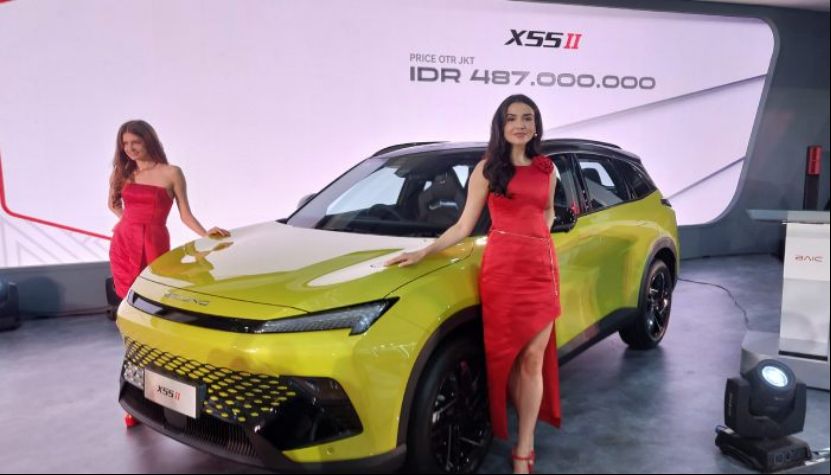
Chinese automakers continue to showcase their flagship models at Indonesian auto shows,
using product strength to offset price impacts. This policy phase-out is driving Indonesia's auto market toward rational competition. Chinese automakers are shifting from relying on subsidies to
deepening product and localization strategies. They are both bearing the pressure of policy changes and playing a core role in market restructuring, likely to consolidate their market position through ongoing competition.