
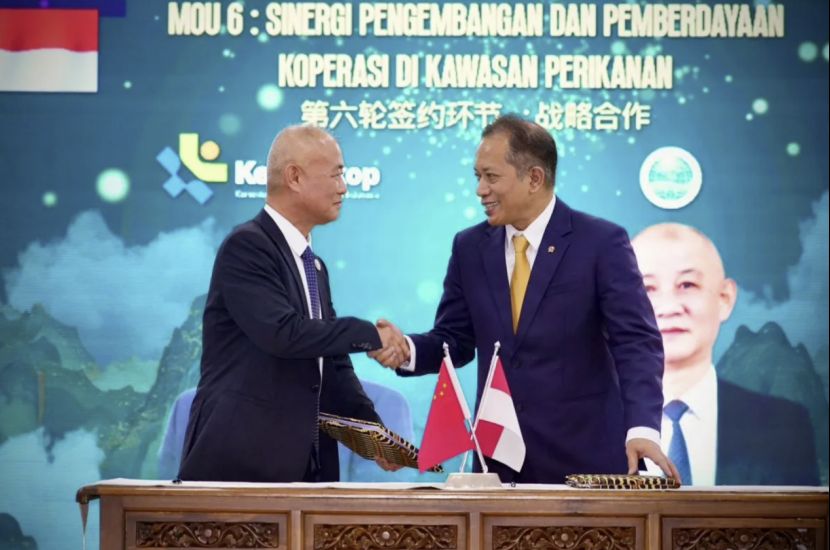
 Indonesia's Ministry of Cooperatives, together with the China-Shanghai Cooperation Organization Economic and Trade Exchange Center (SCO-ETEC) and several Chinese companies, signed six fishery cooperation memorandums of understanding in Jakarta, aiming to build cooperative-based fishery facilities and promote the development of Indonesia's marine fisheries. The Minister of Cooperatives stated that this cooperation implements the economic and trade consensus reached last year between President Prabowo and Chinese leaders, focusing on marine fishery potential development and supporting industry construction. The memoranda cover the construction of facilities such as ice factories, cold storage, shipyards, and small solar power plants, all of which will be operated and managed by Indonesia's Red and White Village/Community Cooperatives (Kopdes Merah Putih).
Indonesia possesses abundant marine fishery resources, yet coastal areas still face extreme poverty. The Minister emphasized that the cooperation aims to increase fishery production capacity while reducing and even eliminating poverty in coastal fishing villages, particularly among fishermen. He expressed hope that this cooperation could serve as a model for modern, integrated cooperative fishery zone development, with multi-party support enabling Red and White Village Cooperatives to become new economic growth centers in coastal areas. The Chairman of SCO-ETEC stated that the center fully supports the construction of Indonesia's fishery industry ecosystem and highly appreciates President Prabowo's Red and White Village Cooperative Program, viewing it as a welfare-oriented policy that showcases Indonesia's development prospects.
He noted that the cooperation will benefit both sides and strengthen existing economic synergy. China is willing to gain deeper understanding of Indonesia's investment environment and market demands, and explore cooperation opportunities with Indonesian parties in fisheries, industrial parks, agriculture, and logistics. This cooperation marks a new stage in China-Indonesia fisheries cooperation. Through facility construction and the cooperative model, it not only helps modernize Indonesia's fisheries but also promotes economic development and poverty reduction in coastal areas, while deepening economic and trade cooperation between the two countries and within the SCO framework.
Indonesia's Ministry of Cooperatives, together with the China-Shanghai Cooperation Organization Economic and Trade Exchange Center (SCO-ETEC) and several Chinese companies, signed six fishery cooperation memorandums of understanding in Jakarta, aiming to build cooperative-based fishery facilities and promote the development of Indonesia's marine fisheries. The Minister of Cooperatives stated that this cooperation implements the economic and trade consensus reached last year between President Prabowo and Chinese leaders, focusing on marine fishery potential development and supporting industry construction. The memoranda cover the construction of facilities such as ice factories, cold storage, shipyards, and small solar power plants, all of which will be operated and managed by Indonesia's Red and White Village/Community Cooperatives (Kopdes Merah Putih).
Indonesia possesses abundant marine fishery resources, yet coastal areas still face extreme poverty. The Minister emphasized that the cooperation aims to increase fishery production capacity while reducing and even eliminating poverty in coastal fishing villages, particularly among fishermen. He expressed hope that this cooperation could serve as a model for modern, integrated cooperative fishery zone development, with multi-party support enabling Red and White Village Cooperatives to become new economic growth centers in coastal areas. The Chairman of SCO-ETEC stated that the center fully supports the construction of Indonesia's fishery industry ecosystem and highly appreciates President Prabowo's Red and White Village Cooperative Program, viewing it as a welfare-oriented policy that showcases Indonesia's development prospects.
He noted that the cooperation will benefit both sides and strengthen existing economic synergy. China is willing to gain deeper understanding of Indonesia's investment environment and market demands, and explore cooperation opportunities with Indonesian parties in fisheries, industrial parks, agriculture, and logistics. This cooperation marks a new stage in China-Indonesia fisheries cooperation. Through facility construction and the cooperative model, it not only helps modernize Indonesia's fisheries but also promotes economic development and poverty reduction in coastal areas, while deepening economic and trade cooperation between the two countries and within the SCO framework.
China-Indonesia bilateral cooperation in fisheries sector strengthened
www.indoent.com
2026-03-15
Indonesia's Ministry of Cooperatives, together with the China-Shanghai Cooperation Organization Economic and Trade Exchange Center (SCO-ETEC) and several Chinese companies, signed six fishery cooperation memorandums of understanding in Jakarta, aiming to build cooperative-based fishery facilities and promote the development of Indonesia's marine fisheries. The Minister of Cooperatives stated that this cooperation implements the economic and trade consensus reached last year between President Prabowo and Chinese leaders, focusing on the development of marine fishery potential and supporting industry construction. The memoranda cover the construction of facilities such as ice factories, cold storage, shipyards, and small solar power plants, all of which will be operated by Indonesia's Red and White Village/Community Cooperatives (Kopdes Me
Indonesia's Ministry of Cooperatives, together with the China-Shanghai Cooperation Organization Economic and Trade Exchange Center (SCO-ETEC) and several Chinese companies, signed six fishery cooperation memorandums of understanding in Jakarta, aiming to build cooperative-based fishery facilities and promote the development of Indonesia's marine fisheries. The Minister of Cooperatives stated that this cooperation implements the economic and trade consensus reached last year between President Prabowo and Chinese leaders, focusing on marine fishery potential development and supporting industry construction. The memoranda cover the construction of facilities such as ice factories, cold storage, shipyards, and small solar power plants, all of which will be operated and managed by Indonesia's Red and White Village/Community Cooperatives (Kopdes Merah Putih).
Indonesia possesses abundant marine fishery resources, yet coastal areas still face extreme poverty. The Minister emphasized that the cooperation aims to increase fishery production capacity while reducing and even eliminating poverty in coastal fishing villages, particularly among fishermen. He expressed hope that this cooperation could serve as a model for modern, integrated cooperative fishery zone development, with multi-party support enabling Red and White Village Cooperatives to become new economic growth centers in coastal areas. The Chairman of SCO-ETEC stated that the center fully supports the construction of Indonesia's fishery industry ecosystem and highly appreciates President Prabowo's Red and White Village Cooperative Program, viewing it as a welfare-oriented policy that showcases Indonesia's development prospects.
He noted that the cooperation will benefit both sides and strengthen existing economic synergy. China is willing to gain deeper understanding of Indonesia's investment environment and market demands, and explore cooperation opportunities with Indonesian parties in fisheries, industrial parks, agriculture, and logistics. This cooperation marks a new stage in China-Indonesia fisheries cooperation. Through facility construction and the cooperative model, it not only helps modernize Indonesia's fisheries but also promotes economic development and poverty reduction in coastal areas, while deepening economic and trade cooperation between the two countries and within the SCO framework.
Tags
Industry News
Share to
Related Reading
 Industry Flash
Cheap Chinese Plastics Impact Indonesia's Petrochemical Industry, Association Calls for Protection
2026-09-03 Industry News
Investment Heat in Two Key Industrial Parks in Central Java Continues to Rise
2026-08-31 Industry News