
Indonesia Has the Potential to Lead the Battery Energy Transition Revolution
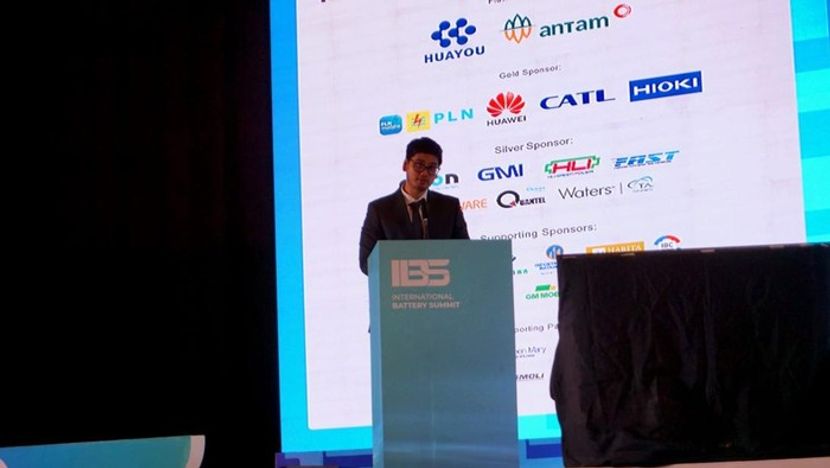
The Chairman of the Indonesian Battery Ecosystem Association (Id Battery) recently stated at the opening of the 2025 International Battery Summit in Jakarta that as the world moves toward decarbonization, batteries are rapidly becoming the core of the energy transition, and Indonesia has enormous potential to lead this transformation. Indonesia has the potential to lead the global battery production field and urgently needs to build an integrated, sustainable, and inclusive battery ecosystem. He emphasized Id Battery's mission to develop a national battery ecosystem that meets global environmental and social standards, and also mentioned the strategic cooperation between the Indonesian Battery Corporation (IBC) and the World Bank
Indonesian Companies Develop Five Strategic Coal Downstream Projects
Indonesia's Total Coal Production Expected to Exceed 700 Million Tons This Year

Multiple Indonesian Companies Awaiting or Have Completed Listings
China remains Indonesia's largest import and export trading partner

Indonesia is the world's second largest country in tin reserves and tin production
Indonesia is the world's second largest country in tin reserves (after Australia) and tin production (after China). As of the end of 2024, tin ore reserves stood at 643 million tons, equivalent to 1.43 million tons of tin metal. Total tin ore resources amounted to 827 million tons, equivalent to 2.53 million tons of tin metal. In 2024, Indonesia's tin metal production was 39,814 tons, sourced from mining areas covered by 200 relevant mining permits (IUP/IUPK/KK/IPR) nationwide. In 2022, China's tin production was 95,000 tons with reserves of 720,000 tons. Australia's tin production
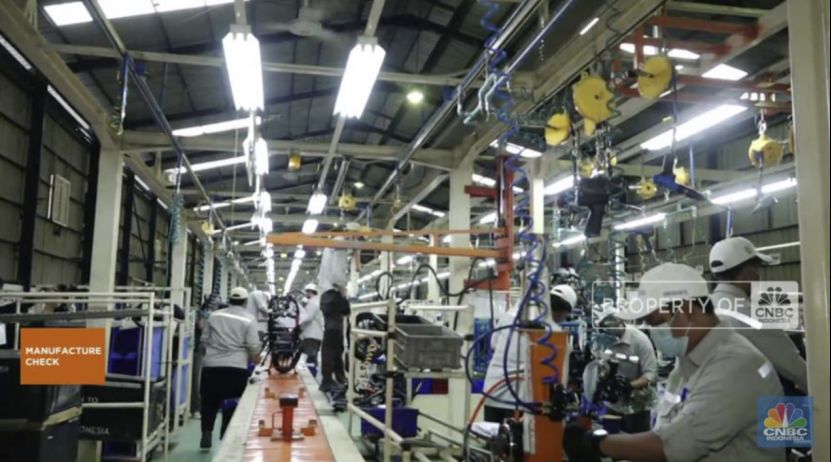
Indonesia's Manufacturing Expansion Creates More New Jobs
The Ministry of Industry confirmed that the national industrial growth rate in the second quarter of 2025 reached 5.60%. This data has been verified by valid indicators, including the Industrial Confidence Index (IKI), Bank Indonesia's Manufacturing Purchasing Managers' Index (PMI BI), investment, and industrial export data. The Ministry emphasized that it only uses IKI and PMI BI as a basis for policy formulation (due to covering more respondents, thus being more accurate and comprehensive), and does not use the manufacturing PMI published by S&P Global, only referencing it as general information. The economic and manufacturing growth data released by the Central Statistics Agency is accurate, and IKI and PMI BI indicate that the manufacturing sector remained in an expansion phase in the second quarter of 2025 (index above 50). Manufacturing investment spending is also showing an upward trend. In the first half of 2025, 1,641 enterprises reported establishing new production facilities through the National Industrial Information System, with a total investment of IDR 803.2 trillion. Industrial expansion directly led to the creation of approximately 303,000 new jobs, far exceeding the number of layoffs reported by other sectors or employer associations. The number of layoffs recorded by the Ministry of Manpower in the first half of 2024 was 42,385, an increase of 32.19% compared to the same period in 2023 (32,064 layoffs in the same period of 2023). In June 2025, the number of layoffs was 1,609, lower than the 4,702 in May; West Java Province accounted for the highest share of layoffs at 28.59%. A spokesperson for the Ministry of Industry stated that if pro-industry policies are implemented, manufacturing growth can further improve. Specific recommendations include controlling imports of finished goods; shifting entry ports for imported finished goods to ports in eastern Indonesia; securing raw material supply (especially natural gas raw materials for specific industries); and reducing the quota for industrial products from bonded zones entering the domestic market.
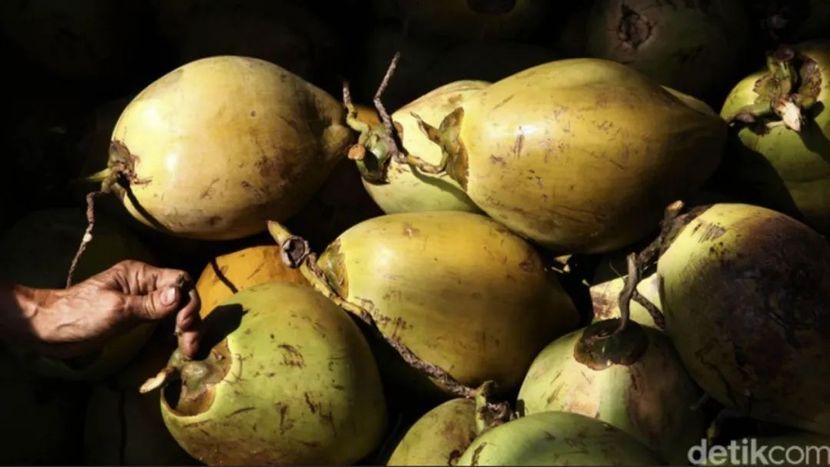
China Actively Invests in Developing Indonesia's Coconut Downstream Industry
Indonesia has significant potential in the coconut industry, with its coconut and related processed products exported to many countries. China has made major investments in Indonesia's coconut industry. In 2025, among the total coconut planting area in Indonesia, smallholder plantations account for the largest share at 3,274,321 hectares; state-owned large plantations cover 443 hectares; and private large plantations cover 36,591 hectares. Compared to 2024, the area of smallholder plantations and state-owned large plantations has increased, while private large plantations decreased from 42,146 hectares. In 2025, smallholder plantations are expected to produce approximately 2,821,927 tons of coconuts, higher than
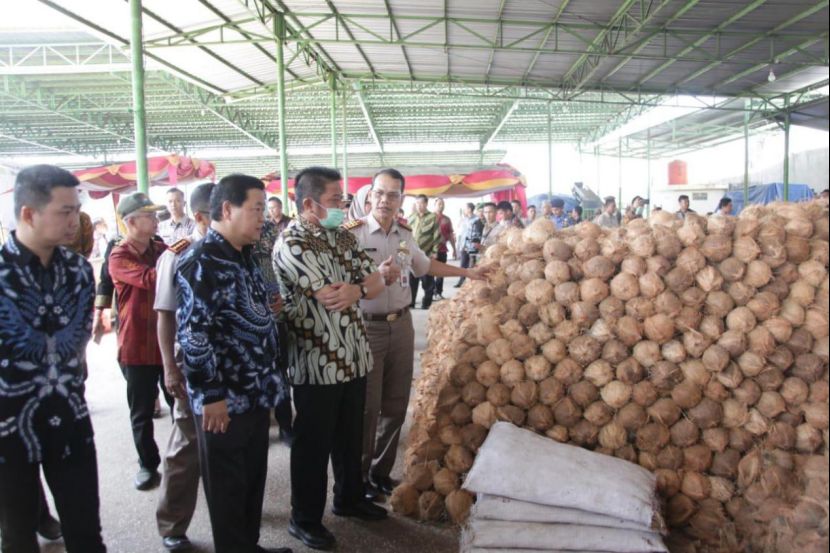
Chinese Investment Drives Indonesia's Coconut Downstream Industry Development
As the world's largest coconut producer, Indonesia's coconut industry has broad prospects and growing export potential. According to 2023-2025 planting statistics, Indonesia's coconut planting area in 2025 shows positive growth. Smallholder plantations dominate with 3,274,321 hectares, a slight increase from 3,273,278 hectares the previous year. State-owned large plantations cover only 443 hectares, while private large plantations account for 36,591 hectares. Although private plantations are smaller in area, they have the highest productivity. In 2025, private plantation productivity is expected to reach 1,381 kg/ha, ranking first; state-owned large plantations at 1,285 kg/ha; and smallholder plantations at 1,127 kg/ha, the highest since 2022.

Alcoholic Beverage and Tobacco Industry Makes Significant Contribution to Indonesian Economy
In 2024, the excise tax contribution from the alcoholic beverage industry reached IDR 8.86 trillion, with the industry's export value at US$17.32 million (approximately IDR 282 billion). The government has issued relevant regulations to provide opportunities for importing raw materials for alcoholic beverages, aiming to secure domestic raw material supply, promote innovation, and enhance product quality. Export promotion is carried out through participation in international exhibitions, such as at the 2024 SIAL exhibition in Paris, where interest was received from regions including Taiwan (China), Germany, the United Kingdom, France, and Russia, with potential export transactions valued at US$620,000. The tobacco industry (IHT) invested IDR 5.2 trillion between 2022 and 2025, creating over 5,000 direct jobs. In 2024, tobacco product exports grew to US$1.85 billion, with main export destinations including the Philippines, the United States, Cambodia, Singapore, and Vietnam. The tobacco industry's excise tax revenue in 2024 reached IDR 216.9 trillion, directly employing 644,584 people. Smallholder tobacco farming accounts for 99.65% of total production with an output of 234,139 tons; smallholder clove farming accounts for 99.18% with an output of 137,568 tons, and the industry possesses a complete downstream supply chain using almost entirely domestic raw materials.
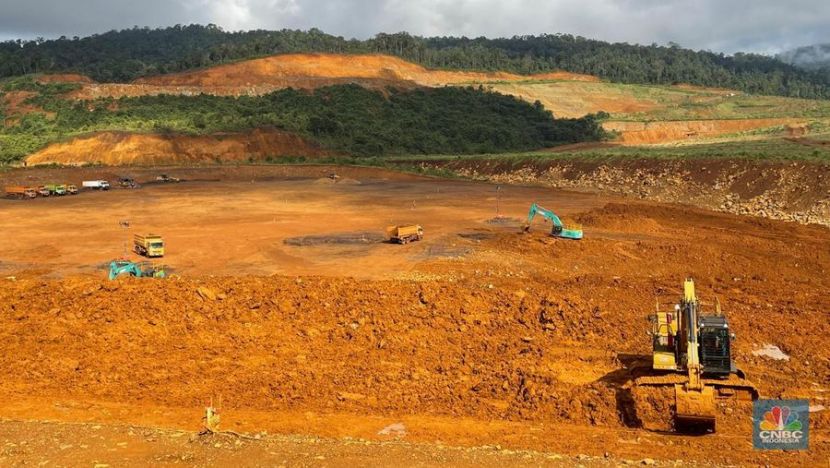
34% of Global Nickel Reserves Located in Indonesia
Data from the U.S. Geological Survey shows that 43% of global nickel reserves are in Indonesia, a fact confirmed by the Minister of Energy and Mineral Resources. According to the 2025 Indonesia Mineral and Coal Resource and Reserve Balance Report (data updated to December 2024) published by the Indonesian Geological Agency, Indonesia's nickel ore reserves in 2024 stood at 5.913 billion tons, comprising 3.818 billion tons of inferred reserves and 2.095 billion tons of proven reserves. Based on the estimated annual nickel ore production of 173 million tons in 2024, Indonesia's nickel reserves are expected to last for another 34 years. Indonesia stopped exporting nickel ore in 2020
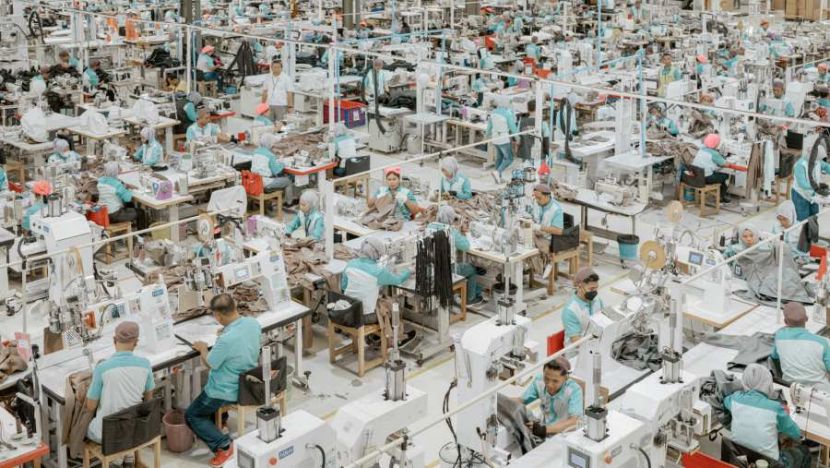
China, Sweden, and Japan Plan to Invest in Indonesia's Textile Industry
In the second half of 2025, Sweden, China, and Japan will invest in Indonesia's textile and textile product (TPT) sector, with a focus on downstream products such as fabrics and more environmentally friendly dyeing processes. The Director General of Chemical, Pharmaceutical, and Textile Industries at the Ministry of Industry stated that investment will be concentrated on downstream products like fabrics close to garments. For Japan, Indonesia will develop mechanisms to reduce carbon emissions in the fabric dyeing process by minimizing boiler usage and reducing electricity consumption derived from coal. The Indonesia-EU Comprehensive Economic Partnership Agreement has been finalized, with signing expected in Jakarta in September 2025 and entry into force in 2026, granting tariff reductions for approximately 80% of Indonesia's exports.