

Indonesia Simplifies Export Approval Process for Tin, Oil & Gas, and Coal
Indonesia's Ministry of Trade issued two new export permit regulations on March 26, 2026, which came into effect on April 1, streamlining export supervision requirements for key commodities such as tin, oil & gas, and coal, in order to adapt to global trade changes and reduce business burdens. The two new regulations are Trade Minister Regulation No. 5 of 2026 (amending Trade Minister Regulation No. 23 of 2023) and Trade Minister Regulation No. 6 of 2026 (amending Trade Minister Regulation No. 22 of 2023), covering adjustments to export policies and management of prohibited export goods. The Director General of Foreign Trade stated in a statement that this revision aims to
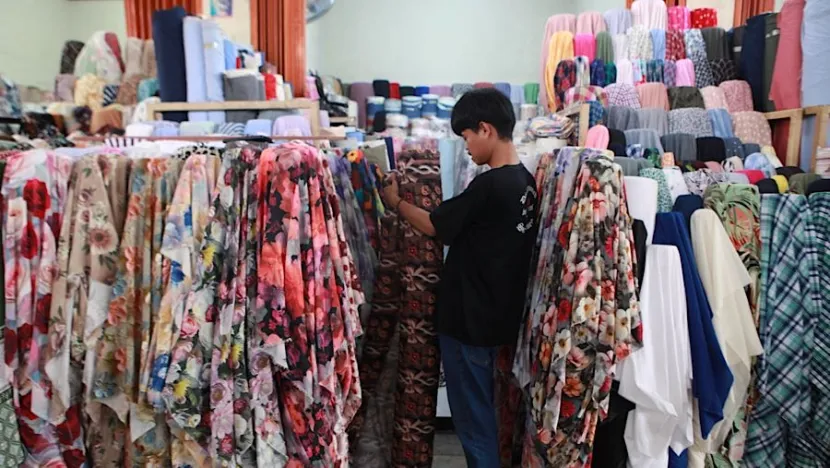
Surging Textile Raw Material Prices in Indonesia Lead to Higher Garment Costs

Chinese-Invested Melamine Project Becomes Milestone for Indonesia's Downstream Industrialization

Indonesia's Ministry of Energy and Mineral Resources Approves Nearly 600 Million Tons of Coal Production Quota

Chinese Steel Company Expands into Indonesian and Southeast Asian Markets

Indonesian Battery Materials Company's Nickel Ore Reserves Surge 48% Last Year
PT Merdeka Battery Materials Tbk (MBMA), a subsidiary of a copper-gold company, released its 2025 consolidated mineral resources and ore reserves report, showing significant growth in nickel ore resources and reserves, providing a solid foundation for the company's medium- to long-term production operations. The total ore reserves at its Sulawesi Cahaya Mineral (SCM) mine increased substantially to 578.8 million wet metric tons (equivalent to 358.2 million dry metric tons), with a nickel grade of 1.23% and contained nickel metal of 4.4 million tons, a year-on-year increase of 4

Indonesia Accelerates Approval of 2026 Nickel Mining Plans
The Ministry of Energy and Mineral Resources (ESDM) reported that as of the end of March 2026, approximately 150 nickel mining companies had obtained approval for their 2026 Work Plan and Cost Budget (RKAB), with the actual number slightly higher. The Director General of Minerals and Coal at the ESDM Ministry stated that nickel mining companies that have not yet received RKAB approval can continue production until March 31, 2026, under the government's relaxed policy. The Directorate General had previously issued the 2026 nickel RKAB approvals on February 10, setting the total annual nickel mining quota at 260–270 million tons, compared to the 2025 RKAB production target of 3
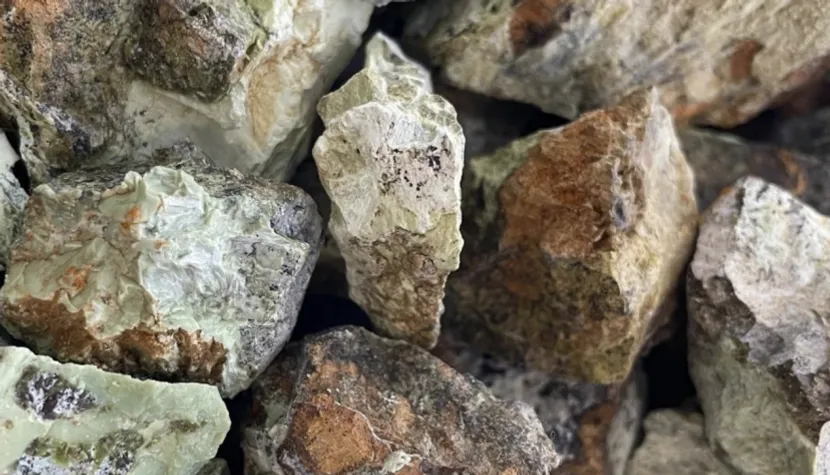
Multiple New Nickel Industry Policies to Be Implemented in Indonesia This Year
Against the backdrop of relatively high nickel prices, a series of new policies introduced by the Indonesian government, including the nickel product export tax plan, revision of mineral reference prices, and possible increases in mining quotas for work plans and cost budgets, are expected to become core influencing factors for the nickel industry in 2026. A research report recently released by an Indonesian securities firm pointed out that if nickel prices remain high, the Ministry of Energy and Mineral Resources plans to moderately relax quotas for mining work plans and cost budgets. New quotas are expected to be

Indonesia's Plastics Industry Faces Production Setbacks Due to Raw Material Supply Shortage
Plastic industry practitioners in Cibitung, Bandung, West Java, are facing severe operational pressure. Local plastic companies generally report that the price of plastic pellet raw materials has surged, nearly doubling, placing a heavy burden on the entire industry. According to companies, the price of 2 tons of plastic pellets was previously IDR 40 million, but has now soared to IDR 80 million, a direct doubling that many plastic producers find unbearable. Along with the price surge, the supply of plastic raw materials has become increasingly tight, significantly increasing the difficulty for companies to obtain production materials. The main reason for this situation is that the

Indonesia Becomes China's Largest Investment Destination in Asia
Over the past two decades, China has carried out large-scale, systematic global investment expansion, and Indonesia has become China's largest investment destination in Asia. Through outward investment, China has not only strengthened its economic influence but also expanded its geopolitical network and global supply chain layout. According to Visual Capitalist data, from 2005 to the present, Chinese companies have invested over $1.5 trillion globally, equivalent to approximately 25,350 trillion rupiah. However, these investments are unevenly distributed, with only a few countries being the main destinations for Chinese capital. Despite the geopolitical tensions between China and the United States,

Indonesia Accelerates Waste-to-Energy Projects for Full Completion by 2028
The Coordinating Minister for Food Affairs recently revealed that Indonesia's waste-to-energy (PSEL/WTE) projects are progressing well, with multiple construction works entering the tender and implementation stages. Following a recent limited coordination meeting, he announced that 4 regional landfills (TPS) have completed project approval and entered the tender process, with waste-to-energy facilities set to be built soon in Denpasar, Bekasi City, Bogor, and the Special Region of Yogyakarta. Another 6 regions have passed Danantara's review and will initiate tenders shortly, including Bandar Lampung, Semarang, Surabaya, Serang, Bekasi Regency, and Medan. The first

Indonesia's QRIS Payment May Be Usable in China by May
Bank Indonesia is accelerating the cross-border interconnection of the Indonesian Standard QR Code (QRIS). After officially connecting with South Korea on April 1, 2026, it plans to extend QRIS payment to China next month, further expanding the use of Indonesian digital payments in Asia and strengthening cross-border transaction links. A deputy governor of the central bank stated that this cooperation will deeply integrate Indonesia's payment system with the global system. To date, QRIS cross-border payments have been implemented in Malaysia, Singapore, Thailand, Japan, and South Korea. After connecting with China, it will complete the payment connectivity with the "Asia Plus Three" (Japan, South Korea, China).