
China-Indonesia Food Industry Trade Cooperation Continues to Develop
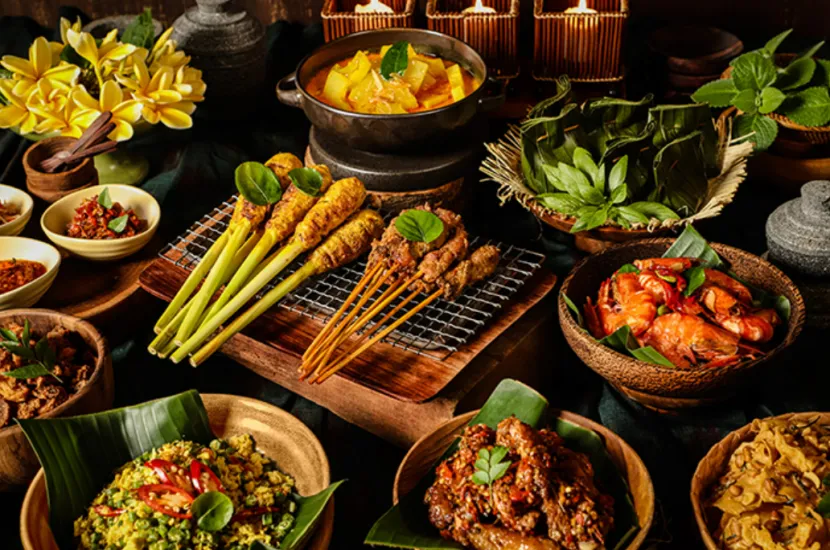
At the Indonesian Food Festival recently organized by the Indonesian Embassy in China, Indonesian Ambassador to China Djauhari Oratmangun discussed the current state of China-Indonesia food trade cooperation. He pointed out that in recent years, the acceptance and awareness of various Indonesian foods in the Chinese market have steadily increased. Various Indonesian specialty snacks, beverages, and local foods continue to enter the domestic consumer market, and the overall cooperation trend in the food sector between the two countries is positive. As cooperation deepens, a large number of Indonesian food companies have chosen to establish a presence in China by investing in production facilities, collaborating closely with Chinese partners. Bilateral food industry cooperation has moved beyond the original model of simple import and export trade, with the industrial chain expanding to include industrial investment, deep food processing, warehousing and logistics, production technology R&D, and local brand incubation.

Chinese Building Materials Company Expands into Indonesian Market through Acquisition

Some Indonesian Companies No Longer Enjoy 0.5% Final Income Tax Incentive

Over 600 Indonesian Fish Processing Factories Obtain Export Qualification to China

Indonesia's Imports from China Surge in Early 2026

Indonesia Establishes Jakarta-Bandung High-Speed Rail Special Committee
Indonesian President Prabowo recently signed Presidential Decree No. 29 of 2026, making the second amendment to Presidential Decree No. 107 of 2015, officially establishing the Jakarta-Bandung High-Speed Rail Special Committee and appointing the Coordinating Minister for Infrastructure and Regional Development as the committee chairman. The decree was signed on May 12, 2026, clarifying the committee structure and core responsibilities. According to the new regulation, the committee has two core positions: chairman and vice chairman. The chairman is held by the Coordinating Minister for Infrastructure and Regional Development, and the Coordinating Minister for Economic Affairs serves as vice chairman. The committee members cover multiple core ministries and institutions.

Indonesia Invites Hebei Investment: Deepening Mineral Downstream and High-Tech Cooperation
Indonesia's Coordinating Minister for Economic Affairs recently met in Jakarta with a delegation led by Hebei Province's Executive Vice Governor, explicitly expressing hope to attract more investment from Hebei. The two sides will expand deep cooperation in areas such as downstream industry processing and artificial intelligence technology. He stated that in recent years, economic and trade relations between Indonesia and China have developed rapidly, with bilateral trade volume already three times that of Indonesia's trade with Europe and the United States. Actively attracting foreign investment is of great significance to Indonesia's economic development, as it not only creates a large number of jobs but also increases national foreign exchange income through product exports. He pointed out that Chinese enterprise investment is an important force supporting Indonesia's national mineral downstream processing strategy.

Hebei Steel Enterprises Invest in Developing Banten Province's Industrial Chain
PT Krakatau Steel and China's Hebei Province delegation signed a Memorandum of Understanding in Jakarta, led by Hebei's Executive Vice Governor, with the head of Hebei International Trade Group and several leading steel enterprises participating. The Governor of Banten Province has high hopes for this cooperation, believing that the presence of large Chinese steel enterprises will support Indonesia's national industrialization process and drive local economic growth. Cilegon City is a traditional steel industry center in Indonesia, and Banten Province has outstanding geographical and infrastructure advantages, including an international port with a natural depth of 21 meters, well-suited for the raw material transportation, product distribution, and deep processing of large-scale integrated steel industries.

10 Palm Oil Companies Audited, Are New Export Regulations Coming?
10 palm oil giants were named in an AI audit, are Indonesian resource export regulations really coming? Friends, I am Wang Guanzhang. An AI audit has pushed the top 10 CPO exporters in Indonesia's palm oil industry into the spotlight. Just before the transition period of Indonesia's new strategic resource export mechanism on June 1, Finance Minister Purbaya confirmed that the government is investigating 10 large crude palm oil exporters for suspected under-invoicing and transfer pricing. In public reports, large companies such as Wilmar International and Musim Mas have been involved in the investigation. The timing is delicate.

Indonesia Imposes Provisional Anti-Dumping Duties on Chinese Steel Enterprises
Indonesian Minister of Finance recently issued a new regulation, specifically imposing a 17.5% provisional anti-dumping duty on non-alloy hot-rolled coils imported from Wuhan Iron and Steel Group. The policy is based on Ministry of Finance Regulation No. 32 of 2026, officially issued on May 22, taking effect five days after issuance, with a validity period of six months. According to the tariff change information, under the previous Regulation No. 103 of 2024, the anti-dumping duty rate for similar products from WISCO was 0%, while other domestic Chinese steel enterprises such as Angang and Baosteel had a uniform rate of 20%. This policy marks the first increase in anti-dumping duties on WISCO's steel products.

XPeng Motors Takes Over Manufacturing Division of Indonesian Automaker
Indonesia's local electric vehicle industry equity structure sees new changes. China's XPeng Motors officially becomes the controlling shareholder of Era Industri Otomotif (EIDO), a vehicle manufacturer under Indonesia's Xinghui Group, marking a new phase of strategic cooperation in Indonesia's EV sector. This equity transaction only involves the vehicle production and manufacturing entity, without substantial impact on existing business operations. XPeng's distribution, sales, and after-sales services in Indonesia will continue to be handled by two other companies under the group, maintaining the original service model for consumers. The equity change focuses on local vehicle production

Indonesia Cracks Down on Under-declared Palm Oil and Coal Export Values
Indonesia's Minister of Finance recently disclosed after a closed-door meeting at the Presidential Palace that authorities have verified multiple large enterprises engaged in irregular operations of under-declaring cargo values in crude palm oil and coal export businesses. Currently, the National Audit Board for Financial Construction and the Attorney General's Office have initiated investigations, and relevant work is progressing in an orderly manner. The Ministry of Finance will receive the case progress report next week. Based on the verification of shipping documents and cross-border trade data, evidence of export price fraud is conclusive. He stated bluntly that the term 'under-declaration' may sound professional, but it is essentially fraudulent overstatement of export amounts. Companies commonly use a related-party transit model to profit: establishing their own trading agencies in Singapore, selling local goods to overseas related entities at low prices, and then the transit enterprises resell them at several times the price to the final consumer countries. Investigations have found price differences up to four times the original price.