
Indonesia's Nickel Downstream Exports Soar to 510 Trillion IDR
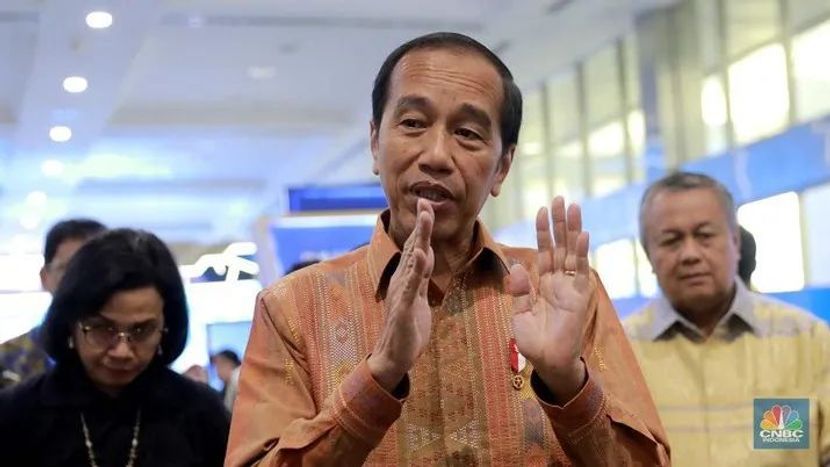
President Joko Widodo showcased the results of his "pride program," in this case the downstreaming of nickel, which has significantly increased the export value of downstream products. The export value of nickel downstream products has soared multiple times, from only 33 trillion IDR to 510 trillion IDR. At the inauguration of the lithium battery anode material factory owned by PT Indonesia BTR New Energy Materials in Kendal, East Java, he stated, as Coordinating Minister Luhut said, that the current nickel export value has reached 34 billion USD, jumping from the previous 33 trillion IDR to approximately 510 trillion IDR. By blocking the export of nickel ore products abroad to carry out downstream development, his policy has brought benefits, including the lawsuit from the European Union (EU) to the World Trade Organization (WTO). Although they lost, the country is a sovereign state where national interests come first, and they cannot be dictated by anyone.
YLKI Urges Consumers to Beware of Illegal Imported Food from China

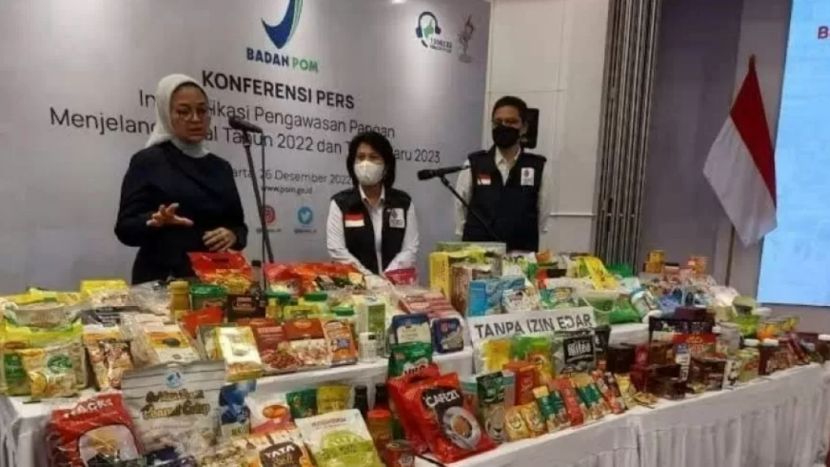
Indonesia's Special Task Force Seizes IDR 46.1 Billion in Illegal Imported Goods

Indonesia's Largest Battery Anode Material Factory Begins Production
Indonesian Government Plans to Tax Processed Foods for Health Reasons
Boss Says: What Industrial Parks Are in Central Java Industrial Belt, Indonesia
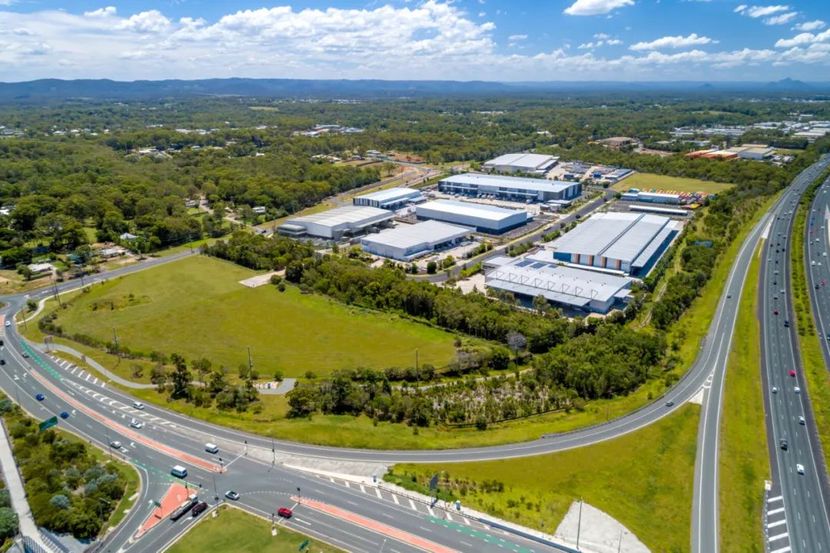
Java Island is the center of Indonesia's manufacturing industry, and the Central Java Industrial Belt is an emerging and vibrant industrial belt among the three industrial belts on Java Island. Land and labor costs are highly competitive, with land costs around 50-100 USD and labor costs around 150-200 USD. What industrial parks are in the Central Java Industrial Belt? Boss Wang will explain in detail: First, the Batang Industrial Park, located in Batang Regency, 60 km west of Semarang Airport. Established in 2020, covering 4,300 hectares, it is the only large-scale government-led industrial zone on Java Island. It is not only a national strategic project of Indonesia but also became the Indonesian park for the China-Indonesia Two Countries Twin Parks project in 2021. Among the companies入驻 the park, there is a Chinese-invested company, Wanxinda. Founder Chen Riling of Wanxinda is a firm practitioner of the Two Countries Twin Parks. As the Chinese operator of Batang Industrial Park, they pioneered a one-stop factory delivery solution for Chinese enterprises in Indonesia. In May 2023, they signed a land purchase agreement with the park, and on December 10 of the same year, they held a groundbreaking ceremony. They plan to complete and deliver 1 million square meters of factory space within 2024 and strive to build over 10 million square meters of industrial factory space within five years. This is very suitable for export-oriented and labor-intensive manufacturing enterprises, with 14 companies already入驻 the park. Second, the Kendal Industrial Park (KIP), located in Kendal Regency, 30 km west of Semarang Airport. <strong>It is a joint venture between Singapore's Sembcorp Group and Indonesia's Jababeka Group,</strong> covering approximately 2,200 hectares. It was inaugurated in 2016 by Indonesian President Joko Widodo and then-Singapore Prime Minister Lee Hsien Loong. Kendal Industrial Park is one of the two special economic zones on Java Island, offering preferential treatment in corporate income tax, value-added tax, and import duties. <strong>Companies such as Lopal Tech, BTR, and Zhongce Rubber have already入驻 the park.</strong> Third, the JIPS Park, established in 2013, located in Demak Regency, east of Semarang. It has a total planned area of 300 hectares and currently hosts 22 large enterprises, including Chinese-invested companies such as Liansu, Huafeng, Xinbao, Sailun, and Huagang Group. With the rise of trade protectionism in Europe and America, more and more Chinese labor-intensive and export-oriented enterprises are choosing Indonesia, especially the Central Java Industrial Belt, as their overseas production base. This makes it easier to access European and American markets without barriers. Coupled with Indonesia's population of 280 million, the fourth largest in the world, and its huge consumption power, Indonesia has enormous development potential.
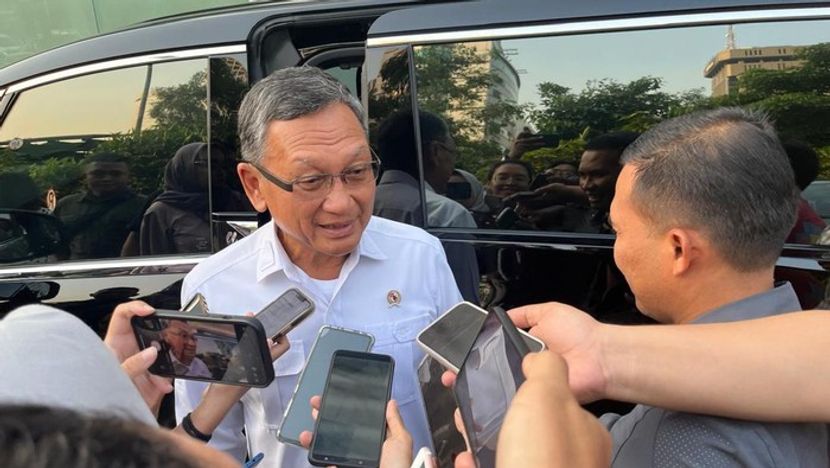
Indonesian Government Decides to Suspend Construction of New Nickel Smelters
The government has decided to stop building new nickel refining facilities or smelters that produce low value-added products, specifically rotary kiln electric furnace (RKEF) smelters that produce nickel pig iron (NPI). The Minister of Energy and Mineral Resources stated at the Jakarta Oil and Gas (Migas) Directorate General that the Ministry of Industry has agreed not to add new factories for RKEF and NPI. The government is encouraging the use of minerals to support the electric vehicle industry and new renewable energy. Meanwhile, Indonesia's smelters include bauxite, nickel, iron, and copper. Indonesian smelters must be able to produce intermediate products; several intermediate products are not produced by Indonesian smelters.

Indonesian Minister of SMEs Calls for Prevention of Illegal Imported Goods Inflow
The Minister of Cooperatives and SMEs (MenKopUKM) has requested the Ministry of Trade (Kemendag) to further strengthen control over the flow of imported goods, especially finished products or consumer goods, in order to protect local products from the impact of imported goods. The government is pushing for trade regulations to tighten the inflow of goods, particularly consumer goods. However, supervision must be carried out because the inflow of goods may occur legally or illegally; the government will continue to work to protect local products. He also expressed concern about the current free trade system implemented in Indonesia, believing that if free trade does not regulate the inflow volume, local products

Ten Goods Planned for Excise Tax in Indonesia
The government plans to increase the types of goods subject to excise tax, ranging from packaged sweetened beverages (MBDK), plastics, to ready-to-eat food. Excise taxes on MBDK and plastics have been planned since 2019 but discussions were postponed due to the pandemic. Currently, this proposal is being discussed again with the House of Representatives, although it is unclear when it will be implemented. The Director General of Customs and Excise stated that they do not know when it will be implemented yet and will see the discussion in the 2025 RAPBN; their position remains open. Besides these two goods, several other goods have been proposed for excise tax. The latest is processed ready-to-eat food as stipulated in Government Regulation (PP) No. 28 of 2024 concerning the implementation regulations of Health Law No. 17 of 2023.

From September 1, Shopee Will Implement New Management Fees for Sellers
Shopee e-commerce platform will implement new policies for product categories and management fees starting September 1, 2024. This update applies to sellers in Non-Star, Star, and Star+ categories. Under the new policy, Shopee will apply four new product categories to calculate management costs. Several product categories and subcategories originally included in Category B and Category C will be changed to Category D. Thus, after the policy takes effect, Shopee will have four categories: A, B, C, and D. Shopee's management fees range from 4.25% to 8%, calculated based on the number of products sold.

Joko Approves Establishment of Four New Special Economic Zones in Indonesia
Four new Special Economic Zones (KEK) proposed by business figures this year have been approved by President Joko Widodo. These four KEKs are Edutek Medika Internasional Banten at Bumi Serpong Damai (BSD), Nipa in Riau Islands, Batam International Health Tourism Zone in Riau Islands, and Bungku Green Industry in Central Sulawesi. The Coordinating Minister for Economic Affairs stated that President Joko Widodo has approved the four proposals to establish KEKs and is currently

Beauty Going Global: Why Indonesia is the First Choice?
Indonesia, with the largest GDP among ASEAN countries, is becoming a key market for Chinese beauty brands going global. rnrnAccording to data from the General Administration of Customs, in RMB terms, in the first half of this year, China's total import and export value of goods trade was 21.17 trillion yuan, a year-on-year increase of 6.1%, exceeding 21 trillion yuan for the first time in the same historical period. Among this, exports totaled 12.13 trillion yuan, up 6.9% year-on-year; imports totaled 9.04 trillion yuan, up 5.2% year-on-year. rnrnASEAN continues to be China's largest trading partner. The total trade value between China and ASEAN was 3.36 trillion yuan, a year-on-year increase of 10.5%. Among this, exports to ASEAN were 2.03