
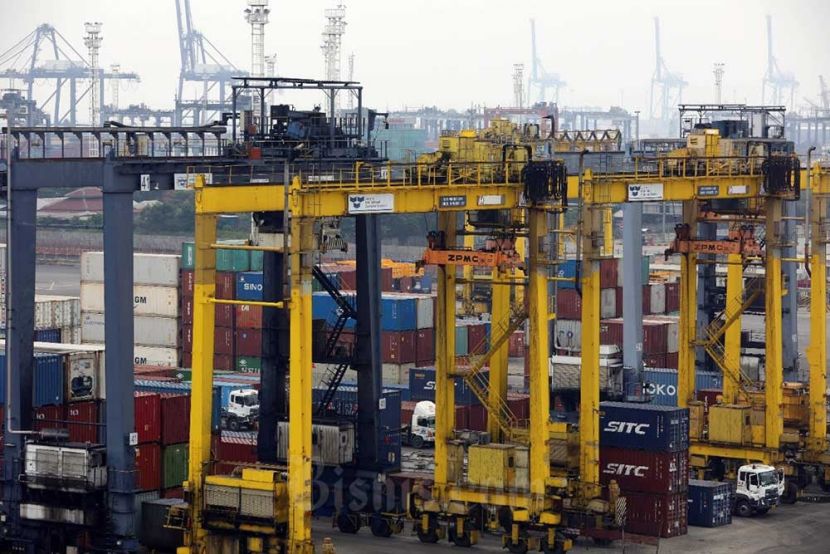
 The Directorate General of Customs and Excise has disclosed the content data of 26,415 containers stranded at multiple ports due to import prohibition and restriction (lartas) regulations. Most of the contents of these containers are industrial raw and auxiliary materials. The Director of Customs Communication and User Guidance stated that the 26,415 stranded containers are in BC 1.1 status, which is the inward manifest. There are 21,166 containers (80%) containing raw and auxiliary materials, while approximately 3,356 containers (about 12.7%) are consumer goods, and 7.17% (about 1,893 containers) are capital goods. This can explain why investment is not good; from this, it can be seen that the proportion of capital goods imports is not significant, but rather raw materials dominate. He explained the reason why Customs compiled the container content data in the format of the top 10 main items, as the container quantities for these 10 categories are quite substantial. For example, data on raw and auxiliary materials with fewer than 10 containers are listed below. The government's order through the Minister of Trade Regulation (Permendag) No. 8/2024 to release 26,000 containers was not immediately implemented. This does not mean they will release all 26,000 containers; LS (Inspector Report) and PI (Import Approval) are still required, as it can be traced back to the Minister of Trade Regulation 25. Customs' duties and functions in the fiscal sector involve collecting import and entry duties from import and export activities. Border control is carried out as the implementation of trade policy. Customs is merely the executor; they do what is decided. That is why it would be good to have a trade import task force, where inspected goods are examined at the border, so everything is clear.
The Ministry of Industry (Kemenperin) accused the Minister of Finance of being opaque regarding the content data of the 26,415 containers of imported goods that were detained and released in May. The release of the containers coincided with the issuance of the Minister of Trade Regulation (Permendag) No. 2, which introduced import relaxation regulations effective immediately on May 17, 2024. This import relaxation policy is the reason why the manufacturing sector's performance entered a contraction zone for the first time in three years. In July 2024, Indonesia's Manufacturing Purchasing Managers' Index (PMI) fell to 49.3, down 1.4 points from 50.7 the previous month. A spokesperson for the Ministry of Industry stated that the Minister of Finance's lack of transparency prevented the Ministry of Industry from formulating policies or anticipatory steps to counter the invasion of imported goods in containers. In fact, on June 27, the Minister of Industry sent a letter requesting data on the container loads. However, the Ministry of Industry did not receive an official reply from the Director General of Customs until August 2, even though the reply letter had been signed since July 17. In its reply, the Directorate General of Customs explained that the contents of the 26,415 containers, grouped by Broad Economic Categories (BEC), included 21,166 containers (80.13%) of raw and auxiliary materials, 3,356 containers (12.7%) of consumer goods, and 1,893 containers (7.17%) of capital goods. The attached document also provided data on the top 10 goods/containers in each group. However, he considered this data still meaningless. If most of the piled-up containers contain 80.13% raw/auxiliary materials, they question the urgency of the Minister of Trade Regulation No. 8/2024 pushed by the Coordinating Minister for Economic Affairs and the Minister of Finance, which relaxes downstream imports/consumer goods, while the number of containers containing downstream goods is only 12.7%.
The Directorate General of Customs and Excise has disclosed the content data of 26,415 containers stranded at multiple ports due to import prohibition and restriction (lartas) regulations. Most of the contents of these containers are industrial raw and auxiliary materials. The Director of Customs Communication and User Guidance stated that the 26,415 stranded containers are in BC 1.1 status, which is the inward manifest. There are 21,166 containers (80%) containing raw and auxiliary materials, while approximately 3,356 containers (about 12.7%) are consumer goods, and 7.17% (about 1,893 containers) are capital goods. This can explain why investment is not good; from this, it can be seen that the proportion of capital goods imports is not significant, but rather raw materials dominate. He explained the reason why Customs compiled the container content data in the format of the top 10 main items, as the container quantities for these 10 categories are quite substantial. For example, data on raw and auxiliary materials with fewer than 10 containers are listed below. The government's order through the Minister of Trade Regulation (Permendag) No. 8/2024 to release 26,000 containers was not immediately implemented. This does not mean they will release all 26,000 containers; LS (Inspector Report) and PI (Import Approval) are still required, as it can be traced back to the Minister of Trade Regulation 25. Customs' duties and functions in the fiscal sector involve collecting import and entry duties from import and export activities. Border control is carried out as the implementation of trade policy. Customs is merely the executor; they do what is decided. That is why it would be good to have a trade import task force, where inspected goods are examined at the border, so everything is clear.
The Ministry of Industry (Kemenperin) accused the Minister of Finance of being opaque regarding the content data of the 26,415 containers of imported goods that were detained and released in May. The release of the containers coincided with the issuance of the Minister of Trade Regulation (Permendag) No. 2, which introduced import relaxation regulations effective immediately on May 17, 2024. This import relaxation policy is the reason why the manufacturing sector's performance entered a contraction zone for the first time in three years. In July 2024, Indonesia's Manufacturing Purchasing Managers' Index (PMI) fell to 49.3, down 1.4 points from 50.7 the previous month. A spokesperson for the Ministry of Industry stated that the Minister of Finance's lack of transparency prevented the Ministry of Industry from formulating policies or anticipatory steps to counter the invasion of imported goods in containers. In fact, on June 27, the Minister of Industry sent a letter requesting data on the container loads. However, the Ministry of Industry did not receive an official reply from the Director General of Customs until August 2, even though the reply letter had been signed since July 17. In its reply, the Directorate General of Customs explained that the contents of the 26,415 containers, grouped by Broad Economic Categories (BEC), included 21,166 containers (80.13%) of raw and auxiliary materials, 3,356 containers (12.7%) of consumer goods, and 1,893 containers (7.17%) of capital goods. The attached document also provided data on the top 10 goods/containers in each group. However, he considered this data still meaningless. If most of the piled-up containers contain 80.13% raw/auxiliary materials, they question the urgency of the Minister of Trade Regulation No. 8/2024 pushed by the Coordinating Minister for Economic Affairs and the Minister of Finance, which relaxes downstream imports/consumer goods, while the number of containers containing downstream goods is only 12.7%.
Indonesia Customs Reveals Content Data of Containers Stranded at Ports
www.indoent.com
2024-08-15
The Directorate General of Customs and Excise has disclosed the content data of 26,415 containers stranded at multiple ports due to import prohibition and restriction (lartas) regulations. Most of the contents of these containers are industrial raw and auxiliary materials. The Director of Customs Communication and User Guidance stated that the 26,415 stranded containers are in BC 1.1 status, which is the inward manifest. There are 21,166 containers (80%) containing raw and auxiliary materials, while approximately 3,356 containers (about 12.7%) are consumer goods, and 7.17% (about 1,893 containers) are capital goods. This can be interpreted as
The Directorate General of Customs and Excise has disclosed the content data of 26,415 containers stranded at multiple ports due to import prohibition and restriction (lartas) regulations. Most of the contents of these containers are industrial raw and auxiliary materials. The Director of Customs Communication and User Guidance stated that the 26,415 stranded containers are in BC 1.1 status, which is the inward manifest. There are 21,166 containers (80%) containing raw and auxiliary materials, while approximately 3,356 containers (about 12.7%) are consumer goods, and 7.17% (about 1,893 containers) are capital goods. This can explain why investment is not good; from this, it can be seen that the proportion of capital goods imports is not significant, but rather raw materials dominate. He explained the reason why Customs compiled the container content data in the format of the top 10 main items, as the container quantities for these 10 categories are quite substantial. For example, data on raw and auxiliary materials with fewer than 10 containers are listed below. The government's order through the Minister of Trade Regulation (Permendag) No. 8/2024 to release 26,000 containers was not immediately implemented. This does not mean they will release all 26,000 containers; LS (Inspector Report) and PI (Import Approval) are still required, as it can be traced back to the Minister of Trade Regulation 25. Customs' duties and functions in the fiscal sector involve collecting import and entry duties from import and export activities. Border control is carried out as the implementation of trade policy. Customs is merely the executor; they do what is decided. That is why it would be good to have a trade import task force, where inspected goods are examined at the border, so everything is clear.
The Ministry of Industry (Kemenperin) accused the Minister of Finance of being opaque regarding the content data of the 26,415 containers of imported goods that were detained and released in May. The release of the containers coincided with the issuance of the Minister of Trade Regulation (Permendag) No. 2, which introduced import relaxation regulations effective immediately on May 17, 2024. This import relaxation policy is the reason why the manufacturing sector's performance entered a contraction zone for the first time in three years. In July 2024, Indonesia's Manufacturing Purchasing Managers' Index (PMI) fell to 49.3, down 1.4 points from 50.7 the previous month. A spokesperson for the Ministry of Industry stated that the Minister of Finance's lack of transparency prevented the Ministry of Industry from formulating policies or anticipatory steps to counter the invasion of imported goods in containers. In fact, on June 27, the Minister of Industry sent a letter requesting data on the container loads. However, the Ministry of Industry did not receive an official reply from the Director General of Customs until August 2, even though the reply letter had been signed since July 17. In its reply, the Directorate General of Customs explained that the contents of the 26,415 containers, grouped by Broad Economic Categories (BEC), included 21,166 containers (80.13%) of raw and auxiliary materials, 3,356 containers (12.7%) of consumer goods, and 1,893 containers (7.17%) of capital goods. The attached document also provided data on the top 10 goods/containers in each group. However, he considered this data still meaningless. If most of the piled-up containers contain 80.13% raw/auxiliary materials, they question the urgency of the Minister of Trade Regulation No. 8/2024 pushed by the Coordinating Minister for Economic Affairs and the Minister of Finance, which relaxes downstream imports/consumer goods, while the number of containers containing downstream goods is only 12.7%.
Tags
Industry News
Share to
Related Reading
 Industry Flash
Cheap Chinese Plastics Impact Indonesia's Petrochemical Industry, Association Calls for Protection
2026-09-03 Industry News
Investment Heat in Two Key Industrial Parks in Central Java Continues to Rise
2026-08-31 Industry News