
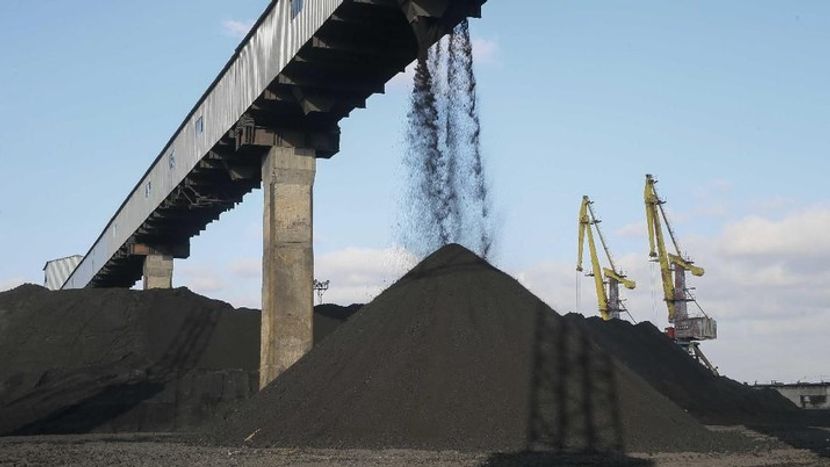
 The Indonesian government has proposed to China to develop and increase the added value of coal (PNT) through a project President Jokowi is proud of, namely downstream development in the form of other products such as coal quality improvement (coal upgrading), coal briquettes, coking, and coal liquefaction.The proposal was directly presented by the Acting Director General of Minerals and Coal on Tuesday (September 3) at the 7th Indonesia-China Energy Forum (ICEF) in Bali.This proposal is part of Indonesia's commitment to reduce the greenhouse effect in national development, as ratified through the Paris Agreement via Law No. 16 of 2016. Gradually reducing coal consumption and developing it into other forms is a concrete measure to achieve this goal. One of the policies for managing coal is to reduce its use alongside the termination of coal-fired power plants, and to develop it into other forms, especially natural gas, to meet the needs of other chemical industries such as LPG and fertilizers. To accelerate the coal downstream and PNT program, the government has invited various parties to ensure the program runs as expected. They are investing in developing Indonesia's coal downstream industry in the form of methanol, dimethyl ether, and other products.
Coal can be processed into derivative products that serve as industrial raw materials or energy sources. The six coal development products currently feasible are: coal quality improvement, briquettes, coke, liquefied coal, and coal gasification (including underground coal gasification). To support the acceleration of this program, in addition to providing three incentive measures, the government also requires that Coal Mining Concession Work Agreements (PKP2B) be extended into Special Mining Business Licenses (IUPK). Business entities must submit plans for coal development and/or utilization. Currently, six IUPK entities plan to develop coal into natural gas, fertilizers, and coke, and are conducting economic studies and feasibility studies, hoping to commence production by 2030. Indonesia currently has coal resources of 97.29 billion tons and reserves of 31.71 billion tons, of which low-quality coal accounts for 70% of total resources, while the remaining 30% is medium to high quality. Most resources and reserves are located in East Kalimantan, South Sumatra, South Kalimantan, Central Kalimantan, and Jambi. The rest are spread across Jambi Province, Riau Province, North Kalimantan Province, Aceh Province, Bengkulu Province, West Sumatra, Papua Province, West Sulawesi Province, and West Java Province.


