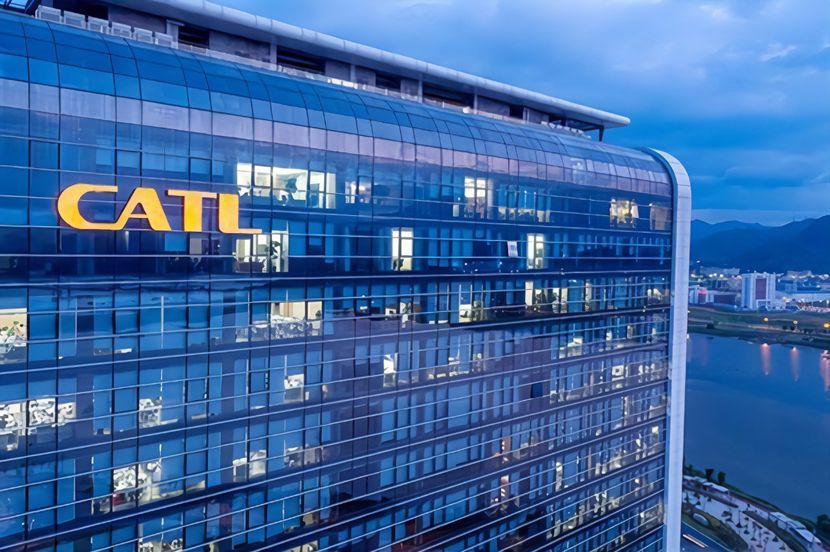
 On October 16, witnessed by Indonesia's Deputy Minister of State-Owned Enterprises, Indonesia Battery Corporation (IBC) and CATL's subsidiary CBL jointly established a joint venture company to build a JV 5 battery manufacturing factory in Karawang, West Java, Indonesia, with an investment of approximately $1.18 billion. The factory is expected to start production in 2027, with a planned annual battery capacity of 15 GWh.
As the world's largest power battery manufacturer, CATL had already positioned itself in Indonesia early on. In 2018, CATL reached a cooperation agreement with domestic nickel giant Tsingshan Holding Group, making Tsingshan its first supplier. Subsequently, CATL, together with GEM Co., Ltd. and Tsingshan, jointly invested approximately RMB 1.85 billion in a project to produce 50,000 tons of high-nickel power ternary material precursors and 20,000 tons of ternary cathode materials annually in Indonesia. CATL also jointly developed the Indonesia Weda Bay Industrial Park project—the country's largest comprehensive nickel, chromium, and iron ore resource project—with Tsingshan, Huayou Cobalt, and Zhenshi Group.
In April 2022, CATL announced plans to invest in a power battery industry chain project in Indonesia, with a total investment not exceeding $6 billion (approximately RMB 38.02 billion), of which CATL's investment totaled $3.937 billion. The joint venture construction projects include nickel mining development, pyrometallurgical smelting, hydrometallurgical smelting, battery recycling, battery materials, and battery manufacturing. Overall, the six sub-projects focus on nickel mining and battery production. Except for the nickel mining project, the other five projects are controlled by CATL. The construction period for these projects is five years. The $1.18 billion battery factory signed on October 16, 2024, is part of this overall project investment.
Nickel metal is an important raw material for producing stainless steel and ternary lithium batteries. Ternary lithium batteries refer to batteries whose positive electrode contains a "ternary precursor" composed of nickel, cobalt, and manganese. Due to nickel's performance advantage in enhancing battery energy density, high-nickel batteries are becoming an important development direction for ternary lithium batteries. China's nickel reserves are scarce, with high external dependence. Indonesia is the world's most nickel-rich country. According to the U.S. Geological Survey (USGS), global nickel resource reserves were about 94 million tons in 2020, with Indonesia ranking first at approximately 21 million tons, accounting for 22%.
In recent years, the Indonesian government has vigorously promoted the downstream industrialization policy for nickel mines, driving the development of battery materials, battery production, and electric vehicles, aiming to make Indonesia the EV industry center in ASEAN. According to data from the Indonesian Automotive Industry Association, in 2023, sales of hybrid vehicles in Indonesia increased by 5.2 times to about 54,000 units, while sales of pure electric vehicles rose by nearly 70% to about 17,000 units. The Indonesian government targets sales of 50,000 pure electric vehicles in 2024. According to Indonesia's plan, the country aims to produce 400,000 electric vehicles by 2025, 600,000 by 2030, and 1 million by 2035; and by 2050, achieve the goal that all cars and motorcycles sold in Indonesia are electric. In battery production, Indonesia's goal is to produce EV batteries with a total capacity of 140 GWh per year by 2030, accounting for 4% to 9% of global demand at that time.
On October 16, witnessed by Indonesia's Deputy Minister of State-Owned Enterprises, Indonesia Battery Corporation (IBC) and CATL's subsidiary CBL jointly established a joint venture company to build a JV 5 battery manufacturing factory in Karawang, West Java, Indonesia, with an investment of approximately $1.18 billion. The factory is expected to start production in 2027, with a planned annual battery capacity of 15 GWh.
As the world's largest power battery manufacturer, CATL had already positioned itself in Indonesia early on. In 2018, CATL reached a cooperation agreement with domestic nickel giant Tsingshan Holding Group, making Tsingshan its first supplier. Subsequently, CATL, together with GEM Co., Ltd. and Tsingshan, jointly invested approximately RMB 1.85 billion in a project to produce 50,000 tons of high-nickel power ternary material precursors and 20,000 tons of ternary cathode materials annually in Indonesia. CATL also jointly developed the Indonesia Weda Bay Industrial Park project—the country's largest comprehensive nickel, chromium, and iron ore resource project—with Tsingshan, Huayou Cobalt, and Zhenshi Group.
In April 2022, CATL announced plans to invest in a power battery industry chain project in Indonesia, with a total investment not exceeding $6 billion (approximately RMB 38.02 billion), of which CATL's investment totaled $3.937 billion. The joint venture construction projects include nickel mining development, pyrometallurgical smelting, hydrometallurgical smelting, battery recycling, battery materials, and battery manufacturing. Overall, the six sub-projects focus on nickel mining and battery production. Except for the nickel mining project, the other five projects are controlled by CATL. The construction period for these projects is five years. The $1.18 billion battery factory signed on October 16, 2024, is part of this overall project investment.
Nickel metal is an important raw material for producing stainless steel and ternary lithium batteries. Ternary lithium batteries refer to batteries whose positive electrode contains a "ternary precursor" composed of nickel, cobalt, and manganese. Due to nickel's performance advantage in enhancing battery energy density, high-nickel batteries are becoming an important development direction for ternary lithium batteries. China's nickel reserves are scarce, with high external dependence. Indonesia is the world's most nickel-rich country. According to the U.S. Geological Survey (USGS), global nickel resource reserves were about 94 million tons in 2020, with Indonesia ranking first at approximately 21 million tons, accounting for 22%.
In recent years, the Indonesian government has vigorously promoted the downstream industrialization policy for nickel mines, driving the development of battery materials, battery production, and electric vehicles, aiming to make Indonesia the EV industry center in ASEAN. According to data from the Indonesian Automotive Industry Association, in 2023, sales of hybrid vehicles in Indonesia increased by 5.2 times to about 54,000 units, while sales of pure electric vehicles rose by nearly 70% to about 17,000 units. The Indonesian government targets sales of 50,000 pure electric vehicles in 2024. According to Indonesia's plan, the country aims to produce 400,000 electric vehicles by 2025, 600,000 by 2030, and 1 million by 2035; and by 2050, achieve the goal that all cars and motorcycles sold in Indonesia are electric. In battery production, Indonesia's goal is to produce EV batteries with a total capacity of 140 GWh per year by 2030, accounting for 4% to 9% of global demand at that time.
CATL Invests $1.18 Billion in Indonesian Battery Factory
www.indoent.com
2024-11-05
On October 16, witnessed by Indonesia's Deputy Minister of State-Owned Enterprises, Indonesia Battery Corporation (IBC) and CATL's subsidiary CBL jointly established a joint venture company to build a JV 5 battery manufacturing factory in Karawang, West Java, Indonesia, with an investment of approximately $1.18 billion. The factory is expected to start production in 2027, with a planned annual battery capacity of 15 GWh. As the world's largest power battery manufacturer, CATL had already positioned itself in Indonesia early on. In 2018, CATL partnered with domestic nickel giant Tsingshan Holding Group
On October 16, witnessed by Indonesia's Deputy Minister of State-Owned Enterprises, Indonesia Battery Corporation (IBC) and CATL's subsidiary CBL jointly established a joint venture company to build a JV 5 battery manufacturing factory in Karawang, West Java, Indonesia, with an investment of approximately $1.18 billion. The factory is expected to start production in 2027, with a planned annual battery capacity of 15 GWh.
As the world's largest power battery manufacturer, CATL had already positioned itself in Indonesia early on. In 2018, CATL reached a cooperation agreement with domestic nickel giant Tsingshan Holding Group, making Tsingshan its first supplier. Subsequently, CATL, together with GEM Co., Ltd. and Tsingshan, jointly invested approximately RMB 1.85 billion in a project to produce 50,000 tons of high-nickel power ternary material precursors and 20,000 tons of ternary cathode materials annually in Indonesia. CATL also jointly developed the Indonesia Weda Bay Industrial Park project—the country's largest comprehensive nickel, chromium, and iron ore resource project—with Tsingshan, Huayou Cobalt, and Zhenshi Group.
In April 2022, CATL announced plans to invest in a power battery industry chain project in Indonesia, with a total investment not exceeding $6 billion (approximately RMB 38.02 billion), of which CATL's investment totaled $3.937 billion. The joint venture construction projects include nickel mining development, pyrometallurgical smelting, hydrometallurgical smelting, battery recycling, battery materials, and battery manufacturing. Overall, the six sub-projects focus on nickel mining and battery production. Except for the nickel mining project, the other five projects are controlled by CATL. The construction period for these projects is five years. The $1.18 billion battery factory signed on October 16, 2024, is part of this overall project investment.
Nickel metal is an important raw material for producing stainless steel and ternary lithium batteries. Ternary lithium batteries refer to batteries whose positive electrode contains a "ternary precursor" composed of nickel, cobalt, and manganese. Due to nickel's performance advantage in enhancing battery energy density, high-nickel batteries are becoming an important development direction for ternary lithium batteries. China's nickel reserves are scarce, with high external dependence. Indonesia is the world's most nickel-rich country. According to the U.S. Geological Survey (USGS), global nickel resource reserves were about 94 million tons in 2020, with Indonesia ranking first at approximately 21 million tons, accounting for 22%.
In recent years, the Indonesian government has vigorously promoted the downstream industrialization policy for nickel mines, driving the development of battery materials, battery production, and electric vehicles, aiming to make Indonesia the EV industry center in ASEAN. According to data from the Indonesian Automotive Industry Association, in 2023, sales of hybrid vehicles in Indonesia increased by 5.2 times to about 54,000 units, while sales of pure electric vehicles rose by nearly 70% to about 17,000 units. The Indonesian government targets sales of 50,000 pure electric vehicles in 2024. According to Indonesia's plan, the country aims to produce 400,000 electric vehicles by 2025, 600,000 by 2030, and 1 million by 2035; and by 2050, achieve the goal that all cars and motorcycles sold in Indonesia are electric. In battery production, Indonesia's goal is to produce EV batteries with a total capacity of 140 GWh per year by 2030, accounting for 4% to 9% of global demand at that time.
Share to
Related Reading
 China Investment News
China's AiMOGA Humanoid Robot Obtains Three International Certifications
2026-09-07 China Investment News
Only Three Chinese Automakers Have Independently Built Factories in Indonesia
2026-09-05 Chinese Investment News