
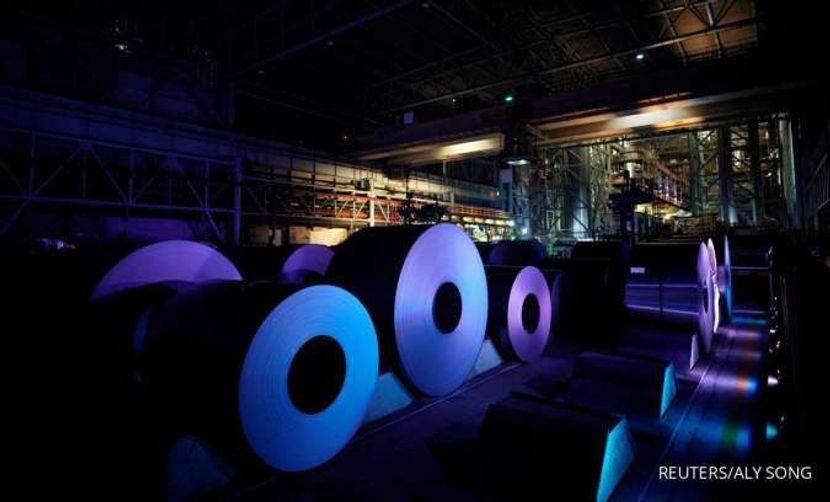
 Recently, the domestic steel industry has been overshadowed by news of massive steel imports from China. Therefore, the industry hopes the government can protect the national steel industry from suffering the same fate as the textile industry, which was severely hit by the invasion of imported products. The head of the Industry, Trade, and Investment Center at the Institute for Development of Economics and Finance (Indef) assessed that the decline in China's steel industry performance indeed provides an opportunity for the country to expand exports to various nations, including Indonesia, at very cheap prices or through dumping practices. Due to oversupply, they naturally export production directly abroad, and Indonesia is a market with penetration potential. Hence, government protection for domestic steel is urgent; otherwise, Indonesia's steel industry could collapse due to the impact of imported steel. Other countries have also adopted protective measures for their domestic steel industries. The US, EU, and Canada have imposed anti-dumping duties (BMAD) and high tariffs on Chinese steel products. Many countries have provided various trade remedies, while Indonesia's protective measures remain minimal. He hopes the Indonesian government will take similar actions, such as safeguard measures or implementing BMAD, to protect the domestic steel industry. The government can also promote other certifications. If large-scale steel imports are allowed, it will not only bankrupt the domestic steel industry but also threaten massive layoffs. Other sectors will also be affected, such as steel distributors and related industries, creating a significant domino effect. Production can grow positively, encouraging investors to enter this field.
Indonesia's steel industry indeed expects government protection, including PT Gunung Raja Paksi Tbk (GGRP) or GRP. The President Director of GRP stated that the steel industry is a pillar of development, so the government should seriously protect it by implementing multiple trade remedies. They believe that the review or extension process for anti-dumping is very lengthy and worry that the steel industry will suffer the same destruction as the textile industry. Referring to a recent Bloomberg report, they noted that in the first half of 2024, nearly three-quarters of China's steel producers suffered losses. Major producers such as Xinjiang Bayi Iron and Steel, Gansu Jiugang, and Anyang Iron and Steel went bankrupt due to declining domestic demand. To survive, these steel producers have chosen to increase exports, including to Indonesia, which may increase the risk of dumping practices.
Recently, the domestic steel industry has been overshadowed by news of massive steel imports from China. Therefore, the industry hopes the government can protect the national steel industry from suffering the same fate as the textile industry, which was severely hit by the invasion of imported products. The head of the Industry, Trade, and Investment Center at the Institute for Development of Economics and Finance (Indef) assessed that the decline in China's steel industry performance indeed provides an opportunity for the country to expand exports to various nations, including Indonesia, at very cheap prices or through dumping practices. Due to oversupply, they naturally export production directly abroad, and Indonesia is a market with penetration potential. Hence, government protection for domestic steel is urgent; otherwise, Indonesia's steel industry could collapse due to the impact of imported steel. Other countries have also adopted protective measures for their domestic steel industries. The US, EU, and Canada have imposed anti-dumping duties (BMAD) and high tariffs on Chinese steel products. Many countries have provided various trade remedies, while Indonesia's protective measures remain minimal. He hopes the Indonesian government will take similar actions, such as safeguard measures or implementing BMAD, to protect the domestic steel industry. The government can also promote other certifications. If large-scale steel imports are allowed, it will not only bankrupt the domestic steel industry but also threaten massive layoffs. Other sectors will also be affected, such as steel distributors and related industries, creating a significant domino effect. Production can grow positively, encouraging investors to enter this field.
Indonesia's steel industry indeed expects government protection, including PT Gunung Raja Paksi Tbk (GGRP) or GRP. The President Director of GRP stated that the steel industry is a pillar of development, so the government should seriously protect it by implementing multiple trade remedies. They believe that the review or extension process for anti-dumping is very lengthy and worry that the steel industry will suffer the same destruction as the textile industry. Referring to a recent Bloomberg report, they noted that in the first half of 2024, nearly three-quarters of China's steel producers suffered losses. Major producers such as Xinjiang Bayi Iron and Steel, Gansu Jiugang, and Anyang Iron and Steel went bankrupt due to declining domestic demand. To survive, these steel producers have chosen to increase exports, including to Indonesia, which may increase the risk of dumping practices.
Indonesian Industry Calls for Protection of Steel Sector from Chinese Imports
www.indoent.com
2024-11-09
Recently, the domestic steel industry has been overshadowed by news of massive steel imports from China. Therefore, the industry hopes the government can protect the national steel industry from suffering the same fate as the textile industry, which was severely hit by the invasion of imported products. The head of the Industry, Trade, and Investment Center at the Institute for Development of Economics and Finance (Indef) assessed that the decline in China's steel industry performance indeed provides an opportunity for the country to expand exports to various nations, including Indonesia, at very cheap prices or through dumping practices. Due to oversupply, they naturally export production directly abroad, and Indonesia is a market with penetration potential. Hence, government protection for domestic steel is urgent; otherwise, Indonesia's steel industry could collapse due to the impact of imported steel. Other countries have also adopted protective measures for their domestic steel industries. The US, EU, and Canada have imposed anti-dumping duties (BMAD) and high tariffs on Chinese steel products. Many countries have provided various trade remedies, while Indonesia's protective measures remain minimal. He hopes the Indonesian government will take similar actions, such as safeguard measures or implementing BMAD, to protect the domestic steel industry. The government can also promote other certifications. If large-scale steel imports are allowed, it will not only bankrupt the domestic steel industry but also threaten massive layoffs. Other sectors will also be affected, such as steel distributors and related industries, creating a significant domino effect. Production can grow positively, encouraging investors to enter this field.
Recently, the domestic steel industry has been overshadowed by news of massive steel imports from China. Therefore, the industry hopes the government can protect the national steel industry from suffering the same fate as the textile industry, which was severely hit by the invasion of imported products. The head of the Industry, Trade, and Investment Center at the Institute for Development of Economics and Finance (Indef) assessed that the decline in China's steel industry performance indeed provides an opportunity for the country to expand exports to various nations, including Indonesia, at very cheap prices or through dumping practices. Due to oversupply, they naturally export production directly abroad, and Indonesia is a market with penetration potential. Hence, government protection for domestic steel is urgent; otherwise, Indonesia's steel industry could collapse due to the impact of imported steel. Other countries have also adopted protective measures for their domestic steel industries. The US, EU, and Canada have imposed anti-dumping duties (BMAD) and high tariffs on Chinese steel products. Many countries have provided various trade remedies, while Indonesia's protective measures remain minimal. He hopes the Indonesian government will take similar actions, such as safeguard measures or implementing BMAD, to protect the domestic steel industry. The government can also promote other certifications. If large-scale steel imports are allowed, it will not only bankrupt the domestic steel industry but also threaten massive layoffs. Other sectors will also be affected, such as steel distributors and related industries, creating a significant domino effect. Production can grow positively, encouraging investors to enter this field.
Indonesia's steel industry indeed expects government protection, including PT Gunung Raja Paksi Tbk (GGRP) or GRP. The President Director of GRP stated that the steel industry is a pillar of development, so the government should seriously protect it by implementing multiple trade remedies. They believe that the review or extension process for anti-dumping is very lengthy and worry that the steel industry will suffer the same destruction as the textile industry. Referring to a recent Bloomberg report, they noted that in the first half of 2024, nearly three-quarters of China's steel producers suffered losses. Major producers such as Xinjiang Bayi Iron and Steel, Gansu Jiugang, and Anyang Iron and Steel went bankrupt due to declining domestic demand. To survive, these steel producers have chosen to increase exports, including to Indonesia, which may increase the risk of dumping practices.
Tags
Industry News
Share to
Related Reading
 Industry Flash
Cheap Chinese Plastics Impact Indonesia's Petrochemical Industry, Association Calls for Protection
2026-09-03 Industry News
Investment Heat in Two Key Industrial Parks in Central Java Continues to Rise
2026-08-31 Industry News