
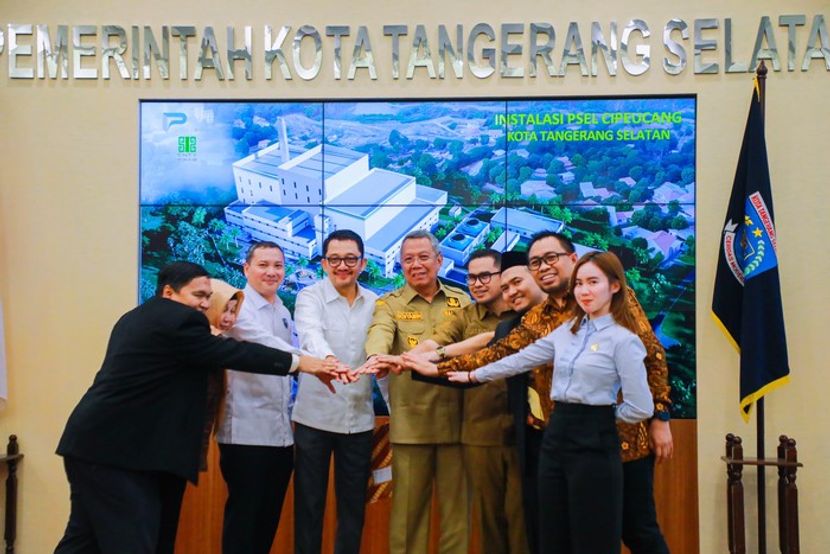
 The South Tangerang city government will cooperate with a Chinese company to build a waste-to-energy processing facility (PSEL). The facility will use environmentally friendly modern technology, and the mayor stated that it will become a model for urban waste management in Indonesia. The mayor recently, accompanied by relevant personnel, issued a Letter of Acceptance to PT Indoplas Energi Hijau (IEH), a subsidiary of PT Maharaksa Biru Energi Tbk (OASA). IEH, together with its Chinese technology partner China Tianying Inc (CNTY), formed a consortium that won the tender on April 17. CNTY is a Chinese company with extensive modern waste management experience in multiple countries, operating in sectors such as urban industry, resource recovery, and carbon-free clean energy technologies. The PSEL project is expected to process 1,000 tons of waste daily, and will also utilize moving grate incineration technology to treat 100 tons of existing waste. This technology efficiently reduces waste on a large scale while being environmentally friendly, and is expected to solve the city's waste problem. The head of the IEH-CNTY consortium stated that PSEL will not only solve the waste problem but also improve the quality of life for local residents, while alleviating the burden on the Cipeucang landfill, which is currently overcrowded with waste and has poor environmental conditions.
Chinese Company Participates in South Tangerang Waste-to-Energy Project
www.indoent.com
2025-05-11
The South Tangerang city government will cooperate with a Chinese company to build a waste-to-energy processing facility (PSEL). The facility will use environmentally friendly modern technology, and the mayor stated that it will become a model for urban waste management in Indonesia. The mayor recently, accompanied by relevant personnel, issued a Letter of Acceptance to PT Indoplas Energi Hijau (IEH), a subsidiary of PT Maharaksa Biru Energi Tbk (OASA). IEH, together with its Chinese technology partner China Tianying Inc (CNTY), formed a
The South Tangerang city government will cooperate with a Chinese company to build a waste-to-energy processing facility (PSEL). The facility will use environmentally friendly modern technology, and the mayor stated that it will become a model for urban waste management in Indonesia. The mayor recently, accompanied by relevant personnel, issued a Letter of Acceptance to PT Indoplas Energi Hijau (IEH), a subsidiary of PT Maharaksa Biru Energi Tbk (OASA). IEH, together with its Chinese technology partner China Tianying Inc (CNTY), formed a consortium that won the tender on April 17. CNTY is a Chinese company with extensive modern waste management experience in multiple countries, operating in sectors such as urban industry, resource recovery, and carbon-free clean energy technologies. The PSEL project is expected to process 1,000 tons of waste daily, and will also utilize moving grate incineration technology to treat 100 tons of existing waste. This technology efficiently reduces waste on a large scale while being environmentally friendly, and is expected to solve the city's waste problem. The head of the IEH-CNTY consortium stated that PSEL will not only solve the waste problem but also improve the quality of life for local residents, while alleviating the burden on the Cipeucang landfill, which is currently overcrowded with waste and has poor environmental conditions.
Share to
Related Reading
 China Investment News
China's AiMOGA Humanoid Robot Obtains Three International Certifications
2026-09-07 China Investment News
Only Three Chinese Automakers Have Independently Built Factories in Indonesia
2026-09-05 Chinese Investment News