
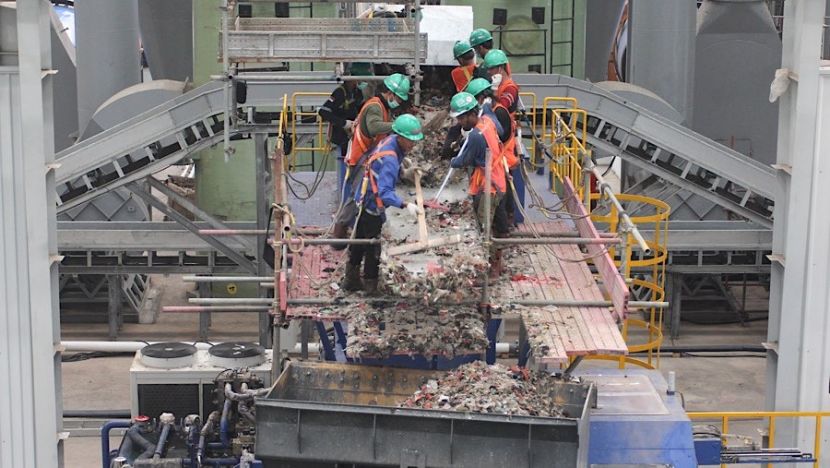
 The National Investment Management Agency (BPI) Danantara will launch an open tender for waste-to-energy (PLTSa) projects in early November 2025. Its CEO has pledged to ensure a transparent process. The projects aim to address waste accumulation in major cities and promote energy transition, targeting commercial operations by 2028.
The government will revise Presidential Regulation No. 35 of 2018, fixing the electricity price at 20 US cents/kWh (originally proposed at 22 cents), eliminating local government tipping fees, shifting the burden to state electricity company PLN, and introducing a "take and pay" contract model to protect investor returns.
Currently, Indonesia has only 2 waste-to-energy plants in operation (Solo 5MW, Surabaya 9MW). PLN plans to participate in development, with 11 projects already planned and another 24 potential projects. In the first half of 2025, 4 power purchase agreements were signed (Palembang, Sunter, Surabaya, Solo).
This project marks Indonesia's accelerated energy transition, attracting private investment through fixed electricity prices and simplified regulations, while alleviating the financial burden on local governments.
The National Investment Management Agency (BPI) Danantara will launch an open tender for waste-to-energy (PLTSa) projects in early November 2025. Its CEO has pledged to ensure a transparent process. The projects aim to address waste accumulation in major cities and promote energy transition, targeting commercial operations by 2028.
The government will revise Presidential Regulation No. 35 of 2018, fixing the electricity price at 20 US cents/kWh (originally proposed at 22 cents), eliminating local government tipping fees, shifting the burden to state electricity company PLN, and introducing a "take and pay" contract model to protect investor returns.
Currently, Indonesia has only 2 waste-to-energy plants in operation (Solo 5MW, Surabaya 9MW). PLN plans to participate in development, with 11 projects already planned and another 24 potential projects. In the first half of 2025, 4 power purchase agreements were signed (Palembang, Sunter, Surabaya, Solo).
This project marks Indonesia's accelerated energy transition, attracting private investment through fixed electricity prices and simplified regulations, while alleviating the financial burden on local governments.
Indonesia Launches Tender for Waste-to-Energy Projects
www.indoent.com
2025-10-14
The National Investment Management Agency (BPI) Danantara will launch an open tender for waste-to-energy (PLTSa) projects in early November 2025. Its CEO has pledged to ensure a transparent process. The projects aim to address waste accumulation in major cities and promote energy transition, targeting commercial operations by 2028. The government will revise Presidential Regulation No. 35 of 2018, fixing the electricity price at 20 US cents/kWh (originally proposed at 22 cents), eliminating local government tipping fees, and shifting the burden to state electricity company PLN. A "take and pay" contract model will also be introduced to protect investor returns.
The National Investment Management Agency (BPI) Danantara will launch an open tender for waste-to-energy (PLTSa) projects in early November 2025. Its CEO has pledged to ensure a transparent process. The projects aim to address waste accumulation in major cities and promote energy transition, targeting commercial operations by 2028.
The government will revise Presidential Regulation No. 35 of 2018, fixing the electricity price at 20 US cents/kWh (originally proposed at 22 cents), eliminating local government tipping fees, shifting the burden to state electricity company PLN, and introducing a "take and pay" contract model to protect investor returns.
Currently, Indonesia has only 2 waste-to-energy plants in operation (Solo 5MW, Surabaya 9MW). PLN plans to participate in development, with 11 projects already planned and another 24 potential projects. In the first half of 2025, 4 power purchase agreements were signed (Palembang, Sunter, Surabaya, Solo).
This project marks Indonesia's accelerated energy transition, attracting private investment through fixed electricity prices and simplified regulations, while alleviating the financial burden on local governments.
Tags
Industry Flash
Share to
Related Reading
 Industry Flash
Cheap Chinese Plastics Impact Indonesia's Petrochemical Industry, Association Calls for Protection
2026-09-03 Industry News
Investment Heat in Two Key Industrial Parks in Central Java Continues to Rise
2026-08-31 Industry News