
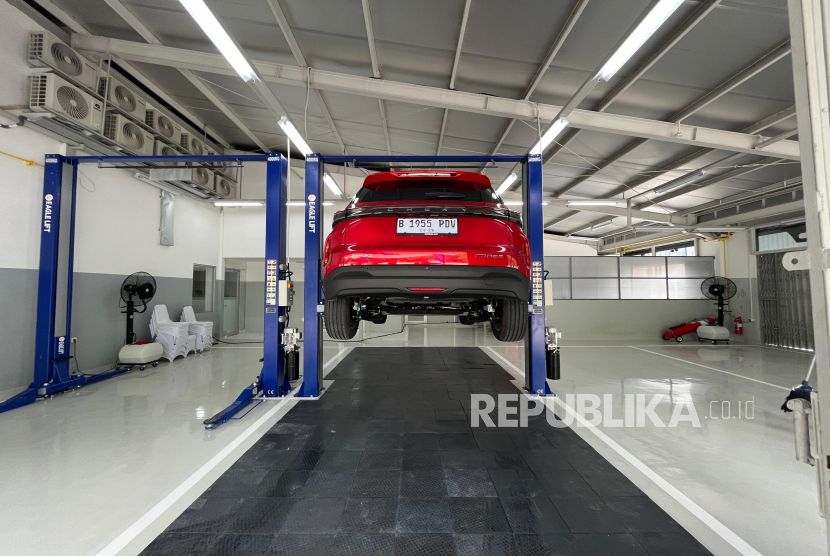
 \n\nThe Indonesian automotive market has recently seen significant changes: Under the strong impact of Chinese car brands, many former Honda and Mitsubishi dealers have been forced to change their brand logos and switch to selling Chinese brands such as Chery and BYD. An automotive observer from Bandung Institute of Technology pointed out that Chinese brands are challenging the long-dominant market position of Japanese brands with more competitive prices, advanced technical features, and innovative designs.\n\nSpecific cases include: Honda dealers in Surabaya Jemursari, Bandung Pasteur, Bekasi Triputra and BSD Trimegah have closed, and a Mitsubishi dealer in Cinere, West Java, has changed to the Chery brand. According to data from the Indonesian Automotive Industry Association (GAIKINDO), wholesale volume of Honda Prospect Motor has continued to decline from 8,757 units in January 2025 to 3,000 units in March, reflecting the changing market landscape. This phenomenon marks a major shift in the competitive dynamics of the Indonesian automotive industry, with Chinese brands continuously expanding their market share through a high cost-performance strategy.
Japanese Auto Dealers Switch to Distributing Chinese Brands
www.indoent.com
2025-11-04
The Indonesian automotive market has recently seen significant changes: Under the strong impact of Chinese car brands, many former Honda and Mitsubishi dealers have been forced to change their brand logos and switch to selling Chinese brands such as Chery and BYD. An automotive observer from Bandung Institute of Technology pointed out that Chinese brands are challenging the long-dominant market position of Japanese brands with more competitive prices, advanced technical features, and innovative designs.\r\n\r\nSpecific cases include: Honda dealers in Surabaya Jemursari, Bandung Pasteur, Bekasi Triputra and BSD Trimegah have closed
\n\nThe Indonesian automotive market has recently seen significant changes: Under the strong impact of Chinese car brands, many former Honda and Mitsubishi dealers have been forced to change their brand logos and switch to selling Chinese brands such as Chery and BYD. An automotive observer from Bandung Institute of Technology pointed out that Chinese brands are challenging the long-dominant market position of Japanese brands with more competitive prices, advanced technical features, and innovative designs.\n\nSpecific cases include: Honda dealers in Surabaya Jemursari, Bandung Pasteur, Bekasi Triputra and BSD Trimegah have closed, and a Mitsubishi dealer in Cinere, West Java, has changed to the Chery brand. According to data from the Indonesian Automotive Industry Association (GAIKINDO), wholesale volume of Honda Prospect Motor has continued to decline from 8,757 units in January 2025 to 3,000 units in March, reflecting the changing market landscape. This phenomenon marks a major shift in the competitive dynamics of the Indonesian automotive industry, with Chinese brands continuously expanding their market share through a high cost-performance strategy.
Tags
Social Trends
Share to


