
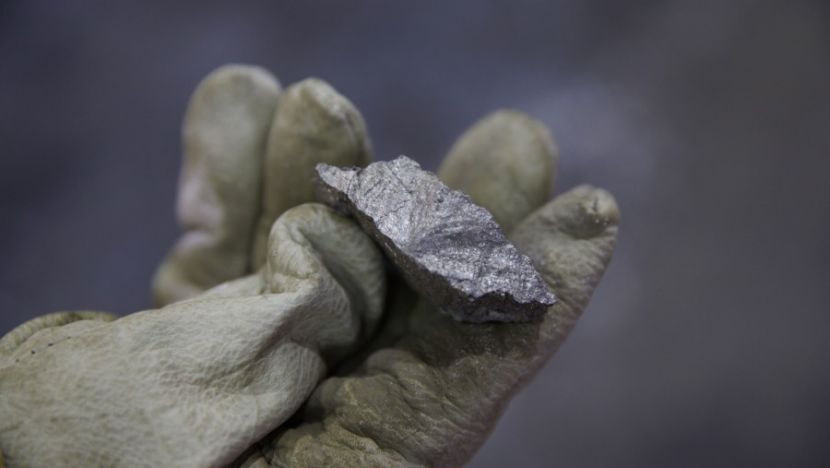
 The Indonesian Nickel Miners Association (APNI) believes that Indonesia's restrictions on new nickel smelter investments and issuance of Industrial Business Licenses (IUI) could help push up global nickel prices, but uncertainty remains, and companies must be prepared for prices not rising as expected. An APNI advisory board member noted that the smelter suspension policy in Indonesia could lift global nickel prices, but there is no absolute guarantee due to various factors.
Companies should incorporate Indonesia's policy as a trigger event into their 2025-2030 roadmaps, analyses, and industrial strategic plans. The current nickel price is around $15,075.33 per ton. Although this is a sharp drop from the historical high of over $100,000 per ton in March 2022, this policy can help companies operate more efficiently and drive investment. The government has streamlined the risk-based business licensing process under government regulations, with four potential positive impacts on the industry.
First, low-risk smelters can obtain permits more quickly with simpler requirements; second, it reduces the administrative burden on companies, allowing them to focus on operations and innovation; third, companies adopting clean and innovative technologies may find it easier to obtain permits, attracting more innovative investment; fourth, with clearer regulations and easier-to-understand processes, companies can enjoy better legal certainty.
The Ministry of Industry also confirmed that it is tightening the issuance of IUI for independent nickel smelters (not integrated with mines) as per regulations, though some flexibility remains for smelters already in the construction phase and planning to produce intermediate products. As of March 2024, Indonesia had 44 operational nickel smelters, with 19 more under construction and 7 in the feasibility study stage.
The Indonesian Nickel Miners Association (APNI) believes that Indonesia's restrictions on new nickel smelter investments and issuance of Industrial Business Licenses (IUI) could help push up global nickel prices, but uncertainty remains, and companies must be prepared for prices not rising as expected. An APNI advisory board member noted that the smelter suspension policy in Indonesia could lift global nickel prices, but there is no absolute guarantee due to various factors.
Companies should incorporate Indonesia's policy as a trigger event into their 2025-2030 roadmaps, analyses, and industrial strategic plans. The current nickel price is around $15,075.33 per ton. Although this is a sharp drop from the historical high of over $100,000 per ton in March 2022, this policy can help companies operate more efficiently and drive investment. The government has streamlined the risk-based business licensing process under government regulations, with four potential positive impacts on the industry.
First, low-risk smelters can obtain permits more quickly with simpler requirements; second, it reduces the administrative burden on companies, allowing them to focus on operations and innovation; third, companies adopting clean and innovative technologies may find it easier to obtain permits, attracting more innovative investment; fourth, with clearer regulations and easier-to-understand processes, companies can enjoy better legal certainty.
The Ministry of Industry also confirmed that it is tightening the issuance of IUI for independent nickel smelters (not integrated with mines) as per regulations, though some flexibility remains for smelters already in the construction phase and planning to produce intermediate products. As of March 2024, Indonesia had 44 operational nickel smelters, with 19 more under construction and 7 in the feasibility study stage.
Indonesia Tightens Nickel Smelter Permits, Potentially Boosting Prices and Efficiency
www.indoent.com
2025-11-14
The Indonesian Nickel Miners Association (APNI) believes that Indonesia's restrictions on new nickel smelter investments and issuance of Industrial Business Licenses (IUI) could help push up global nickel prices, but uncertainty remains, and companies must be prepared for prices not rising as expected. An APNI advisory board member noted that the smelter suspension policy in Indonesia could lift global nickel prices, but there is no absolute guarantee due to various factors. Companies should incorporate Indonesia's policy as a trigger event into their 2025-2030 roadmaps, analyses, and industrial strategic plans. The current nickel price is around $15,075.
The Indonesian Nickel Miners Association (APNI) believes that Indonesia's restrictions on new nickel smelter investments and issuance of Industrial Business Licenses (IUI) could help push up global nickel prices, but uncertainty remains, and companies must be prepared for prices not rising as expected. An APNI advisory board member noted that the smelter suspension policy in Indonesia could lift global nickel prices, but there is no absolute guarantee due to various factors.
Companies should incorporate Indonesia's policy as a trigger event into their 2025-2030 roadmaps, analyses, and industrial strategic plans. The current nickel price is around $15,075.33 per ton. Although this is a sharp drop from the historical high of over $100,000 per ton in March 2022, this policy can help companies operate more efficiently and drive investment. The government has streamlined the risk-based business licensing process under government regulations, with four potential positive impacts on the industry.
First, low-risk smelters can obtain permits more quickly with simpler requirements; second, it reduces the administrative burden on companies, allowing them to focus on operations and innovation; third, companies adopting clean and innovative technologies may find it easier to obtain permits, attracting more innovative investment; fourth, with clearer regulations and easier-to-understand processes, companies can enjoy better legal certainty.
The Ministry of Industry also confirmed that it is tightening the issuance of IUI for independent nickel smelters (not integrated with mines) as per regulations, though some flexibility remains for smelters already in the construction phase and planning to produce intermediate products. As of March 2024, Indonesia had 44 operational nickel smelters, with 19 more under construction and 7 in the feasibility study stage.
Tags
Policy Information
Share to
Related Reading
 Policy Information
Chinese Mainland and Hong Kong Enterprises Eligible for Relaxed Foreign Exchange Deposit Rules in Indonesia
2026-08-30 Policy Information
China-Indonesia Multi-Sector Strategic Cooperation Upgrade Blueprint
2026-08-23 Policy Information