
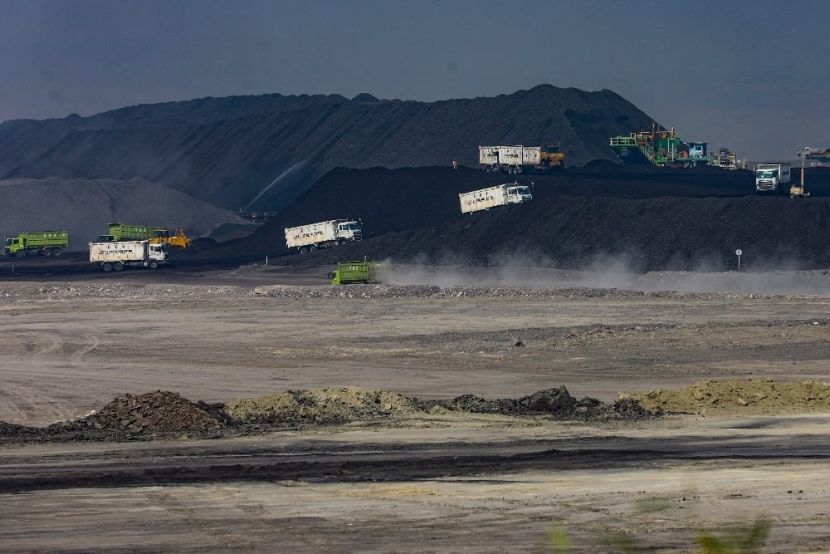
 The mining industry is not only a base for strategic mineral production but also drives local economic growth, contributing approximately 8.5% to the Gross Domestic Product (GDP), making it the fifth-largest sector supporting the economic structure. Economists point out that the mining industry directly affects national and local fiscal capacity, and policy formulation must focus on its role in economic growth. State-owned mining holding company MIND ID, as the main entity managing strategic mineral resources, promotes national and local revenues, fosters economic cycles in operational areas, local supply chains, and fulfillment of fiscal obligations, supporting public expenditure and infrastructure.
For example, in Mimika Regency, Central Papua Province, mining contributed IDR 407.77 billion, with total local revenue reaching IDR 5.8 trillion, mainly from activities related to Freeport Indonesia; in Muara Enim Regency, South Sumatra, the 2025 target for locally generated revenue was IDR 405.24 billion, with IDR 223.19 billion realized by August, mostly related to coal mining taxes and fees; in Bangka Belitung Islands Province, 2024 local revenue was approximately IDR 2.4 trillion, largely derived from tin mining and related economic activities.
The operations of ANTAM and Inalum in North Maluku, Southeast Sulawesi, and other areas also boost local revenue through local taxes and supporting industries. Experts believe that mineral downstream processing (hilirisasi) is an important factor driving local economic growth. Indef is currently studying relevant strategic mineral downstream policies to accelerate economic growth.
The mining industry is not only a base for strategic mineral production but also drives local economic growth, contributing approximately 8.5% to the Gross Domestic Product (GDP), making it the fifth-largest sector supporting the economic structure. Economists point out that the mining industry directly affects national and local fiscal capacity, and policy formulation must focus on its role in economic growth. State-owned mining holding company MIND ID, as the main entity managing strategic mineral resources, promotes national and local revenues, fosters economic cycles in operational areas, local supply chains, and fulfillment of fiscal obligations, supporting public expenditure and infrastructure.
For example, in Mimika Regency, Central Papua Province, mining contributed IDR 407.77 billion, with total local revenue reaching IDR 5.8 trillion, mainly from activities related to Freeport Indonesia; in Muara Enim Regency, South Sumatra, the 2025 target for locally generated revenue was IDR 405.24 billion, with IDR 223.19 billion realized by August, mostly related to coal mining taxes and fees; in Bangka Belitung Islands Province, 2024 local revenue was approximately IDR 2.4 trillion, largely derived from tin mining and related economic activities.
The operations of ANTAM and Inalum in North Maluku, Southeast Sulawesi, and other areas also boost local revenue through local taxes and supporting industries. Experts believe that mineral downstream processing (hilirisasi) is an important factor driving local economic growth. Indef is currently studying relevant strategic mineral downstream policies to accelerate economic growth.
Mining Industry Development Drives Indonesia's Economic Growth
www.indoent.com
2025-11-26
The mining industry is not only a base for strategic mineral production but also drives local economic growth, contributing approximately 8.5% to the Gross Domestic Product (GDP), making it the fifth-largest sector supporting the economic structure. Economists point out that the mining industry directly affects national and local fiscal capacity, and policy formulation must focus on its role in economic growth. State-owned mining holding company MIND ID, as the main entity managing strategic mineral resources, promotes national and local revenues, fosters economic cycles in operational areas, local supply chains, and fulfillment of fiscal obligations, supporting public expenditure and infrastructure. For example, in Mimika Regency, Central Papua Province, mining contributed IDR 407.77 billion, with total local revenue reaching IDR 5.8 trillion, mainly from activities related to Freeport Indonesia; in Muara Enim Regency, South Sumatra, the 2025 target for locally generated revenue was IDR 405.24 billion, with IDR 223.19 billion realized by August, mostly related to coal mining taxes and fees; in Bangka Belitung Islands Province, 2024 local revenue was approximately IDR 2.4 trillion, largely derived from tin mining and related economic activities.
The mining industry is not only a base for strategic mineral production but also drives local economic growth, contributing approximately 8.5% to the Gross Domestic Product (GDP), making it the fifth-largest sector supporting the economic structure. Economists point out that the mining industry directly affects national and local fiscal capacity, and policy formulation must focus on its role in economic growth. State-owned mining holding company MIND ID, as the main entity managing strategic mineral resources, promotes national and local revenues, fosters economic cycles in operational areas, local supply chains, and fulfillment of fiscal obligations, supporting public expenditure and infrastructure.
For example, in Mimika Regency, Central Papua Province, mining contributed IDR 407.77 billion, with total local revenue reaching IDR 5.8 trillion, mainly from activities related to Freeport Indonesia; in Muara Enim Regency, South Sumatra, the 2025 target for locally generated revenue was IDR 405.24 billion, with IDR 223.19 billion realized by August, mostly related to coal mining taxes and fees; in Bangka Belitung Islands Province, 2024 local revenue was approximately IDR 2.4 trillion, largely derived from tin mining and related economic activities.
The operations of ANTAM and Inalum in North Maluku, Southeast Sulawesi, and other areas also boost local revenue through local taxes and supporting industries. Experts believe that mineral downstream processing (hilirisasi) is an important factor driving local economic growth. Indef is currently studying relevant strategic mineral downstream policies to accelerate economic growth.
Tags
Social Trends
Share to


