
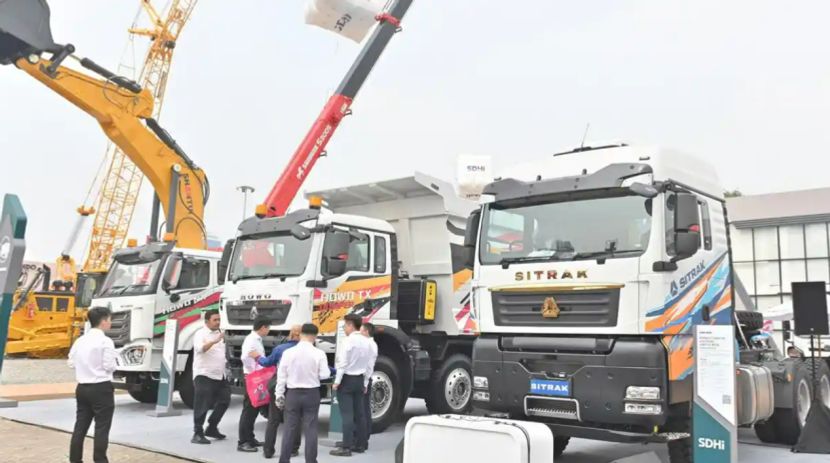
 In 2025, Indonesia's Class III truck commercial vehicle industry fell into development difficulties due to the dual impact of mineral price fluctuations and the influx of Chinese complete vehicle imports. Local companies faced unfair competition, severely affecting their production and business operations. A large number of Chinese Class III trucks entered the Indonesian market without complying with proper import procedures or undergoing vehicle type testing, and illegally sold Euro 2 standard models, deliberately circumventing the Euro 4 standards that local companies must strictly follow. It is reported that the number of such unregistered imported vehicles has reached tens of thousands, and they are also operating illegally on public roads, severely disrupting the competitive balance in Indonesia's domestic market.
KTB company pointed out that local Indonesian automotive companies have invested in local factories and created a large number of jobs, while Chinese truck importers have not made any investment in Indonesia, creating a completely unbalanced competitive landscape. Currently, local companies have jointly filed complaints with the Indonesian Automotive Industry Association to the government, but so far no specific solution has been obtained.
Hino Indonesia has also been severely affected by this import impact, with the capacity utilization rate of its West Java factory in 2025 plummeting to 25%, far below the factory's annual capacity of 75,000 units. Relevant officials predict that the trend of Chinese truck imports will continue in 2026, and the Indonesian government has yet to introduce any targeted control measures.
Hino stated that the actual number of Chinese imported trucks seriously mismatches with Indonesia's official statistics, with the import volume almost equivalent to the annual production capacity of domestic Class III trucks. At the same time, the operational threshold for Chinese truck importers is extremely low, forming a stark contrast with the operating costs of local manufacturers.
Local Indonesian automakers must pay tariffs ranging from 5% to 10% on imported components, while Chinese Class III truck complete vehicle imports enjoy a zero tariff policy, with the Indonesian government imposing no import barriers on them. This practice contradicts the industry control measures of other countries. In addition, the product specifications of Chinese imported trucks do not meet Indonesian market requirements, and Euro 2 standard models were even openly displayed at the Jakarta Mining Exhibition.
Facing the current industry situation, local Indonesian companies are deeply concerned that if the import chaos continues to go unchecked, the Indonesian commercial vehicle industry may follow the fate of Shri Taix.
In 2025, Indonesia's Class III truck commercial vehicle industry fell into development difficulties due to the dual impact of mineral price fluctuations and the influx of Chinese complete vehicle imports. Local companies faced unfair competition, severely affecting their production and business operations. A large number of Chinese Class III trucks entered the Indonesian market without complying with proper import procedures or undergoing vehicle type testing, and illegally sold Euro 2 standard models, deliberately circumventing the Euro 4 standards that local companies must strictly follow. It is reported that the number of such unregistered imported vehicles has reached tens of thousands, and they are also operating illegally on public roads, severely disrupting the competitive balance in Indonesia's domestic market.
KTB company pointed out that local Indonesian automotive companies have invested in local factories and created a large number of jobs, while Chinese truck importers have not made any investment in Indonesia, creating a completely unbalanced competitive landscape. Currently, local companies have jointly filed complaints with the Indonesian Automotive Industry Association to the government, but so far no specific solution has been obtained.
Hino Indonesia has also been severely affected by this import impact, with the capacity utilization rate of its West Java factory in 2025 plummeting to 25%, far below the factory's annual capacity of 75,000 units. Relevant officials predict that the trend of Chinese truck imports will continue in 2026, and the Indonesian government has yet to introduce any targeted control measures.
Hino stated that the actual number of Chinese imported trucks seriously mismatches with Indonesia's official statistics, with the import volume almost equivalent to the annual production capacity of domestic Class III trucks. At the same time, the operational threshold for Chinese truck importers is extremely low, forming a stark contrast with the operating costs of local manufacturers.
Local Indonesian automakers must pay tariffs ranging from 5% to 10% on imported components, while Chinese Class III truck complete vehicle imports enjoy a zero tariff policy, with the Indonesian government imposing no import barriers on them. This practice contradicts the industry control measures of other countries. In addition, the product specifications of Chinese imported trucks do not meet Indonesian market requirements, and Euro 2 standard models were even openly displayed at the Jakarta Mining Exhibition.
Facing the current industry situation, local Indonesian companies are deeply concerned that if the import chaos continues to go unchecked, the Indonesian commercial vehicle industry may follow the fate of Shri Taix.
Chinese Imported Trucks Impact Indonesia's Domestic Industry
www.indoent.com
2026-01-27
In 2025, Indonesia's Class III truck commercial vehicle industry fell into development difficulties due to the dual impact of mineral price fluctuations and the influx of Chinese complete vehicle imports. Local companies faced unfair competition, severely affecting their production and business operations. A large number of Chinese Class III trucks entered the Indonesian market without complying with proper import procedures or undergoing vehicle type testing, and illegally sold Euro 2 standard models, deliberately circumventing the Euro 4 standards that local companies must strictly follow. It is reported that the number of such unregistered imported vehicles has reached tens of thousands, and they are also operating illegally on public roads, severely disrupting the competitive balance in Indonesia's domestic market. KTB company
In 2025, Indonesia's Class III truck commercial vehicle industry fell into development difficulties due to the dual impact of mineral price fluctuations and the influx of Chinese complete vehicle imports. Local companies faced unfair competition, severely affecting their production and business operations. A large number of Chinese Class III trucks entered the Indonesian market without complying with proper import procedures or undergoing vehicle type testing, and illegally sold Euro 2 standard models, deliberately circumventing the Euro 4 standards that local companies must strictly follow. It is reported that the number of such unregistered imported vehicles has reached tens of thousands, and they are also operating illegally on public roads, severely disrupting the competitive balance in Indonesia's domestic market.
KTB company pointed out that local Indonesian automotive companies have invested in local factories and created a large number of jobs, while Chinese truck importers have not made any investment in Indonesia, creating a completely unbalanced competitive landscape. Currently, local companies have jointly filed complaints with the Indonesian Automotive Industry Association to the government, but so far no specific solution has been obtained.
Hino Indonesia has also been severely affected by this import impact, with the capacity utilization rate of its West Java factory in 2025 plummeting to 25%, far below the factory's annual capacity of 75,000 units. Relevant officials predict that the trend of Chinese truck imports will continue in 2026, and the Indonesian government has yet to introduce any targeted control measures.
Hino stated that the actual number of Chinese imported trucks seriously mismatches with Indonesia's official statistics, with the import volume almost equivalent to the annual production capacity of domestic Class III trucks. At the same time, the operational threshold for Chinese truck importers is extremely low, forming a stark contrast with the operating costs of local manufacturers.
Local Indonesian automakers must pay tariffs ranging from 5% to 10% on imported components, while Chinese Class III truck complete vehicle imports enjoy a zero tariff policy, with the Indonesian government imposing no import barriers on them. This practice contradicts the industry control measures of other countries. In addition, the product specifications of Chinese imported trucks do not meet Indonesian market requirements, and Euro 2 standard models were even openly displayed at the Jakarta Mining Exhibition.
Facing the current industry situation, local Indonesian companies are deeply concerned that if the import chaos continues to go unchecked, the Indonesian commercial vehicle industry may follow the fate of Shri Taix.
Tags
Industry News
Share to
Related Reading
 Industry Flash
Cheap Chinese Plastics Impact Indonesia's Petrochemical Industry, Association Calls for Protection
2026-09-03 Industry News
Investment Heat in Two Key Industrial Parks in Central Java Continues to Rise
2026-08-31 Industry News