
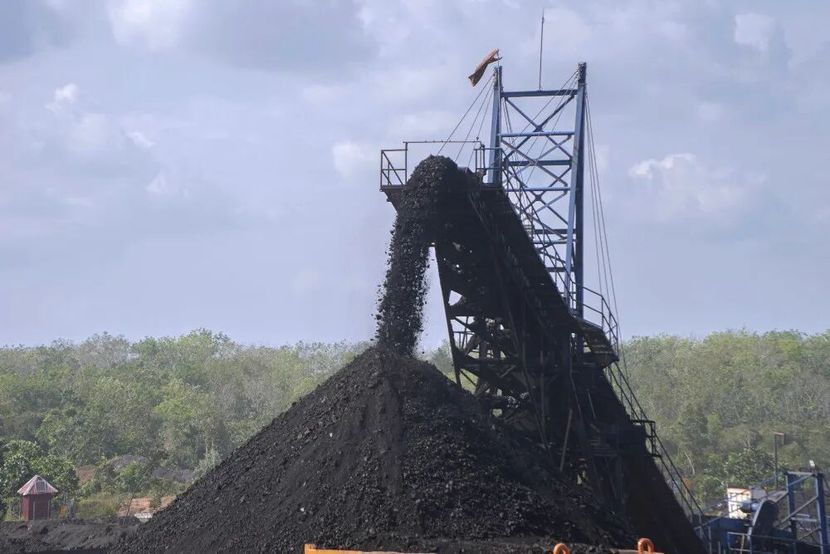
 Indonesia's 2026 work plan aims to cut coal output by more than 50%, with the Ministry of Energy planning a reduction to 600 million tons, a sharp drop from 790 million tons in 2025, representing an actual cut of 40% to 70%. This policy has raised concerns in the industry, which believes it will severely impact business operations and could even trigger a chain of negative effects.
Experts from the Center for Energy and Mineral Resources Law Research pointed out that a maximum output cut of 70% would severely damage corporate cash flow, potentially leading to delayed sales contracts and employee layoffs, and would also cause a short-term sharp decline in state non-tax revenue and mining royalties. It could also disrupt coal supply to domestic coal-fired power plants, requiring precise adjustment of domestic market supply obligations. Additionally, policy uncertainty could affect the mining investment environment, calling on the Ministry of Energy to formulate plans based on coal reserves, sales contracts, and domestic actual demand, to provide a transition period and maintain policy communication, while leaving room for annual output adjustments.
The head of the Indonesian Mining and Energy Forum also believes that a cut of over 50% will put pressure on business operations. Companies need to maintain infrastructure and human resources based on existing capacity, while the heavy equipment of mining service contractors will far exceed actual production needs. A sharp decline in corporate revenue will also affect banks financing equipment leases, likely leading to layoffs. Local government revenues will also decrease, and state non-tax revenue and corporate tax revenue face risks. They acknowledge the government's intention to stabilize international coal prices, but if coal prices do not rise, both companies and the government will suffer losses.
The Indonesian Coal Mining Association also stated that such a significant output cut lacks clear verification standards and sufficient communication, potentially causing companies' output to fall below the economic operating threshold, directly affecting operational feasibility and business continuity. Companies will struggle to cover fixed costs such as operations, environmental protection, and safety production, and it will also impact their financial performance with banks and other financial institutions, severely affecting industry operational stability.
Indonesia's 2026 work plan aims to cut coal output by more than 50%, with the Ministry of Energy planning a reduction to 600 million tons, a sharp drop from 790 million tons in 2025, representing an actual cut of 40% to 70%. This policy has raised concerns in the industry, which believes it will severely impact business operations and could even trigger a chain of negative effects.
Experts from the Center for Energy and Mineral Resources Law Research pointed out that a maximum output cut of 70% would severely damage corporate cash flow, potentially leading to delayed sales contracts and employee layoffs, and would also cause a short-term sharp decline in state non-tax revenue and mining royalties. It could also disrupt coal supply to domestic coal-fired power plants, requiring precise adjustment of domestic market supply obligations. Additionally, policy uncertainty could affect the mining investment environment, calling on the Ministry of Energy to formulate plans based on coal reserves, sales contracts, and domestic actual demand, to provide a transition period and maintain policy communication, while leaving room for annual output adjustments.
The head of the Indonesian Mining and Energy Forum also believes that a cut of over 50% will put pressure on business operations. Companies need to maintain infrastructure and human resources based on existing capacity, while the heavy equipment of mining service contractors will far exceed actual production needs. A sharp decline in corporate revenue will also affect banks financing equipment leases, likely leading to layoffs. Local government revenues will also decrease, and state non-tax revenue and corporate tax revenue face risks. They acknowledge the government's intention to stabilize international coal prices, but if coal prices do not rise, both companies and the government will suffer losses.
The Indonesian Coal Mining Association also stated that such a significant output cut lacks clear verification standards and sufficient communication, potentially causing companies' output to fall below the economic operating threshold, directly affecting operational feasibility and business continuity. Companies will struggle to cover fixed costs such as operations, environmental protection, and safety production, and it will also impact their financial performance with banks and other financial institutions, severely affecting industry operational stability.
Indonesia's Government Substantially Cuts Coal Output, Potentially Impacting Business Operations
www.indoent.com
2026-02-08
Indonesia's 2026 work plan aims to cut coal output by more than 50%, with the Ministry of Energy planning a reduction to 600 million tons, a sharp drop from 790 million tons in 2025, representing an actual cut of 40% to 70%. This policy has raised concerns in the industry, which believes it will severely impact business operations and could even trigger a chain of negative effects. Experts from the Center for Energy and Mineral Resources Law Research pointed out that a maximum output cut of 70% would severely damage corporate cash flow, potentially leading to delayed sales contracts and employee layoffs, and would also cause a short-term sharp decline in state non-tax revenue and mining royalties. It could also disrupt coal supply to domestic coal-fired power plants, requiring
Indonesia's 2026 work plan aims to cut coal output by more than 50%, with the Ministry of Energy planning a reduction to 600 million tons, a sharp drop from 790 million tons in 2025, representing an actual cut of 40% to 70%. This policy has raised concerns in the industry, which believes it will severely impact business operations and could even trigger a chain of negative effects.
Experts from the Center for Energy and Mineral Resources Law Research pointed out that a maximum output cut of 70% would severely damage corporate cash flow, potentially leading to delayed sales contracts and employee layoffs, and would also cause a short-term sharp decline in state non-tax revenue and mining royalties. It could also disrupt coal supply to domestic coal-fired power plants, requiring precise adjustment of domestic market supply obligations. Additionally, policy uncertainty could affect the mining investment environment, calling on the Ministry of Energy to formulate plans based on coal reserves, sales contracts, and domestic actual demand, to provide a transition period and maintain policy communication, while leaving room for annual output adjustments.
The head of the Indonesian Mining and Energy Forum also believes that a cut of over 50% will put pressure on business operations. Companies need to maintain infrastructure and human resources based on existing capacity, while the heavy equipment of mining service contractors will far exceed actual production needs. A sharp decline in corporate revenue will also affect banks financing equipment leases, likely leading to layoffs. Local government revenues will also decrease, and state non-tax revenue and corporate tax revenue face risks. They acknowledge the government's intention to stabilize international coal prices, but if coal prices do not rise, both companies and the government will suffer losses.
The Indonesian Coal Mining Association also stated that such a significant output cut lacks clear verification standards and sufficient communication, potentially causing companies' output to fall below the economic operating threshold, directly affecting operational feasibility and business continuity. Companies will struggle to cover fixed costs such as operations, environmental protection, and safety production, and it will also impact their financial performance with banks and other financial institutions, severely affecting industry operational stability.
Tags
Industry News
Share to
Related Reading
 Industry Flash
Cheap Chinese Plastics Impact Indonesia's Petrochemical Industry, Association Calls for Protection
2026-09-03 Industry News
Investment Heat in Two Key Industrial Parks in Central Java Continues to Rise
2026-08-31 Industry News