Detailed Introduction
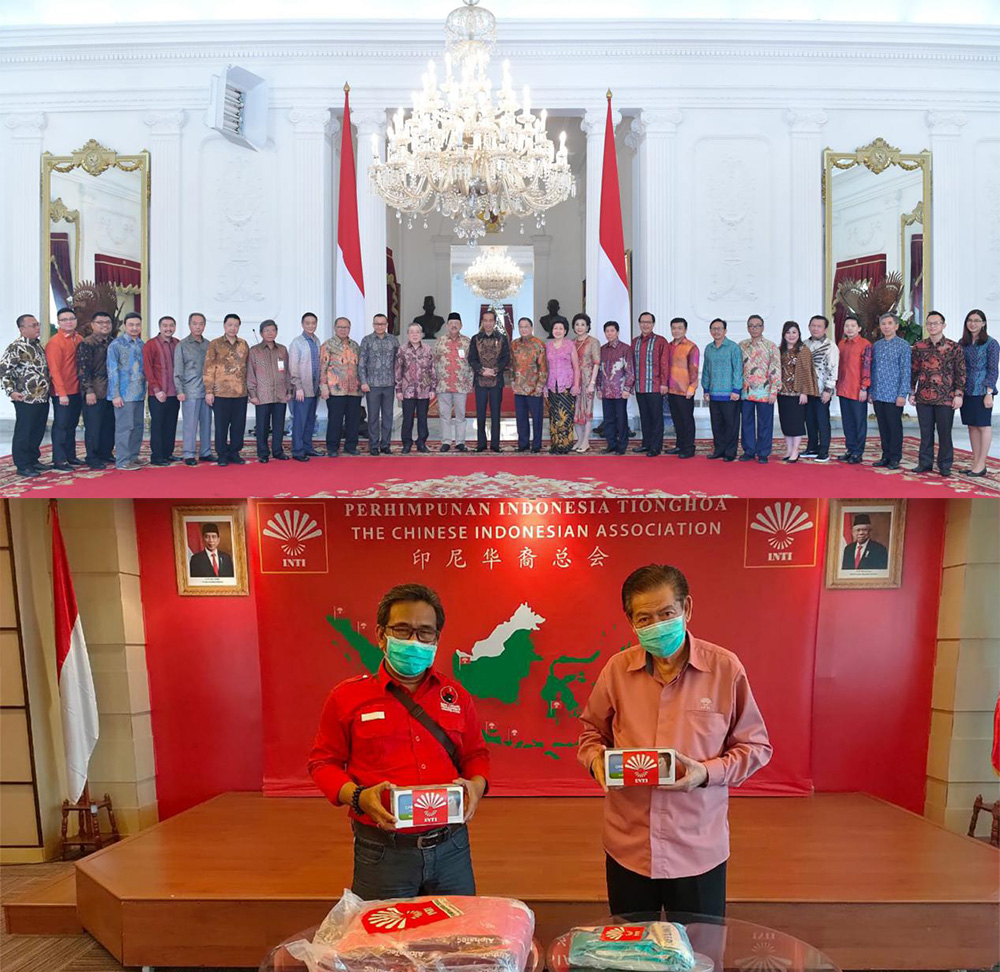
Indonesian Chinese Association, known in Indonesian as Perhimpunan Indonesia Tionghoa, abbreviated as INTI, is one of the larger and more socially influential nationwide Chinese community organizations in Indonesia.
The Indonesian Chinese Association was established on April 10, 1999 in Jakarta. Its founding coincided with Indonesia's reform era, when significant changes began to occur in the political, cultural, and social environment of the Chinese Indonesian community. The association has long been committed to safeguarding the legitimate rights and interests of Chinese Indonesians, opposing ethnic discrimination, and encouraging Chinese Indonesians to integrate more actively into mainstream Indonesian society.
INTI emphasizes Indonesian national identity and advocates for equality, pluralism, inclusiveness, and mutual respect among different ethnic groups, hoping to promote ethnic integration and national unity through public welfare, education, culture, and social participation.
Its official website summarizes the core philosophy as:
"Together Building a Harmonious Indonesia."
Organizational Network
After more than two decades of development, the Indonesian Chinese Association has established a nationwide organizational network covering multiple provinces and major cities across Indonesia.
Statistical scopes in publicly available materials have varied over time. In 2018, the association had established organizations in 14 provinces and 75 cities; since then, the organizational scale has continued to expand, with public statements mentioning branches in 16 provinces and over 80 cities. Materials from around 2024 state that there are now over 90 branches nationwide.
During the National Special Congress of Board Members held in 2026, representatives from 17 provinces and 75 regencies/cities in Indonesia attended, reflecting that INTI has now developed a mature nationwide organizational system.
The association also has various functional departments and organizations covering youth, women, education, culture, economy, social welfare, public relations, and more.
Offices and Liaison Institutions in China
As exchanges between China and Indonesia continue to expand, INTI has also gradually established offices and liaison networks in China.
Currently, publicly available information mainly includes:
- Beijing Office
- Guangzhou Office
- Hainan Office — officially inaugurated in Haikou on March 14, 2024, focusing on promoting cooperation between Hainan and Indonesia in trade, agriculture, medicine, building materials, and investment.
- Jiangmen Office — On May 6, 2025, the Jiangmen Office of the Indonesian Chinese Association (Guangdong) Branch and the Jiangmen Office of the Trade Department were officially established, further strengthening corporate, trade, and cultural ties between Guangdong's hometown of overseas Chinese and Indonesia.
These institutions have gradually extended INTI's functions from a traditional Chinese community organization to a platform for people-to-people exchanges, business cooperation, and resource matching between China and Indonesia.
Protecting the Legitimate Rights and Interests of Chinese Indonesians
Striving for equal social status and eliminating institutional discrimination against Chinese Indonesians was one of INTI's key focuses in its early years.
INTI has long participated in advocacy and social activities for Chinese Indonesians to obtain legitimate rights and equal status.
In 2006, Indonesia passed a new Citizenship Law, which further removed ethnic distinctions in citizenship status and confirmed that Indonesian citizens, including Chinese Indonesians, enjoy equal legal standing.
In 2008, Indonesia further passed laws against racial and ethnic discrimination, prohibiting discriminatory acts based on race or ethnicity.
These two laws became important legal milestones in changing the social status of Chinese Indonesians. The equal-rights and anti-discrimination social activities long carried out by INTI and other Chinese community organizations also became an important part of the struggle for equal rights by Chinese Indonesians during Indonesia's reform era.
Social Welfare
Charity and social welfare are currently one of the most important and active fields of INTI's work.
The association and its local branches have long carried out:
Disaster relief, free medical services, distribution of basic necessities, scholarships, poverty alleviation, community services, clean water assistance, and post-disaster reconstruction projects.
INTI's participation in social relief efforts can be seen during the 2004 Aceh tsunami and numerous major natural disasters in Indonesia since then.
From late 2025 to early 2026, INTI continued to provide assistance in disaster-affected areas such as North Sumatra and Aceh, including free medical care, distribution of food and basic necessities, public kitchens, clean water equipment, and post-disaster community recovery.
INTI emphasizes that its welfare services are not only for Chinese Indonesians but also for the broader Indonesian society.
Education and Youth Development
Education and youth development are long-term priorities for INTI.
The association has a youth organization called GEMA INTI and runs educational programs such as the Pelangi INTI Scholarship, helping young Indonesians gain more educational and inte ational exchange opportunities through scholarships, summer camps, winter camps, youth visits, and exchange programs in China.
INTI also actively promotes Indonesian youth studying in China. In recent years, the association has continued to secure scholarship resources from Chinese universities, for example, proposing free university scholarship quotas for Acehnese youth to study in China.
The beneficiaries of these programs are not limited to Chinese Indonesian youth but also include Indonesian students from other ethnic groups.
Chinese Language and Cultural Exchange
Chinese language education and Chinese cultural exchange are also important aspects of INTI's work.
As restrictions on Chinese language and culture were gradually lifted during Indonesia's reform era, INTI has actively participated in the restoration of Chinese language education, the promotion of Chinese culture, and youth cultural exchanges.
At the same time, INTI emphasizes that cultural preservation does not mean separation from Indonesian society; rather, it advocates that Chinese Indonesians preserve their cultural traditions while further integrating into Indonesian society.
In recent years, the association has also organized large numbers of Chinese Indonesian and non-Chinese Indonesian youth to visit China, fostering greater understanding of China in Indonesian society through education, culture, sports, and youth exchanges.
Indonesia-China Cultural Tourism Exchange Center
On March 26, 2025, the Indonesian Chinese Association officially established the "Indonesia-China Cultural Tourism Exchange Center."
The center is positioned as a cooperation platform for cultural tourism and related industries between China and Indonesia, planning to strengthen ties in the cultural tourism industry between the two countries through cultural exchanges, tourism promotion, business visits, corporate cooperation, professional consulting, and talent exchanges.
The establishment of this institution also reflects the evolving direction of INTI in recent years:
Extending from a traditional Chinese community organization to a comprehensive people-to-people exchange platform between China and Indonesia.
Chinese Political Participation and Social Influence
After Indonesia's reform era, as institutional restrictions against Chinese Indonesians were gradually lifted, more and more Chinese Indonesians began entering political parties, parliament, local legislatures, and gove ment public sectors.
Relevant public materials have noted that the number of Chinese Indonesian legislators in the Indonesian parliament once reached approximately 13.
Since Indonesian authorities generally do not continuously publish parliamentary statistics broken down by ethnicity, the figure "13" is best viewed as a snapshot of the development of Chinese Indonesian political participation, rather than an official fixed number for the current parliament.
What is certain is that since 1998, the degree of Chinese Indonesians' involvement in politics, public affairs, and participation has significantly increased. Chinese society has gradually shifted from being primarily focused on the business sector to more actively participating in politics, education, culture, welfare, and social gove ance.
Nationwide Chinese community organizations such as INTI have played a relatively important organizational and communication role in this social transformation.
Current Chairman
As of August 2026, the current Chairman of the Indonesian Chinese Association is Huang Yinghua.
In April 2026, the Indonesian Chinese Association held a National Special Congress of Board Members, where Huang Yinghua was elected Chairman of the Fourth Term (2026–2030), while the former Chairman Huang Dexin was appointed Honorary Chairman.
On August 7, 2026, the new board of supervisors and executives was officially inaugurated in Jakarta.
It should be noted that some organizational structure pages on INTI's official website may not be updated promptly; some older pages still show Huang Dexin as Chairman. The latest results from the 2026 reelection should be regarded as authoritative.
Overall Assessment
The Indonesian Chinese Association has gradually evolved from a Chinese community organization initially focused on protecting the legitimate rights of Chinese Indonesians and promoting ethnic integration into a nationwide social organization with multiple functions, including:
Chinese Indonesian community affairs, charitable welfare, youth education, cultural exchange, social integration, public affairs, and China-Indonesia people-to-people exchanges.
Its development process reflects, to a certain extent, the changes in Chinese Indonesian society over the past two decades:
From striving for equal rights to actively integrating into mainstream society;
From serving the Chinese Indonesian community to serving the broader Indonesian society;
From a traditional Chinese community organization to a people-to-people exchange platform connecting Indonesia and China.
Overall, INTI is one of the more representative and socially influential Chinese community organizations in Indonesia today, playing a relatively active role in promoting ethnic integration, social welfare, and friendly people-to-people exchanges between China and Indonesia.