

Indonesian Government Provides IDR 2 Trillion Financing for Textile and Furniture Industries
The Minister of Finance recently announced that IDR 2 trillion in special financing will be prepared to support the domestic textile and furniture industries, with funds disbursed through the Indonesian Export Financing Institution (LPEI). Previously, textile and furniture companies had applied for IDR 16 trillion in funding needs, but the government only had IDR 200 billion available at that time. Now, the government has increased the funding size to IDR 2 trillion. He stated at a Ministry of Finance press conference that the lending rate for these two industries is set at 6%, and applications can now be submitted to LPEI. However, this financing is only available for export-oriented companies. He explained that LPEI's positioning is to support export-oriented enterprises, while 80% of the companies that previously expressed needs to the government are primarily domestic market-oriented, and LPEI's financing support mechanism for such companies is still unclear.
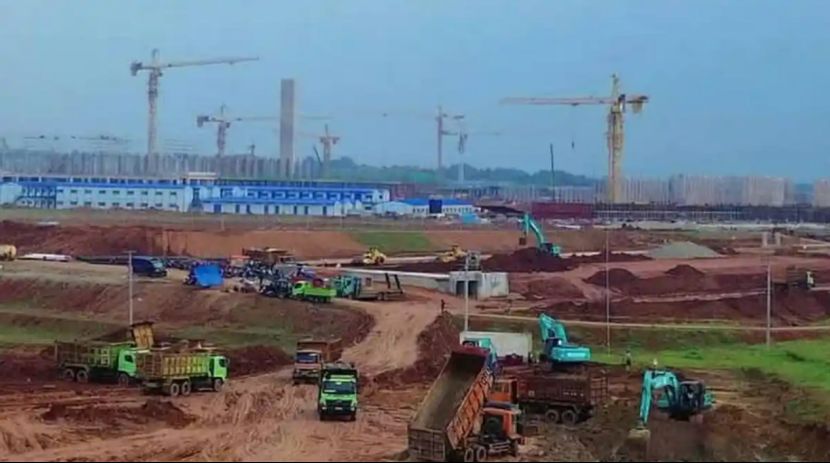
Domestic and Foreign Investment Jointly Push Forward, Hundreds of Billions in Projects Land Densely in West Java

Indonesian Average Employee Salary Expected to Grow 5.8% in 2026

Indonesia May Set Minimum Prices for Imported Goods, Especially from China
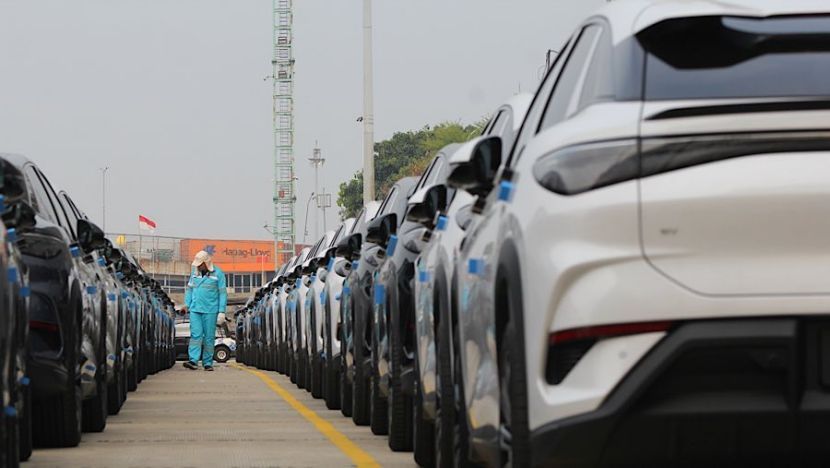
Indonesia's Cancellation of EV Incentives May Impact Industry Development

Indonesia to Impose Coal Export Duty Starting January 1
The Indonesian Ministry of Finance has confirmed that starting January 1, 2026, an export duty (BK) will be imposed on coal, following the gold export duty policy, but as of now, coal companies have not received the relevant technical details and calculation formulas. Earlier, the Minister of Finance stated that the coal export duty rate is expected to be between 1%-5%, and will only be imposed when coal prices reach a certain level, to avoid increasing the burden on enterprises when prices are low. However, as of December 21, the director of ABM Investama stated that they are still waiting for technical regulations to clarify the implementation time and calculation method, and while supporting the government's decision, there is no specific information yet.

Indonesia Plans to Regulate Administrative Fees on E-commerce Platforms
The Ministry of Micro, Small and Medium Enterprises (MSME Ministry) is studying regulations on administrative fees for e-commerce platforms, as currently the Ministry of Communication and Digital Affairs and the Ministry of Trade have not issued specific rules, aiming to ensure policies do not burden MSMEs (especially online sellers). The Deputy Minister stated that the Minister has requested him to draft relevant ministerial regulations, currently in the research phase. The approximate fee increases are known, but it needs to be assessed whether they affect MSME profits. The government will directly survey sellers and collect input in collaboration with partners such as the Internet Marketing Association, focusing on the impact of price increases on profits (especially in intense price competition).

China Mobile Plans to Upgrade Submarine Cable in Indonesia
China Mobile Indonesia (PT Indonesia China Mobile) will upgrade the submarine cable (SKKL) connecting Singapore and Jakarta to enhance Indonesia's internet service capabilities. The company activated a trans-Asia submarine cable from Singapore to Japan in June 2025, and plans to expand the capacity of the existing Singapore-Jakarta segment in 2026 (specific timeline and scale not disclosed). The parent company, China Mobile, reported a third-quarter 2025 revenue of approximately RMB 794.7 billion (up 0.4% year-on-year) and net profit of RMB 31.1 billion (up

Indonesia Imposes First Administrative Sanctions on Mining Companies Failing to Submit Periodic Reports
The Ministry of Energy and Mineral Resources, through the Directorate General of Mineral and Coal, has imposed the first administrative warning sanctions on 2,867 companies holding Mining Service Business Licenses (IUJP). According to a recent letter from the Directorate General of Mineral and Coal, the sanctions were imposed because these companies failed to fulfill their quarterly periodic reporting obligations. The letter clearly states two core requirements: First, companies holding IUJP must submit quarterly reports to the Minister of Energy and Mineral Resources or the relevant governor with authority, no later than 15 calendar days after the end of each quarter. Second, according to the

Chinese Enterprises Participate in Indonesian Waste-to-Energy Project Tender
Indonesia's sovereign wealth fund institution Danantara is about to announce the results of the first phase of the waste-to-energy project (PLTSa) tender. It is currently awaiting bidders to submit final documents approved by the Ministry of Environment and Forestry and the Coordinating Ministry for Food Affairs by January 7, 2025. The CEO stated that the first phase of the tender has been launched after determining 24 shortlisted technology suppliers (DPT), and the winners will be announced after the bid opening on January 7; the second phase of the tender is planned to commence in mid-January. The first phase covers at least 7-10 regions, launched on November 6, 2024.

Indonesia to Mandate Export Foreign Exchange Deposits for One Year from Next Year
The Ministry of Finance confirmed that the revised regulations on Export Foreign Exchange (DHE) management will be issued soon and take effect in January 2026, currently under review by the State Secretariat. The Director General of Strategic Economics and Finance stated that the new regulation requires exporters to deposit DHE into special accounts according to payment terms with importers, with a three-month grace period for crediting, as importers' payments are not immediately received in full. Key provisions include mandatory conversion of 50% of DHE into Indonesian rupiah and deposit in state-owned banks for one year, a ratio set based on central bank data. Previously, only about 4

Indonesian Nickel Association and Forum Oppose Excessive Nickel Mine Fine Standards
The Indonesian Nickel Miners Association (APNI) and the Nickel Industry Forum (FINI) have objected to the Ministerial Decree recently issued by the Minister of Energy and Mineral Resources. The decree sets administrative fine standards for mining violations in forest areas, with nickel being the highest at IDR 6.5 billion per hectare per year, far exceeding bauxite (IDR 1.76 billion), tin (IDR 1.25 billion), and coal (IDR 354 million). The associations have sent letters to the President, relevant ministries, and the forest task force, expressing support for forest protection and compliance but arguing that the fines are excessively high, lack fairness and proportionality, could cause uneven treatment among industries, distort the cost structure of the nickel industry, and contradict the principle of equal regulation.