
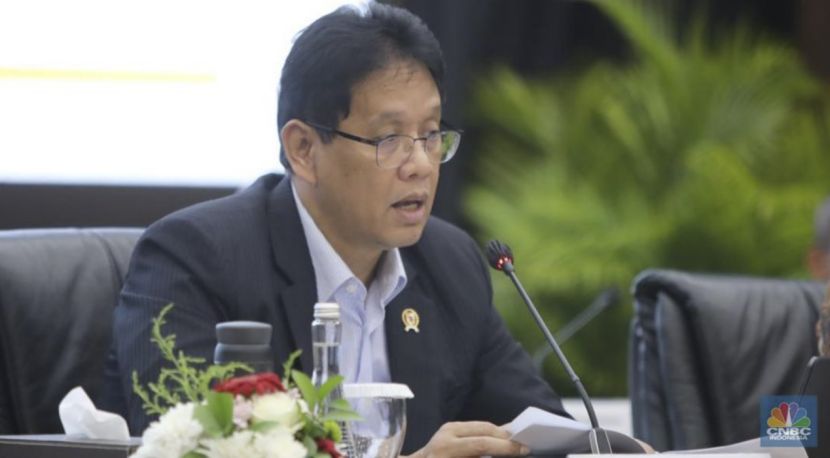
Natural Resource Export Foreign Exchange Must Be Deposited in State-Owned Banks for One Year
The Minister of Finance recently confirmed that the revised "Export Earnings Foreign Exchange Regulations" (DHE) will officially take effect on January 1, 2026. This means that natural resource (SDA) exporters must deposit their foreign exchange funds in state-owned bank groups (Himbara) for a minimum period of one year. The latest regulations will be released soon, and Bank Indonesia (BI) will simultaneously issue supporting technical details. He explained that the government regulations have completed discussions, alignment, and coordination, and only await the issuance of BI's implementing rules for full enforcement. According to the "Strategy for Strengthening Domestic Foreign Exchange Liquidity Policy" document issued by the Ministry of Finance to the banking sector, effective January 1, 2026, natural resource exporters are mandatorily required to deposit their foreign exchange earnings only in Himbara. Previous regulations did not specifically restrict which banks could receive DHE SDA, but the new rules explicitly limit this to Himbara.
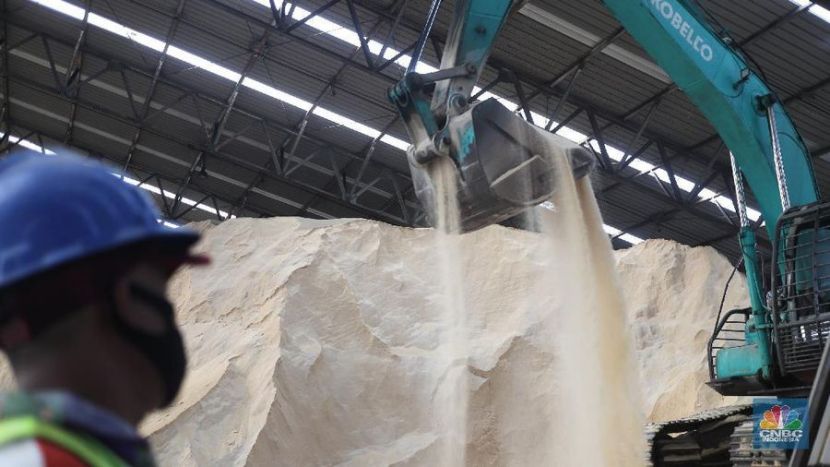
Indonesia Bans Import of Edible Sugar This Year

Indonesia Plans to Achieve One Million Barrels of Daily Crude Oil Production by 2030
Indonesia Plans to Cut Coal and Nickel Production Next Year to Stabilize Prices

List of 2026 Provincial Minimum Wage Standards in Indonesia

Chinese Embassy and Consulates in Indonesia Extend Visa Fee Reduction Period
To further facilitate the movement of Chinese and foreign nationals, Chinese Embassy and Consulates in Indonesia will extend the visa fee reduction policy until December 31, 2026. Visa fees for Indonesian citizens traveling to China: IDR 400,000 for single entry, IDR 600,000 for double entry, IDR 800,000 for multiple entries within six months, and IDR 1,200,000 for multiple entries valid for one year or more. Visa fees for third-country nationals traveling to China: USA - IDR 2,100,000 for single, double, or multiple entries; Canada - IDR 830,000; Argentina - IDR 1,700,000; Brazil - IDR 1,500,000; Israel - IDR 300,000; Panama - IDR 700,000; Romania - IDR 850,000 for single entry, IDR 1,200,000 for double entry, IDR 1,700,000 for multiple entries.

Indonesia Releases 2025-2034 National Electricity Supply Plan
The Ministry of Energy and Mineral Resources recently released the 2025-2034 National Electricity Supply Plan (RUPTL), hailed as the "greenest" electricity development plan in history. The plan is guided by the National Electricity Master Plan and the National Energy Policy, aligning with the Prabowo-Gibran administration's priority strategies of energy sovereignty and energy transition. The government proposes adding 69.5 GW of power generation capacity over the next decade, with 76% coming from new energy and energy storage systems. Specifically, new energy capacity of 42.6 GW (17.1 GW solar PV, 11.7 GW hydropower, 7.2 GW wind power, etc.), energy storage systems of 10.3 GW, and fossil fuel capacity of 16.6 GW. Indonesia's solar PV potential reaches 3,294 GW, and the government will focus on advancing floating solar PV projects.

Multiple Regions in Indonesia Announce 2026 Regional Minimum Wage Standards
The government has stipulated that provincial and local governments must determine the 2026 provincial and regional minimum wage standards by December 24, 2025, which also serves as the deadline for local governments to announce the Regional Minimum Wage (UMK). As of the deadline, only a few regions had published their standards, with Bekasi City predicted to have the highest in Indonesia at IDR 5,999,422. The Regional Minimum Wage is the minimum wage floor that companies must pay local workers, determined by the governor based on recommendations from regents, mayors, and the wage council, taking into account factors such as inflation, economic growth, and basic living needs.

Indonesia Builds Southeast Asia's Largest Plasma-Derived Fractionation Plant
Indonesia's long-standing 100% dependence on imported plasma derivatives is about to change. Through the Indonesia Investment Authority (INA), Indonesia is partnering with SK Plasma, a subsidiary of South Korea's SK Group, to build the country's first and Southeast Asia's largest plasma-derived medicinal product (PDMP) fractionation plant, which is expected to end the complete reliance on imports. INA's Vice President for ESG affairs stated that previously all of Indonesia's plasma needs were met through imports. The jointly built plant, located in the Karawang International Industrial Park, is scheduled to start operations in the fourth quarter of 2026, with an annual processing capacity of
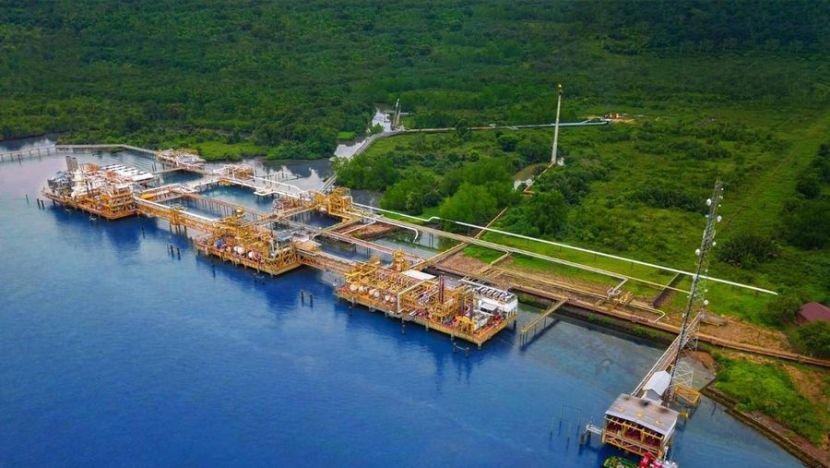
Indonesia's Upstream Oil and Gas Sector Regains Global Interest
The Ministry of Energy and Mineral Resources has revealed that, thanks to the government's creation of a more competitive investment environment, multiple international oil and gas companies have regained interest in Indonesia's upstream oil and gas projects, and many that previously withdrew are planning to return. The Director General of Oil and Gas at the ministry stated that this shift stems from the government's resumption of the cost recovery production sharing contract (PSC) model, which is being implemented in parallel with the gross revenue sharing contract model, along with various incentive policies. Highly attractive fiscal and tax terms have prompted established companies to return. He noted that Indonesia remains highly attractive to global oil and gas investors, with companies such as Ita

Indonesia May Offer Tax Relief for Car Purchases Next Year
The Ministry of Industry recently confirmed that it is holding marathon discussions with the Indonesian Automotive Industry Association and all car manufacturers regarding incentive measures for the automotive sector, aiming to accelerate the recovery and strengthening of the domestic automotive industry in 2026. In 2025, the industry faces pressure from domestic purchasing power and global market fluctuations, making the situation severe. The Deputy Minister of Industry stated that the discussions are not yet concluded, and the results will be announced after the Christmas holiday this year. It is reported that the incentive measures are planned in two options, from which the government will choose one. Option 1: For internal combustion engine vehicles (ICE) priced below IDR 275 million, hybrid

Jakarta Government Requires Companies to Comply with Minimum Wage Standards
The Jakarta Special Region Government announced the 2026 Provincial Minimum Wage (UMP) at IDR 5,729,876 per month, an increase of 6.17% (IDR 333,115 increase) from IDR 5,396,900 in 2025. The Governor stated at a press conference that the UMP adjustment is based on government regulations, which stipulate that the alpha coefficient range for calculating UMP is assumed to be 0.5 to 0.9. After discussion at the Jakarta Wage Council meeting, the α value of 0.75 was finally adopted. He emphasized that all companies in Jakarta must comply with this minimum starting from 2026