

Government Threatens to Take Over Chinese-Invested Weda Bay Nickel Mine
The Forest Management Task Force stated that if PT Weda Bay Nickel fails to pay administrative fines for illegal forest land use, further legal measures may be taken. The company has filed an appeal against the fines and plans to engage in dialogue. Previously, the task force had reclaimed a total of 321.07 hectares of mining area without forest land borrowing permits from the company and PT Tonia Mitra Sejahtera, of which 148.25 hectares belong to Weda Bay Nickel in Central and East Halmahera, and 172.82 hectares to Tonia Mitra in Bombana, Southeast Sulawesi.

Chinese Motorcycle Factory in Indonesia to Start Production Next Year

Chinese Tenants Drive Growth in Indonesia's Industrial Property Sector
Indonesia Suspends EV Incentives Next Year

CATL Supports Indonesia-Singapore Renewable Energy Exports

China Becomes Main Source of Tombstone Imports for Indonesia
Although Indonesia is a participant in the global tombstone trade and exports its own stone products in large quantities to the US and Japan, it still imports tombstones from abroad, with China being the main supplier. Data from the Central Statistics Agency shows that the import value of tombstones (HS code 68029900) first declined then rose in recent years: US$1.93 million in 2019, rising to US$2.35 million in 2020, then declining continuously from 2021 to 2022, bottoming out at US$948,000 in 2022. In 2024, it rebounded to US$1.59 million (approximately IDR 263.2 billion), with imports from China reaching

Indonesia-US Trade Agreement Talks Hit Obstacles
Indonesia faces pressure from the US regarding the trade agreement (tariff 19%) reached in July, with the US demanding new clauses that may restrict Indonesia's cooperation with China, its largest source of foreign investment, causing friction between the two sides. According to Bloomberg, the US accuses Indonesia of breaking initial commitments. New demands include: if Indonesia signs agreements detrimental to US interests, the US can cancel the existing deal; critical mineral development (with China dominating the supply chain) and oil & gas investment cooperation must exclude third parties (affecting Indonesia's relations with Russia and China). Insiders say the US is pressuring Indonesia to distance itself from China during negotiations. The US Trade Representative's Office emphasizes that in October, the US, Malaysia, and Cambodia signed an agreement at the ASEAN meeting, hoping Indonesia will follow suit. A spokesperson for Indonesia's Coordinating Ministry for Economic Affairs responded that there are no specific disputes in the negotiations and that the dynamics are normal, with the government remaining optimistic about reaching a "mutually beneficial agreement."

Special Economic Zones Become Engines of Local Economic Growth in Indonesia
The government continues to strengthen the role of Special Economic Zones (KEK) as engines of local economic growth, with their economic effects gradually becoming apparent. The Coordinating Minister for Economic Affairs stated that regions with well-managed KEKs have shown outstanding economic performance, such as Batang Regency and Kendal Regency, which achieved economic growth rates of 8.52% and 8.84% (year-on-year) respectively in the third quarter of 2025, far exceeding provincial and national averages. The KEK Industrial City in Batang Regency has driven accelerated investment, employment growth, and improved livelihoods. In 2024, the regency's economy grew by 6.03%, jumping to 8.52% in the third quarter of 2025, mainly driven by

Chinese Enterprises Lead Indonesia's National Strategic Project Internship Program
In the launch of the second phase of the "National Strategic Project Internship Program" led by the Indonesian Ministry of Manpower, China Chemical Engineering International Company and its Indonesian subsidiary played a key role as core organizing units. The program aims to cultivate industrial talent for Indonesia's national strategic projects, allowing companies to apply for internship quotas not exceeding 10% of their employee count. Under the guidance of the Chinese Embassy in Indonesia and the Chamber of Commerce, the company actively coordinated with the Ministry of Manpower, providing professional advice on job placement and training mechanisms. It successfully mobilized nearly 200 Chinese enterprises (covering energy, chemical, infrastructure, and other fields) to participate, providing systematic training for nearly 10,000 Indonesian youth.

Chinese Supervised PV Project Synchronized Grid Connection
The first phase of the distributed photovoltaic project on OBI Island, Indonesia, supervised by Xingdian International, has achieved significant progress—over 22MW of distributed PV in three areas (Wet Process Phase I, Pyrometallurgy Phase I, and Wet Process Phase III) were synchronized and connected to the grid. This project is a successful example of Chinese engineering supervision models and new energy technologies in complex overseas environments, injecting momentum into Indonesia's energy structure upgrade. During the project, Xingdian International established a "full-process, multi-dimensional, strict-standard" supervision system covering the entire lifecycle including planning, equipment acceptance, construction control, and grid connection commissioning. Given the characteristics of simultaneous construction in multiple areas and extensive cross-operations, a zoning supervision plan was developed, with 20 supervision notices issued and 76 rectification suggestions proposed to ensure compliance with specifications and safety standards. Key equipment such as inverters and prefabricated cabins were strictly inspected and sampled, with full-process supervision of installation and commissioning to ensure reliability and controllability of details.

Chinese-Invested Shoe Factory in Indonesia Achieves Production Profitability
Huali Group announced that its first factory in Indonesia – the Shichuan Factory – achieved its internal performance targets and turned profitable in the third quarter of 2025, marking a key step in its Indonesian capacity expansion strategy and validating its cross-region operations and localized management capabilities. Indonesia's footwear industry ecosystem is mature, and the company's actual controller has experience operating factories locally, with the core management team including personnel with Indonesian background, enabling rapid adaptation to the local environment, avoiding the typical teething risks of new production bases, and laying the foundation for production profitability. Compared to Vietnam, Indonesia offers abundant labor supply and lower labor costs (Vietnam sees annual wage increases of about 8%), supporting long-term scaling and cost optimization. The company has made targeted management adjustments, optimized training, and adapted to local work habits, improving efficiency, with operations and ramp-up performance exceeding expectations. The first phase of the Shichuan Factory is already in production, and upon completion of the second and third phases, total annual production capacity will reach 50-60 million pairs, becoming a key capacity pillar. In the medium to long term, Indonesia will be the "main battleground" for capacity expansion over the next 3-5 years, while Vietnam will stabilize production and optimize efficiency, forming a dual-base synergy of "Vietnam stabilizing capacity, Indonesia expanding volume." This arrangement helps the company improve gross margins through lower costs, diversify risks from rising Vietnamese costs and geopolitical factors, while Indonesia's flexible capacity can adapt to order fluctuations, enhancing responsiveness. Management stated they will continue deepening localization, advance subsequent construction, conduct monthly efficiency reviews, and ensure steady capacity release to provide stable competitive support for global markets.
Indonesia Plans to Add Six New Special Economic Zones Next Year
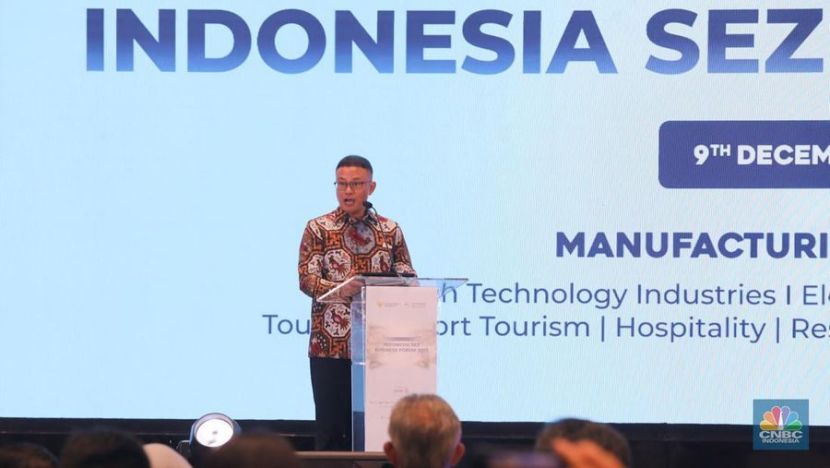
The Indonesian government plans to add 6 new Special Economic Zones (KEK) next year, bringing the total number of KEK nationwide to 31. The Acting Secretary of the National Special Economic Zone Council recently stated that the new KEK will be announced personally by President Prabowo, so the specific locations will not be disclosed yet. He only mentioned that the new KEK will be located in Java, Kalimantan, and Sulawesi, with diverse industry types including deep coal processing, aluminum processing, petrochemicals, and electric vehicles. He revealed that these new KEK already have investors, and one of the main prerequisites for establishing a KEK is that developers must be able to attract an "anchor investor" (anch