
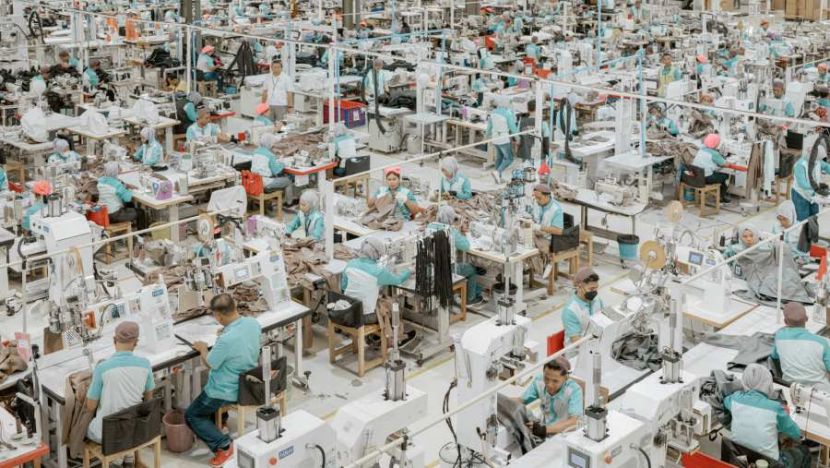
China, Sweden, and Japan Plan to Invest in Indonesia's Textile Industry
In the second half of 2025, Sweden, China, and Japan will invest in Indonesia's textile and textile product (TPT) sector, with a focus on downstream products such as fabrics and more environmentally friendly dyeing processes. The Director General of Chemical, Pharmaceutical, and Textile Industries at the Ministry of Industry stated that investment will be concentrated on downstream products like fabrics close to garments. For Japan, Indonesia will develop mechanisms to reduce carbon emissions in the fabric dyeing process by minimizing boiler usage and reducing electricity consumption derived from coal. The Indonesia-EU Comprehensive Economic Partnership Agreement has been finalized, with signing expected in Jakarta in September 2025 and entry into force in 2026, granting tariff reductions for approximately 80% of Indonesia's exports.

Current Status of Indonesia's Guava Industry

Current Status of Indonesia's Palm Sugar Industry

List of Indonesia's Main Export Commodities in the First Half of This Year
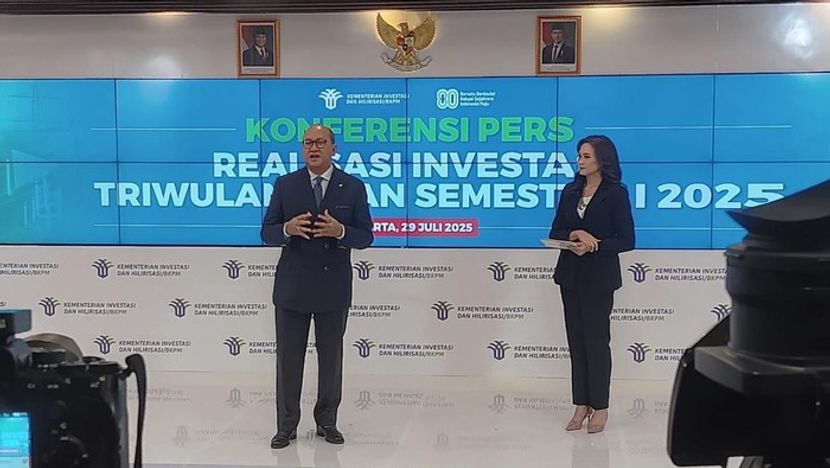
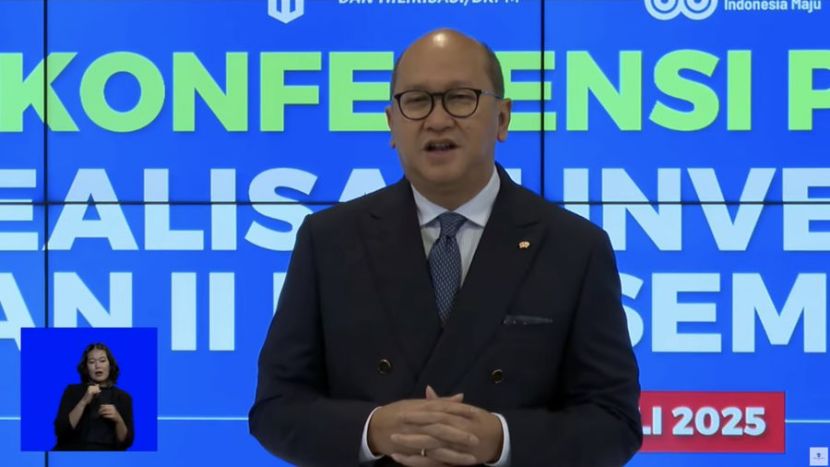
Indonesia's Downstream Industry Investment Exceeds 280 Trillion Rupiah in First Half of Year

China's Investment in Indonesia Surpasses Japan and Malaysia
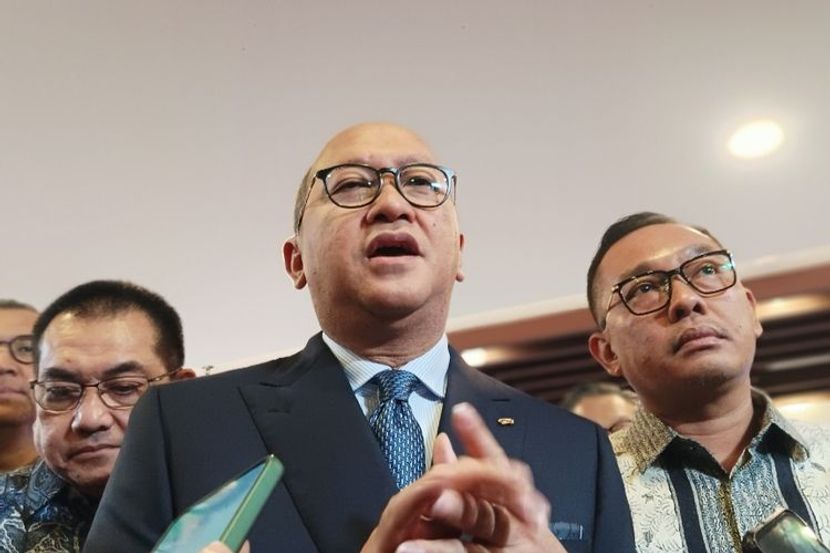
The Investment Ministry/Investment Coordinating Board recorded that the investment realization in the first half of 2025 reached 942 trillion rupiah, a year-on-year increase of 13.6%, equivalent to 49.5% of the government's 2025 investment target of 1,905.9 trillion rupiah. Foreign direct investment contributed 432.6 trillion rupiah, while domestic investment contributed 510.3 trillion rupiah. Japan was once one of Indonesia's main and stable investors, but its investment has been declining over the past six years. In the first half of 2019, it ranked second with 2.4 billion USD, but in the first half of 2025, it only reached 1.6 billion USD, ranking last among the top five foreign investors. China's investment has grown significantly, from only 297 million USD in 2013 (ranking 12th) to third place in 2017; in the first half of 2019, it reached 2.3 billion USD (ranked third), and in the first half of 2025, it reached 3.6 billion USD. Malaysia experienced fluctuations: 1 billion USD in the first half of 2019 (fifth place), surged to 5.9 billion USD in the first half of 2020 (third place), did not enter the top five in 2023-2024, and returned to fourth place in the first half of 2025 with 1.7 billion USD, surpassing Japan, showing strong interest in the Indonesian market. These data exclude the COVID-19 pandemic period (2020-2022) due to low economic activity.
Indonesia and the US Invest $8 Billion to Build 17 Oil Refineries
Indonesia plans to cooperate with US companies to build 17 modular oil refineries with a total investment of $8 billion (approximately IDR 130 trillion) to process crude oil imported from the United States. The project is part of a recent import tariff agreement between Indonesia and the US, led by Indonesia's Danantara company, and is expected to sign an engineering, procurement, and construction (EPC) contract with US engineering firm KBR Inc. Indonesia will adjust its crude oil import source structure, reducing imports from traditional suppliers such as Nigeria and Saudi Arabia, and increasing imports from the US.

Chinese Brands Actively Expand in Southeast Asian Markets
In the past, Chinese products were often considered low-quality and imitations, but now they are more recognized in Southeast Asia. Brands like Xiaomi, Vivo, Oppo, BYD, Chery, Mixue, and Chagee are widely known. An Indonesian consumer owns multiple Chinese products and believes they are competitively priced, easily accessible, and technologically advanced, with functionality not much different from non-Chinese brands. Another Indonesian consumer, influenced by relatives, bought a Xiaomi phone and is satisfied with its battery and heat dissipation. A Malaysian consumer likes Chagee's diverse products and comfortable environment, believing product quality matters, not the country of origin.

Indonesia Builds Global Green Mineral Supply Chain
In the global energy landscape transitioning to low carbon, smelters have become a new geopolitical stage. The past struggle for influence over oil and strategic straits has now shifted to control over the purification process of key minerals such as nickel, cobalt, and lithium, which are core raw materials for electric vehicles, solar panels, etc. Countries that control downstream processing can dictate prices, supply, set environmental standards, and hold strategic positions in international negotiations. China dominates the global mineral supply chain competition through an integration strategy, mining cobalt in the Congo, lithium in Chile, and building large processing centers, supported by government low-cost financing and technology subsidies.
Indonesia Plans to Build 18 Refineries with Total Capacity of 1 Million Barrels
Indonesia plans to build oil refineries with a total capacity of 1 million barrels per day at 18 locations across the country, along with oil storage facilities at the same locations. The refinery project is estimated to require an investment of 160 trillion IDR, and the storage facilities 72 trillion IDR. It is expected to provide 50,960 new jobs for the community, reduce fuel imports, save foreign exchange, and strengthen national energy security and economic resilience. Construction locations include 18 areas such as Lhokseumawe, Sibolga, Natuna, Cilegon, Sukabumi, Semarang, and Surabaya

West Java Subang Balances Industrial and Agricultural Development
The Patimban Port in Subang Regency, West Java Province has been operational as a national strategic project, aiming to relieve the pressure on Tanjung Priok Port and improve national logistics efficiency. Supported by supporting infrastructure such as Kertajati Airport and highways, this port is expected to become a new economic development center outside Jakarta, driving economic growth in the Cirebon, Subang, and Majalengka areas, and promoting the shift of industrial zones from Cikarang and Karawang in Bekasi to Subang. Currently, four large enterprises have obtained industrial area operating permits in Subang Regency, namely Subang Smartpol
Indonesia Plans to Invest Over 600 Trillion in 18 Downstream Projects
Indonesia plans to build coal downstream industry projects at 6 locations, converting coal into dimethyl ether. This project is part of 18 national downstream and energy security projects, and its preliminary feasibility study has been completed. The project locations are in Bulungan, Kutai Timur, Kota Baru, Muara Enim, Pali, and Banyuasin. The estimated investment is 164 trillion IDR, and it is expected to create 34,800 jobs. The preliminary feasibility study was completed by the National Task Force for Downstream Industry and Energy Security, and the documents have been submitted to the