
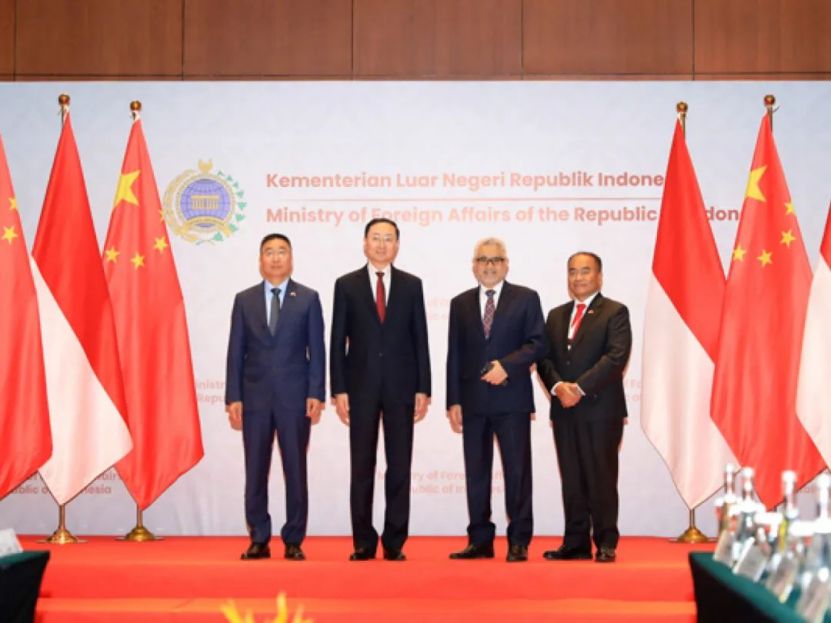
First Ministerial Meeting of China-Indonesia Foreign and Defense Ministers Held in Beijing
At a regular press conference of the Ministry of Foreign Affairs on April 18, Lin Jian announced: Wang Yi, Member of the Political Bureau of the CPC Central Committee and Minister of Foreign Affairs, and Minister of National Defense Dong Jun will co-chair the first ministerial meeting of the China-Indonesia Foreign and Defense Ministers' "2+2" Dialogue Mechanism in Beijing on April 21. Indonesian Minister of Foreign Affairs Sugiono and Minister of Defense Sjafrie will visit China to attend the meeting. China and Indonesia are good neighbors across the sea and good partners sharing a common destiny. This year marks the 75th anniversary of the establishment of diplomatic relations between China and Indonesia. Under the personal care of the heads of state of the two countries, China and Indonesia have established and launched the "2+2" dialogue mechanism between foreign and defense ministers. This is the first ministerial-level "2+2" mechanism established by China.
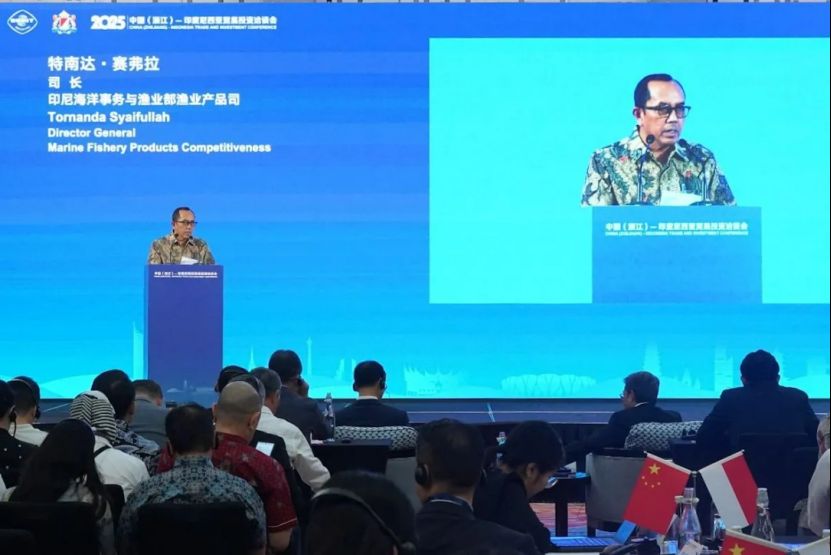
Indonesian Ministry of Maritime Affairs and Fisheries Encourages Investment Cooperation in Fisheries with China
Indonesia Sunplast Pipe
Indonesian Industry Worries About Influx of Chinese Electronics into Indonesian Market
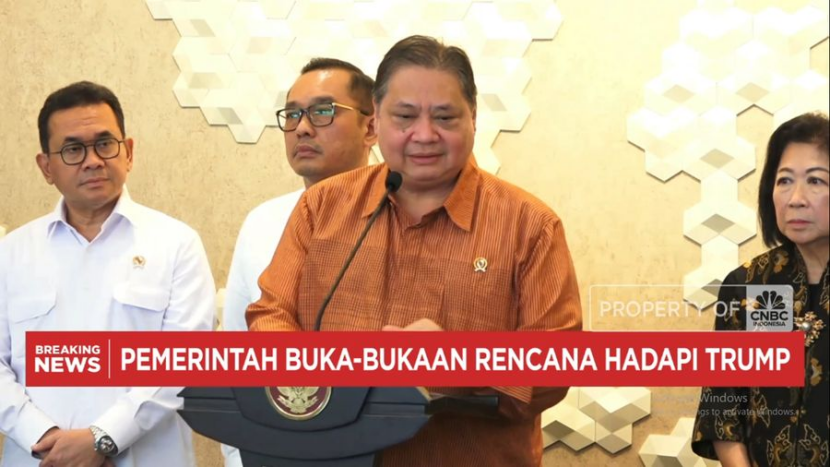
Key Points of Indonesia-US Tariff Negotiations

Chinese Embassy in Indonesia Conducts Consular Document Services Survey
To understand the satisfaction and opinions of Chinese compatriots in its consular district regarding the embassy's consular document services and to improve the quality of consular services, the Chinese Embassy in Indonesia sincerely invites you to fill out the "Chinese Embassy in Indonesia Consular Document Services Survey Questionnaire." Please use WeChat to scan the QR code above and fill it out truthfully on a voluntary basis. Each person only needs to fill it once; please do not submit repeatedly. Thank you for your support and cooperation!
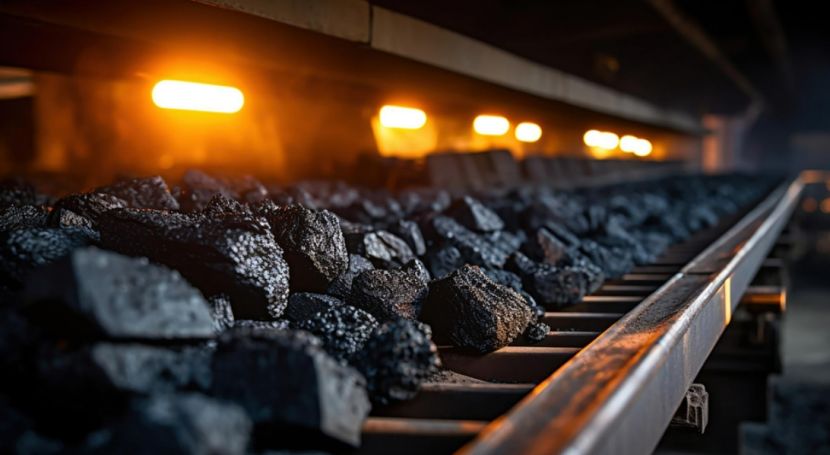
China's Construction of Coal-Fired Power Plants Pushes Up Coal Prices
Driven by news of China's planned construction of coal-fired power plants, coal prices in Newcastle and Rotterdam rose for different months. For example, Newcastle April coal price rose to $95.5/ton, and Rotterdam April price rose to $103.65/ton. The Chinese government announced it will continue building coal-fired power plants until 2027, aiming to meet peak electricity demand in some regions, ensure grid stability, and serve as a supplement to new energy. This is because China's coal consumption is expected to peak only by 2028, later than previously anticipated. In March 2025, China's coal imports dropped 6% year-on-year to 38.73 million tons, mainly due to high port
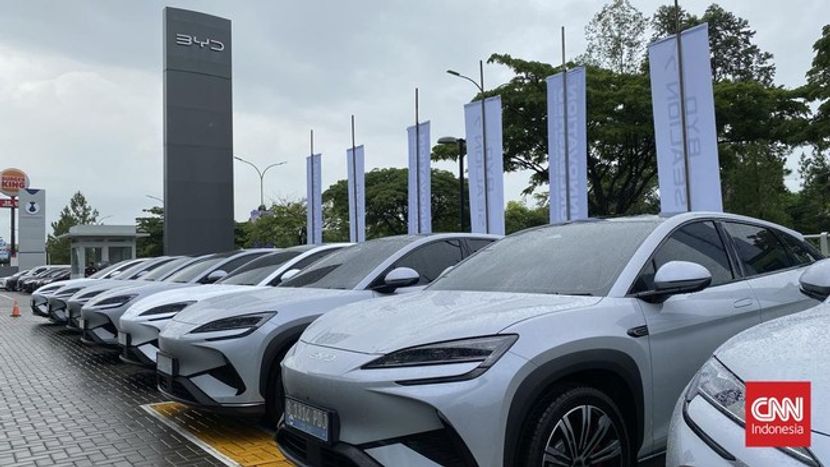
Three Chinese Brands Among Top 10 in Indonesia's Auto Market in March
Based on the March 2025 Indonesia auto market sales, BYD, as an electric vehicle manufacturer, broke into the top 10 best-selling car brands in Indonesia, ranking sixth with sales of 3,205 units, surpassing Hyundai which ranked seventh. Toyota continued to lead the market with wholesale sales of 22,476 units, followed by Daihatsu, Honda, Mitsubishi, and Suzuki. Additionally, two Chinese brands, Wuling and Chery, also entered the top 10 best-selling brands in March. In March, Indonesia's national auto retail sales decreased by 6.8% year-on-year but increased compared to February, with wholesale sales showing a similar trend over the same period. 2025
China Becomes Indonesia's Main Export Market for Coconuts
In January-February 2025, Indonesia's export value of in-shell coconuts reached USD 30.8 million (approximately IDR 5.17 trillion), with export volume of 71,077 tons, mainly destined for China and Vietnam. Among them, exports of in-shell coconuts to China reached 68,065 tons, valued at USD 29.5 million; exports to Vietnam were 2,180 tons, to Thailand 550 tons, and to Malaysia 280 tons. Indonesia's export volume of in-shell coconuts has fluctuated in the past four years. It was 431,841 tons in 2021, dropped to 288,286 tons in 2022, rebounded to 380,883 tons in 2023, and reached 43
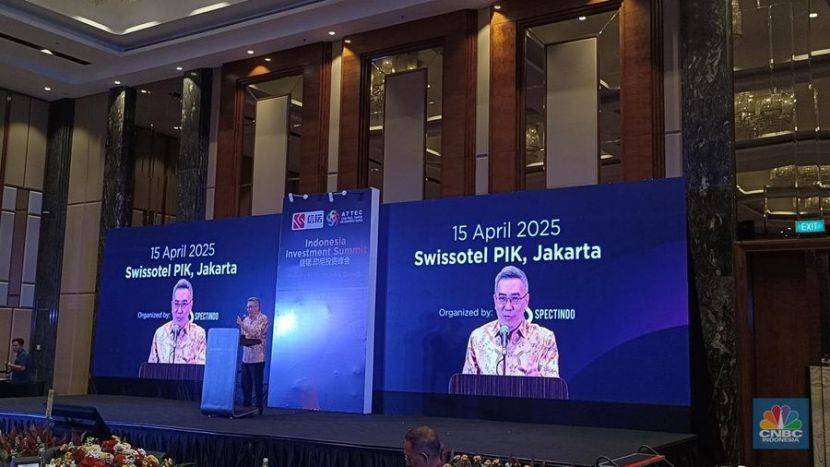
Advantages of China's Manufacturing Relocation to Indonesia
The Chairman of the Asian Council for Trade, Tourism and Economy emphasized at the Indonesia Investment Summit that now is a golden opportunity for Indonesia to attract foreign investment, welcoming global investors, especially Chinese manufacturing investors, to invest and set up factories in Indonesia. Indonesia is being seen as a new global economic growth center, with significant advantages in attracting foreign investment. It not only has a large market, stable policies, and a strategic geographical location, but also promising economic development prospects, giving it the potential to become an engine of world economic growth. The investment potential in Indonesia's manufacturing sector is huge, and he called on Chinese factory owners to consider Indonesia as a new production base. He believes that relocating factories to

Indonesia's Foreign Exchange Reserves Hit Record High
According to data from Bank Indonesia, Indonesia's foreign exchange reserves reached USD 157.1 billion at the end of March 2025, up from USD 154.5 billion the previous month. The increase was driven by higher tax and service revenues, as well as the government's recovery of foreign loans. Indonesia's requirement for natural resource exporters to keep 100% of their USD-denominated profits in the country for at least one year has also helped stabilize foreign exchange reserves. The reserves can cover 6.7 months of imports, or 6.5 months of imports and government external debt repayments, far exceeding the international standard of 3 months of imports. This supports the external sector's resilience, maintaining macroeconomic and

Chinese E-commerce Platforms Banned from Entering the Indonesian Market
Chinese e-commerce platforms Temu and Shein had planned to expand into the Indonesian market and were even listed on Apple and Google app stores in Indonesia. However, the Indonesian government intervened directly and banned their operations in the country due to concerns that their business model could impact local small and medium enterprises. These platforms sell goods directly from Chinese manufacturers to end consumers without intermediaries, offering low prices that squeeze the survival space of local producers. In the United States, these platforms have become popular due to their prices being significantly below market levels, but the Trump administration's policies pose threats.