
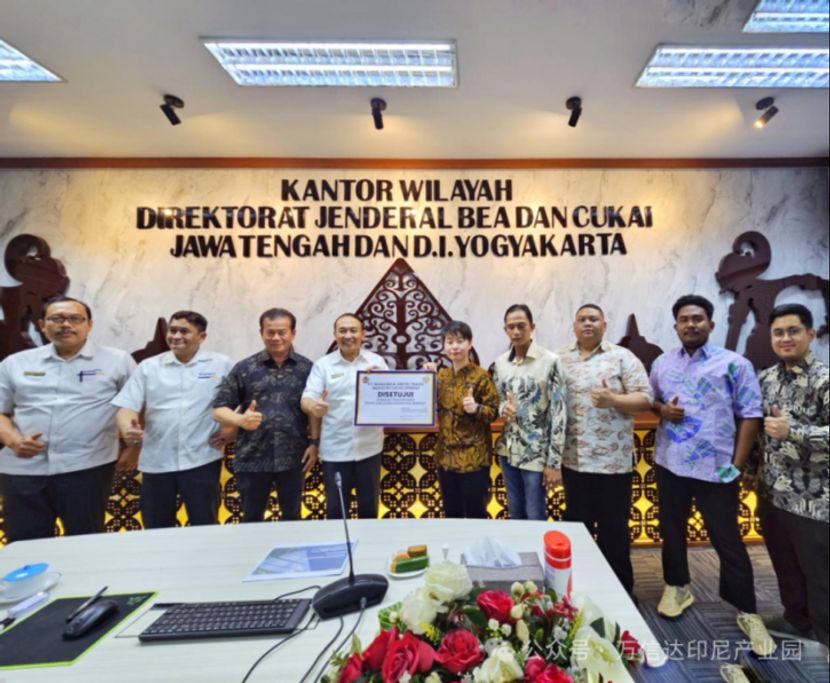
 On September 2, 2024, the China-Indonesia Two Countries Twin Parks • Batang Industrial Park received the Large Bonded Zone PKB qualification. This is the fourth Large Bonded Zone permit approved in Central Java Province, and the only Chinese-invested park to receive this honor. According to Perdirjen Bea Cukai No.PER-19/BC/2018, a bonded zone is a bonded storage area used to store imported goods and local raw materials for the purpose of producing export goods. Simply put, it is mainly oriented towards export-oriented industries. Bonded zones are generally located near ports, because the main goal of bonded zones is to increase Indonesian exports. Bonded zones can be divided into 3 types: 1) KB Operator (Penyelenggara Kawasan Berikat), 2) KB Entrepreneur (Pengusaha Kawasan Berikat), 3) Entrepreneur within KB (Pengusaha Dalam Kawasan Berikat). Bonded Zone Facilities and Incentives: Businesses holding a bonded zone license can be exempted from customs duties, import tax (PPh 22), Value Added Tax (PPN), and Luxury Tax (PPnBM). These policies aim to enable businesses to reduce the cost of imported raw materials and capital goods, hoping that businesses can export products at more competitive prices globally.
According to the origin of goods entering the bonded zone, the incentives provided for materials/goods are as follows: Not all goods can enjoy bonded zone incentives. According to PMK No.131 of 2018, the following goods qualify for bonded zone incentives: 1) Raw materials, auxiliary materials, samples, capital goods; 2) Packaging and packaging auxiliary materials; 3) Fuel, office equipment; 4) Finished products and semi-finished products for assembly production; 5) Goods temporarily exported and re-entering the bonded zone; 6) Re-entering production goods; a. Sales Tax on Luxury Goods (PPnBM) → is a tax levied on goods classified as luxury items. b. Taxable Goods (BKP) → are goods subject to Value Added Tax law. c. Other Places within Customs Territory (TLDPP) → are other places within the Indonesian customs area. d. Excise Goods (BKC) → are certain goods that, due to their negative impact on the community or environment, require control over their distribution and use, thus incurring an additional fee. Examples: cigarettes and alcoholic beverages.


