
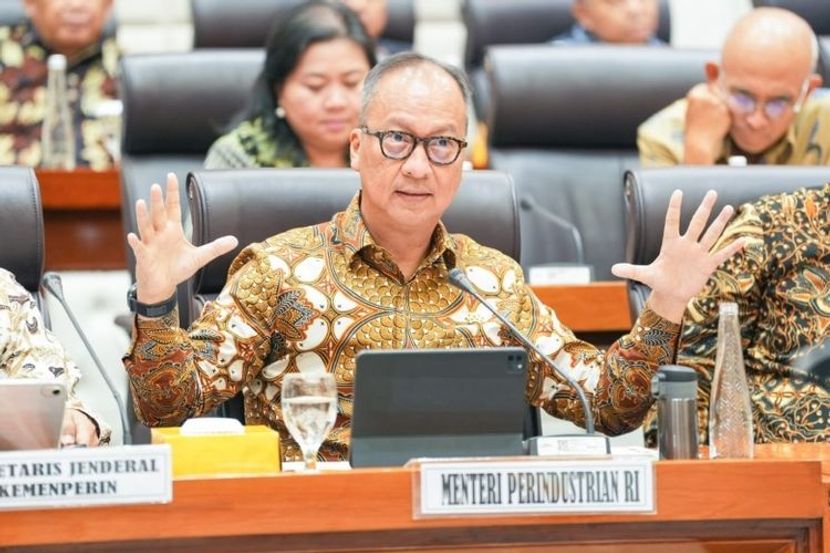
 The Ministry of Industry is advancing reforms to the Local Component Level (TKDN) policy to strengthen domestic manufacturing, in response to the President's deregulation initiative and not under external pressure. Since February 2025, the ministry has begun discussing reforms, and the relevant regulations are now in the final stage. Compared to the old rules, the new regulations optimize the TKDN certification process, promising simpler processes, lower costs, and faster speeds. The new calculation method is also simpler, with shorter processing times and lower costs, aiming to encourage more domestic industrial products to obtain TKDN certificates, thereby increasing procurement willingness of government agencies and state-owned enterprises, and promoting the development of domestic manufacturing. President Prabowo signed a presidential regulation amending the provisions for government procurement of goods and services. The new regulations clarify the priority order for procurement by government agencies and SOEs: when the combined score of TKDN and business efficiency weight (BMP) exceeds 40%, the government may only procure products with TKDN above 25%; if there are no products scoring above 40% but there are products with TKDN above 25%, they may be procured; if all TKDN are below 25%, procurement is also allowed; if there are no TKDN-certified products, domestic products registered in the National Industrial Information System (SIINAS) may be procured. This provision replaces the old rule that allowed direct procurement of imported products when products did not meet the combined score requirements, making the government's procurement priority for local products clearer. The industry hopes the new regulations will be implemented soon, believing they will provide convenience for enterprises, reflecting the urgent need to simplify approval processes and promote business development.
New TKDN Policy Accelerates Rise of Local Manufacturing in Indonesia
www.indoent.com
2025-05-14
The Ministry of Industry is advancing reforms to the Local Component Level (TKDN) policy to strengthen domestic manufacturing, in response to the President's deregulation initiative and not under external pressure. Since February 2025, the ministry has been discussing reforms, and the relevant regulations are now in the final stage. Compared to the old rules, the new regulations optimize the TKDN certification process, promising simpler processes, lower costs, and faster speeds. The new calculation method is also simpler, with shorter processing times and lower costs, aiming to encourage more domestic industrial products to obtain TKDN certificates and increase procurement by government agencies and state-owned enterprises, t
The Ministry of Industry is advancing reforms to the Local Component Level (TKDN) policy to strengthen domestic manufacturing, in response to the President's deregulation initiative and not under external pressure. Since February 2025, the ministry has begun discussing reforms, and the relevant regulations are now in the final stage. Compared to the old rules, the new regulations optimize the TKDN certification process, promising simpler processes, lower costs, and faster speeds. The new calculation method is also simpler, with shorter processing times and lower costs, aiming to encourage more domestic industrial products to obtain TKDN certificates, thereby increasing procurement willingness of government agencies and state-owned enterprises, and promoting the development of domestic manufacturing. President Prabowo signed a presidential regulation amending the provisions for government procurement of goods and services. The new regulations clarify the priority order for procurement by government agencies and SOEs: when the combined score of TKDN and business efficiency weight (BMP) exceeds 40%, the government may only procure products with TKDN above 25%; if there are no products scoring above 40% but there are products with TKDN above 25%, they may be procured; if all TKDN are below 25%, procurement is also allowed; if there are no TKDN-certified products, domestic products registered in the National Industrial Information System (SIINAS) may be procured. This provision replaces the old rule that allowed direct procurement of imported products when products did not meet the combined score requirements, making the government's procurement priority for local products clearer. The industry hopes the new regulations will be implemented soon, believing they will provide convenience for enterprises, reflecting the urgent need to simplify approval processes and promote business development.
Tags
Policy Information
Share to
Related Reading
 Policy Information
Chinese Mainland and Hong Kong Enterprises Eligible for Relaxed Foreign Exchange Deposit Rules in Indonesia
2026-08-30 Policy Information
China-Indonesia Multi-Sector Strategic Cooperation Upgrade Blueprint
2026-08-23 Policy Information