
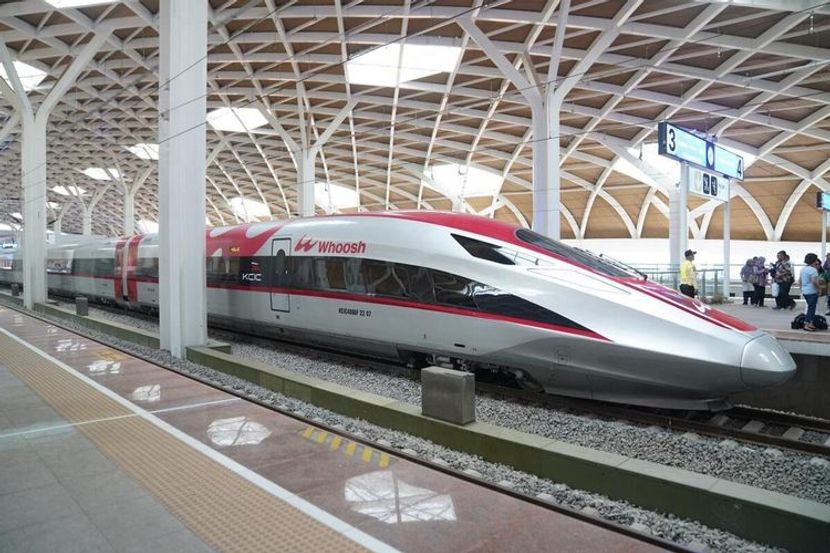
 The President Director of PT Kereta Cepat Indonesia China (KCIC) stated that the continued progress of the Jakarta-Surabaya high-speed rail project depends on government support. Due to the high construction costs of high-speed rail, not all banks or financial institutions have the capacity and willingness to provide financing. Therefore, in many countries, the supply of high-speed rail usually comes from the government, depending on the government's willingness. At least the land and some infrastructure must be provided by the government. If all costs are borne by KCIC, it would increase the burden of investment recovery and lengthen the payback period. This is one of the lessons learned from the previous Jakarta-Bandung high-speed rail Whoosh project. He believes that KCIC should continue to develop and should not only serve the Jakarta-Bandung route. From an economies of scale perspective, it is necessary to extend the route to places such as Yogyakarta or Surabaya, but all of this depends on government support. The government has actually included the Jakarta-Surabaya high-speed rail in the national transportation system master plan. Currently, the plan is being reviewed by the Coordinating Minister for Infrastructure and Regional Development. As time has passed, it needs to be adjusted based on the latest conditions. The Jakarta-Surabaya high-speed rail is still in the preliminary study stage, so it is not yet possible to determine the route (known coordinates of high-speed rail station sites), whether construction is feasible, financing capacity, and other issues. The project still has a long way to go before implementation, but the government has the intention to push it forward. For now, it depends on factors such as financial conditions and route planning, as lessons from the Jakarta-Bandung project need to be taken into account and extensive evaluations are required.
Jakarta-Surabaya high-speed rail requires government support
www.indoent.com
2025-07-09
The President Director of PT Kereta Cepat Indonesia China (KCIC) stated that the continued progress of the Jakarta-Surabaya high-speed rail project depends on government support. Due to the high construction costs of high-speed rail, not all banks or financial institutions have the capacity and willingness to provide financing. Therefore, in many countries, the supply of high-speed rail usually comes from the government, depending on the government's willingness. At least the land and some infrastructure must be provided by the government. If all costs are borne by KCIC, it would increase the burden of investment recovery and lengthen the payback period. This is one of the lessons learned from the previous Jakarta-Bandung high-speed rail Whoosh
The President Director of PT Kereta Cepat Indonesia China (KCIC) stated that the continued progress of the Jakarta-Surabaya high-speed rail project depends on government support. Due to the high construction costs of high-speed rail, not all banks or financial institutions have the capacity and willingness to provide financing. Therefore, in many countries, the supply of high-speed rail usually comes from the government, depending on the government's willingness. At least the land and some infrastructure must be provided by the government. If all costs are borne by KCIC, it would increase the burden of investment recovery and lengthen the payback period. This is one of the lessons learned from the previous Jakarta-Bandung high-speed rail Whoosh project. He believes that KCIC should continue to develop and should not only serve the Jakarta-Bandung route. From an economies of scale perspective, it is necessary to extend the route to places such as Yogyakarta or Surabaya, but all of this depends on government support. The government has actually included the Jakarta-Surabaya high-speed rail in the national transportation system master plan. Currently, the plan is being reviewed by the Coordinating Minister for Infrastructure and Regional Development. As time has passed, it needs to be adjusted based on the latest conditions. The Jakarta-Surabaya high-speed rail is still in the preliminary study stage, so it is not yet possible to determine the route (known coordinates of high-speed rail station sites), whether construction is feasible, financing capacity, and other issues. The project still has a long way to go before implementation, but the government has the intention to push it forward. For now, it depends on factors such as financial conditions and route planning, as lessons from the Jakarta-Bandung project need to be taken into account and extensive evaluations are required.
Tags
Social Dynamics
Share to


